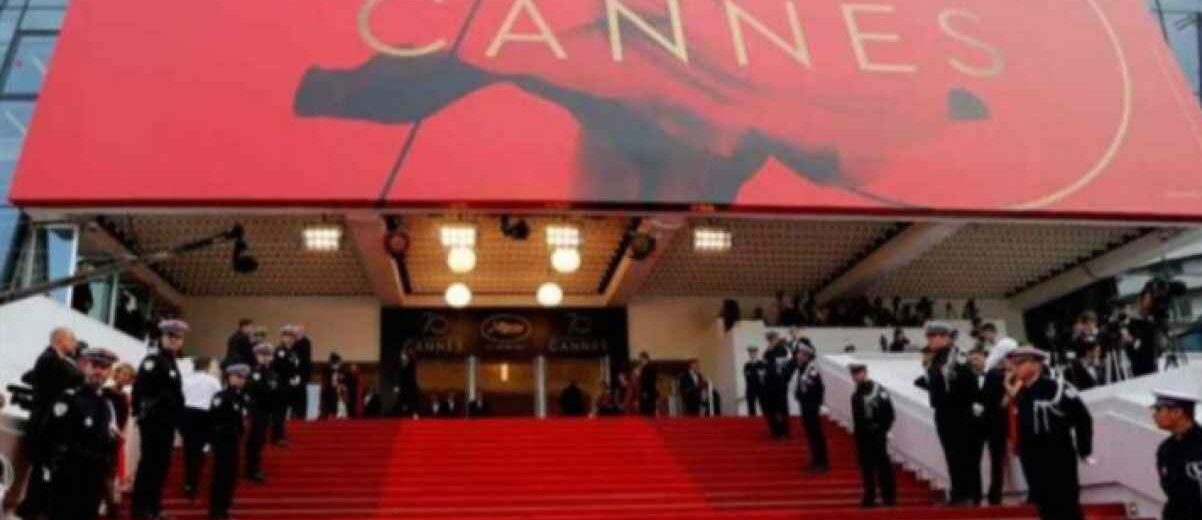
The 79th Cannes Film Festival has twenty-two films in its main Competition — the section from which the Palme d’Or, the Grand Prix, the Jury Prize, the Best Director, and the acting prizes are awarded. These twenty-two films represent the Cannes selection committee’s judgement about the most significant cinema produced in the world in the past year. They are selected from thousands of submissions. They are the films that define the international prestige conversation for the twelve months that follow the festival.
Zero of them are directed by an African filmmaker.
The last African film in Cannes Competition was Abderrahmane Sissako’s Timbuktu in 2014. Sissako won Best Director. The film went on to receive the César Award for Best Film and an Academy Award nomination for Best International Feature. That was twelve years ago. In the twelve years since, African filmmakers have had films in Un Certain Regard, in the Directors’ Fortnight, in Critics’ Week, in Perspectives, and in ACID screenings. They have won Caméra d’Or prizes. They have collected the Ecumenical Jury Prize. They have screened to standing ovations. They have not been in Competition.
This is not an oversight. The Cannes selection committee, chaired by artistic director Thierry Frémaux, is one of the most deliberate curatorial bodies in world cinema. Every film in Competition is there by specific editorial choice. Every film not in Competition is also there by choice. The absence of African directors from the Competition field is a choice that has been made, implicitly or explicitly, for twelve consecutive years.
What the Selection Committee’s Choices Reveal
Frémaux has described the Cannes selection process as looking for “films that have something to say and know how to say it” — a formulation deliberately vague enough to encompass any aesthetic. He has also said publicly that the festival tries to reflect world cinema in its full geographic diversity. The tension between those two stated priorities — artistic excellence and geographic diversity — has, in practice, been resolved in favour of the former when it comes to African cinema. Films by African directors have been judged, in twelve consecutive years, as not reaching the threshold that Competition placement requires.
The question this raises is not whether the individual selection decisions were correct — that is a judgement about specific films that would require seeing the submissions the committee rejected alongside those it selected. The question is whether the structural conditions that produce African films are generating work at the level the Competition requires, and if not, why not.
Thierry Frémaux announced the 2026 Competition lineup in April and described Ben’Imana as “astounding” for a debut feature when announcing its Un Certain Regard selection. He did not select it for Competition. The distinction between “astounding for a debut” and “Competition-ready” is the gap this analysis is examining.
The Production Condition Gap
The twenty-two Competition films at Cannes 2026 were produced under conditions that most African filmmakers do not have access to. They have production budgets measured in millions of euros. They have established relationships with the European co-production market that allows them to assemble financing across multiple countries. They have post-production facilities, visual effects infrastructure, and sound design resources that produce a specific quality of technical finish that the Competition’s international press and jury are accustomed to evaluating.
Ben’Imana was produced across Rwanda, Gabon, Côte d’Ivoire, France, and Norway — a five-country co-production that represents the maximum available financing architecture for an African debut feature. Even with that architecture, the production conditions available to Dusabejambo are structurally different from those available to the Competition directors whose films sit alongside her in the Palais des Festivals this week.
This is not an argument about talent or vision. It is an argument about infrastructure. The Cannes Competition is, in part, a competition between production ecosystems as much as between individual filmmakers. African filmmakers are competing against the full resources of the French, Italian, South Korean, Romanian, and American production ecosystems with a fraction of the institutional support those ecosystems provide.
What Would Have to Change
An African film in the Cannes Competition does not require a miracle. It requires the convergence of four things that are each individually possible: a filmmaker of Competition-level formal ambition and execution, a screenplay that operates at the scale and complexity the Competition expects, a production infrastructure that can deliver the technical finish the Competition requires, and a sales company relationship that gives the film the institutional positioning to reach the selection committee’s attention at the right moment.
READ ALSO: The Esiri Brothers Speak from the Croisette.
The Esiri Brothers have three of the four with Clarissa. NEON’s acquisition and the Directors’ Fortnight selection suggest the fourth was very close. Whether Clarissa was considered for Competition and placed in the Fortnight instead — or whether it was not submitted for Competition consideration — is information the selection committee does not make public. What is public is that the film that the Hollywood Reporter described this week as one of the most significant African cinema achievements at Cannes 2026 is in the Fortnight, not in Competition.
The year an African film is in Competition again will not be announced in advance. It will arrive when a film and a filmmaker and a production ecosystem and a selection committee’s judgement all converge in the same moment. Everything happening in African cinema in 2026 — the CANEX financing, the MK2 sales relationships, the NEON acquisitions, the Berlinale prizes — is building toward that convergence. It has not arrived yet. The twelve-year absence continues. The work of ending it continues also.
— Amara Diallo, Cannes. RollCallAfrica, 14 May 2026.
Sources: Cannes 79th official selection (cannes.com), Hollywood Reporter exclusive (14 May 2026), Deadline (April 2026 — Ben’Imana/MK2 announcement), Variety (May 2026 — Clarissa/NEON announcement), Cannes 2014 official records (Timbuktu, Sissako).