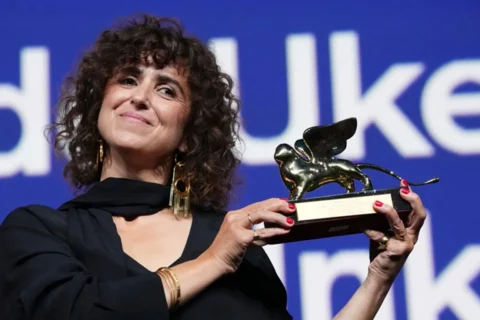
Pocas Pascoal is making a film about the woman whose work helped convince her to become a filmmaker.
The Angolan director is developing Sarah, a feature centred on Sarah Maldoror, the Guadeloupean-French filmmaker whose cinema became inseparable from African liberation, women’s political participation and the struggle to control how Black history appeared on screen.
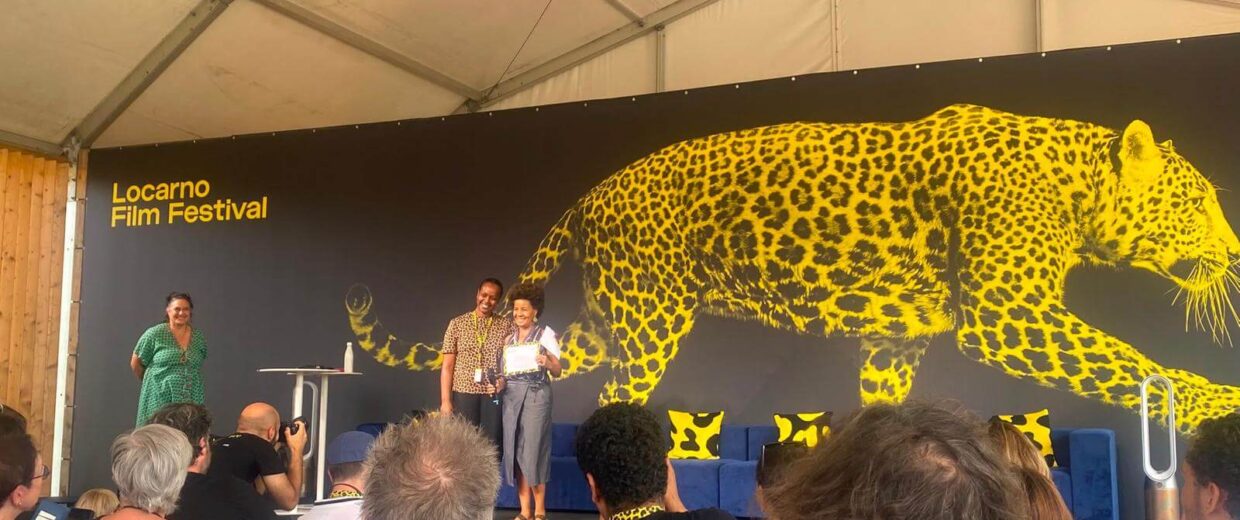
The project received the Open Doors OIF-Francophonie consultancy award at the 2026 Locarno Film Festival. It is the first time the Organisation internationale de la Francophonie has given the honour to a filmmaker from Angola, which joined the organisation in 2024.
In comments released after the award, Pascoal described the support as new momentum for a story that should reach another generation. Her stated intention is clear: to place Maldoror and the women excluded from official historical accounts back inside the image.
This is not a routine artist biography. It is one African filmmaker deciding how to reconstruct another filmmaker’s act of resistance.
The film begins with a missing film
Sarah focuses on a little-known episode from 1970, when Maldoror travelled to Guinea-Bissau to direct Guns for Banta.
The project was financed by Algeria’s post-independence government and made in the context of the struggle against Portuguese colonial rule. Maldoror placed a woman at the centre and used music in ways that challenged the political authorities backing the production.
The footage was seized before she could complete the film. Maldoror was forced to leave Algeria, and Guns for Banta became one of African cinema’s significant lost works.
That makes Pascoal’s task unusually difficult. She is not simply dramatising a well-documented success. She is reconstructing the making and destruction of a film that most audiences have never been able to see.
The absence is part of the subject.
Who controls revolutionary images after they have been created? What happens when a state that funded anti-colonial cinema becomes uncomfortable with the filmmaker’s interpretation? How should a new film represent footage that no longer exists?
Those questions turn Sarah into a story about power inside liberation movements, not only power between coloniser and colonised.
Why Pocas Pascoal is the right filmmaker
Pascoal was born in Luanda and became Angola’s first woman camera operator. She later moved to France, trained in editing and worked as an editor for 15 years.
Her career has repeatedly returned to memory, displacement and the unfinished consequences of colonialism. Her feature All Is Well, also known as Alda and Maria, follows two Angolan sisters who arrive in Lisbon during the civil war and confront the distance between escape and safety.
Like Maldoror, Pascoal has worked across Angola and Europe without treating either location as a simple home or destination. Both filmmakers understand political history through women whose daily lives carry its consequences.
Pascoal has previously described Sambizanga as a masterpiece and as a film that made her want to direct. The connection is therefore artistic as well as historical. She is approaching Maldoror as a predecessor who changed what an Angolan woman could imagine behind the camera.
Her short film Time to Change, screened in Locarno’s Open Doors programme this year, links colonial extraction to environmental destruction and racial power. The film shows that the concerns surrounding Sarah already exist within Pascoal’s current work.
Maldoror filmed the women around revolution
Sarah Maldoror began in theatre, co-founding Les Griots in Paris in 1956 before studying cinema in Moscow. Her first completed films were closely connected to the liberation struggle against Portuguese rule in Africa.
Monangambée, released in 1969, exposed the language and machinery of colonial imprisonment. Sambizanga, released in 1972, adapted José Luandino Vieira’s novel about an Angolan revolutionary arrested and tortured by Portuguese authorities.
The film’s major decision was one of perspective. Rather than build the story around the imprisoned man alone, Maldoror follows his wife, Maria, as she moves from place to place searching for him. Political struggle is shown through the work of a woman trying to locate a loved one inside a system designed to keep both information and power from her.
Maldoror insisted that women belonged throughout cinema, on screen and across the production process. Her films practised that principle before the industry had language ready to celebrate it.
Pascoal’s project is interested in the same people Maldoror filmed: those history pushed into the background. As Pascoal put it after Locarno, Maldoror looked towards people “who were almost never seen”.
Preservation is not neutral
Maldoror directed more than 40 works across fiction, documentary, portraiture and television. For years, only a small portion circulated widely. Restoration and retrospectives have now brought films including Sambizanga back before international audiences.
That recovery is necessary, but preservation always involves decisions. Which films receive restoration money? Which archives are catalogued? Which institutions hold the materials? Who writes the programme notes that explain the work to a new audience?
When African film history is preserved mainly through European institutions, important work may survive while control over its interpretation remains distant from the communities that produced it.
Sarah can intervene in that process by making preservation active. Rather than treating Maldoror as a respectable historical figure whose importance has already been settled, Pascoal can return to the conflict, uncertainty and political cost of her filmmaking.
The challenge will be avoiding the smoothness of the conventional biopic. Maldoror’s life does not need to be converted into a sequence of inspirational achievements. The lost Guns for Banta footage is evidence that artistic courage can end without recognition, completion or institutional protection.
A South-South co-production is part of the argument
The OIF describes Sarah as a prospective South-South co-production. That structure matters for a story moving through Angola, Guinea-Bissau, Algeria, France and the Caribbean.
A production about African liberation should not depend entirely on one European point of financial and editorial control. At the same time, assembling multiple African partners across different languages, currencies and film systems is difficult. The consultancy award is designed to help the project navigate that development.
Pascoal said the Locarno support gives the film more strength and improves the possibility of carrying Maldoror’s story to younger audiences. That audience should include Africans who know Sambizanga by reputation but have never been able to encounter the larger body of work around it.
The final measure of Sarah will not be how respectfully it honours a pioneer. It will be whether Pascoal can make Maldoror politically present again.
Sarah Maldoror used cinema to place women inside the history of revolution. Pocas Pascoal is now using cinema to place Maldoror inside the history that has too often left her at its edge.