
Commercial Index™ tracks the business mechanics behind African film and television: price, distribution, audience access, revenue logic and the risks that sit beneath the headline.
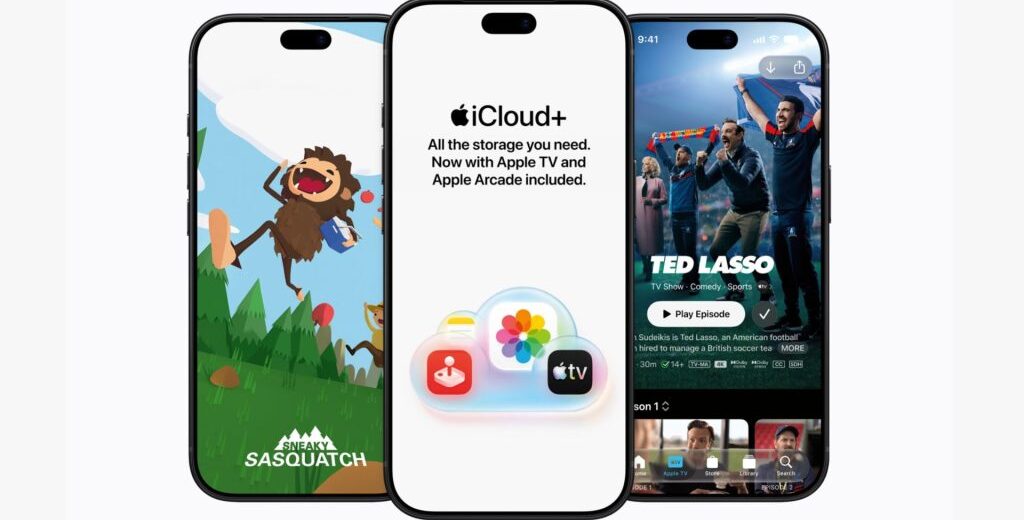
Apple TV enters Nigeria in September 2026 through an expanded iCloud+ subscription rather than as a normal standalone video service.
The entry plan is ₦1,300 per month for 50GB of iCloud storage. Apple TV and Apple Arcade are included at no additional cost, and the subscription can be shared with up to five family members through Family Sharing.
Commercial snapshot
| Metric | RollCallAfrica reading |
|---|---|
| Entry price | ₦1,300/month |
| Core bundle | 50GB iCloud+ + Apple TV + Apple Arcade |
| Household sharing | Subscriber can share with up to five family members |
| Standalone Apple TV | Discontinued in Nigeria under the rollout |
| Acquisition advantage | Entertainment is attached to a utility subscription |
| Retention advantage | Cancelling also affects cloud-storage benefits |
| Primary market constraint | Dependence on Apple’s device and services ecosystem |
| Local-content signal | No Nigerian original slate announced with launch |
Price: strong as an acquisition tool
At ₦1,300, Apple enters below Netflix’s current Nigerian entry price of ₦2,500. The more significant point is that Apple TV is not being asked to justify the full ₦1,300 alone.
The customer receives cloud storage and games in the same payment. For an existing iCloud user, the marginal price of adding Apple TV is effectively zero.
If one subscription is shared across the paying subscriber and five family members, the theoretical cost per person can fall to roughly ₦217 per month, although actual usage will vary by household.
Distribution: strong inside Apple, narrower outside it
The service has immediate access to Nigerians already using iPhones, iPads, Macs and other Apple devices. Account setup, billing and playback sit inside an ecosystem the customer already understands.
The weakness is the same advantage viewed from the other side: Apple is not the dominant device ecosystem in Nigeria. A low price does not matter to a household that has no reason to pay for iCloud storage.
This is therefore not a mass-market Nigerian streaming launch in the same way a platform built around Android and smart-TV neutrality would be.
Retention: Apple’s strongest metric
A pure streamer is vulnerable when the customer finishes the programme that triggered the subscription. Apple has bundled entertainment with a service that stores personal data.
That can reduce churn because cancelling has consequences outside television.
The model also changes how Apple can value content. A programme does not have to recover its cost only by attracting direct video subscriptions. It can contribute to the perceived value of the entire iCloud+ relationship.
Content: global prestige, local gap
Apple’s Nigerian announcement promotes global originals and films including Ted Lasso, Severance, The Studio, Pluribus, CODA and F1.
What is missing is a Nigerian commissioning or acquisition roadmap.
For local producers, that is the key watch point. Market availability creates a legal and technical path to Nigerian subscribers, but it does not automatically create a new buyer for Nigerian stories.
Apple becomes strategically important to the African screen industry only when the expansion moves from distribution of its global catalogue to meaningful local acquisition, commissioning or co-production.
Competitive position
Netflix retains the strongest pure-streaming brand and a much deeper record of African commissioning. DStv Stream carries a large local television and sports proposition after the standalone Showmax service was shut down.
Apple is entering from another direction entirely.
Its proposition is not “more African content” or “more channels.” It is “more services for one payment.” That makes direct comparisons difficult and gives Apple room to win customers who do not think of themselves as shopping for another streamer.
RollCallAfrica watch points
- Whether Apple announces Nigerian or African originals after establishing the subscriber base.
- Whether the ₦1,300 entry price remains stable as adoption grows.
- How strongly Family Sharing drives household use.
- Whether local telecom or device partnerships extend the service beyond premium Apple users.
- Whether producers receive a visible acquisition route for Nigerian films and series.
Commercial Index conclusion: Apple TV’s Nigerian launch has an unusually strong acquisition and retention design because video is bundled with cloud storage. Its weak point is local relevance. The service is commercially interesting on day one; it becomes strategically important to Nollywood only if Apple starts buying or commissioning Nigerian work.