Start with the numbers, because the numbers are where the argument lives.
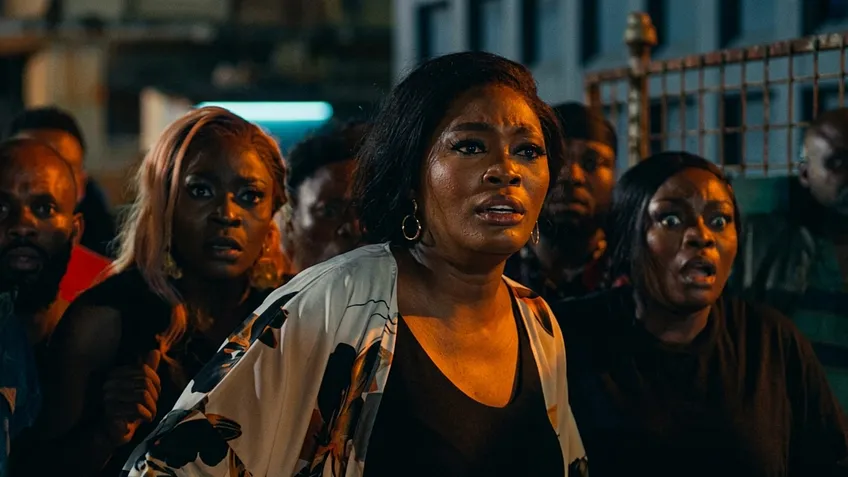
In September 2025, Gingerrr opened to ₦82.6 million — the highest-grossing non-festive September opening in Nollywood history. It ran for eight weeks. It earned ₦509 million in total. It competed, in its later weeks, against Transformers One, Joker: Folie à Deux, Venom: The Last Dance, and Gladiator II, and held its screen allocation against all four of them. The four women who produced, starred in, and financially backed it — Bukunmi Adeaga-Ilori, Bisola Aiyeola, Wumi Toriola, and Bolaji Ogunmola — built what analysts described at the time as Nollywood’s most comprehensive social media campaign to date. The film trended. It generated memes. It produced a catchphrase. It launched a dance challenge. It pulled audiences back in week five and week six and week seven because people who had already seen it were sending other people to see it.
On the strength of all of that, the AMVCA 2026 nominated it nine times.
On Saturday night at Eko Hotel, it won nothing.
Not one award. Not Best Supporting Actress for Bisola Aiyeola, whose comic timing across this film has been the subject of genuine industry praise. Not Best Director for Yemi Morafa, who held four converging personalities in one frame without ever letting the seams show. Not Best Cinematography for Emmanuel Igbekele, who was nominated three times in the same category in the same year — a statistical anomaly that should have translated into at least a conversation about his work on this film specifically. Not the technical awards. Not the public-facing ones. Nothing.
Nine nominations. Zero wins. The widest shutout of the night.
The easy read is that this is a loss. I want to argue the opposite. The AMVCA jury delivered a specific, considered, and ultimately important verdict on Gingerrr, and the industry should spend some time actually sitting with it rather than moving straight to the results table.
What the Jury Was and Was Not Saying
The AMVCA is not one body with one position. It is eighteen jury-decided categories and eleven public-voted categories operating simultaneously, which means the result for any single film is the aggregate of many independent rooms arriving at many independent conclusions. Nine nominations across those rooms and zero wins does not suggest that Gingerrr was overlooked in one category by one oversight. It suggests that something specific and consistent happened every time it entered consideration.
What that something was requires precision, because two versions of the argument are available and only one of them is honest.
The dishonest version: the AMVCA doesn’t understand commercial cinema; it is biased against popular work; Gingerrr was punished for being successful; ₦509 million should have been enough. This version is comfortable because it frames the result as institutional failure rather than anything the film itself might have produced or not produced. It also happens to be wrong.
The honest version: the jury looked at each category, weighed the options, and consistently found that another film had done that specific thing better. Best Cinematography went to Kabelo Thathe for To Kill A Monkey — a film that, whatever its narrative divisions, was shot with a visual rigour that the jury found more precise than Igbekele’s work on Gingerrr. Best Supporting Actress went to Linda Ejiofor for The Herd, because in a category that also included Bisola Aiyeola, the jury watched two very different kinds of performance and decided that one of them required more of its actor. Best Director did not go to Yemi Morafa because it went to Akinola Davies Jr., whose debut feature was shot on 16mm, structured around autobiographical memory, and received from the jury the verdict that My Father’s Shadow was the most fully realised directorial vision of the year.
None of those are wrong verdicts. All of them can be true simultaneously with Gingerrr being a remarkable film.
What Gingerrr Actually Is
The mistake the industry keeps making about Gingerrr is the same mistake it makes about most commercially dominant films: it conflates the cultural experience with the film itself, and then cannot distinguish between the two when the time for evaluation comes.
Gingerrr is a film about four friends at a specific and complicated moment in their lives — marriage, desire, professional humiliation, friendship as the only sustainable architecture when everything else gives way. It is funny in the way that Nigerian women are funny with each other when there are no men in the room, which is a register that Nigerian cinema has almost never captured on screen with this degree of authenticity. The screenplay — credited to Xavier Ighorodje — trusts its performers to carry emotional weight without underlining it, which is a rarer form of trust than it sounds. And its commercial architecture was genuinely intelligent: the collective ownership model, the week-by-week social media maintenance, the fan participation loop that kept the conversation alive for two months, all of it represented something the industry had not seen before at that scale.
The film delivered on its promise. The audience went back and sent others back. That is not nothing. In fact, in terms of what cinema is supposed to do at the most basic level — pull people out of their lives and into a shared experience they want to tell others about — Gingerrr succeeded at a level that most Nollywood releases aspire to and few reach.
But the AMVCA is not measuring what cinema is supposed to do at the most basic level. It is measuring, in each category, what the best execution of a specific craft discipline looked like across the year. And in that more granular assessment, Gingerrr competed against films that were doing different things at a level of intentionality that the jury, in every room it sat, found more instructive.
The Specific Problem
Here is where the analysis requires honesty that the promotional language around Gingerrr never quite allowed.
The film’s greatest strength — the thing that made ₦509 million possible — was also its greatest vulnerability in a jury room. Gingerrr works because its lead performers are so naturally themselves that the camera barely has to do anything. You believe these women are friends because they are friends. You believe their specific comedic timing because it is their specific comedic timing. The chemistry is real. The spontaneity reads as genuine.
That is an extraordinary thing to have in front of a camera. It is also the quality that is most difficult to evaluate as craft, because the question “did the director make this happen or did the director simply not ruin it?” is one that a jury of film professionals is professionally obligated to ask. And the honest answer, watching Gingerrr with that question in mind, is not always clear.
My Father’s Shadow does not have this ambiguity. Every frame of Akinola Davies Jr.’s debut carries visible intention. The choice to shoot on 16mm — a choice that imposes constraints and demands responses to those constraints — is visible in how the film moves, how it holds faces, how it renders Lagos in 1993 as a place where the weather of politics is indistinguishable from the weather. The direction is the argument. You can argue with it. You cannot mistake it for the director getting out of the way.
Gingerrr, at its best, makes direction invisible. That is one conception of what directing is. The jury, in its collective verdict, preferred the conception where direction is legible.
Neither is wrong. They are different. The difference is why Akinola Davies Jr. walked out with Best Director and Yemi Morafa did not.
The Lateef Adedimeji Question
One nomination requires specific attention because it contains a story the broader result obscures.
Lateef Adedimeji was nominated for Best Supporting Actor in Gingerrr and Best Lead Actor for Lisabi: A Legend Is Born and a Best Supporting Actor nomination for Red Circle — three different categories, three different films, in one awards cycle. His work in Gingerrr — a smaller, more contained performance than Lisabi demands — was the nomination most likely to be forgotten in a season where he was giving a career-defining leading performance in an historical epic. It was not a throwaway nod. His timing in Gingerrr is precise. The character he built in what could easily have been a sideline role has texture.
He did not win anything. Lisabi won Best Indigenous Language West Africa and generated a Best Lead Actor nomination that went to Uzor Arukwe for Colours of Fire. The Gingerrr nomination was the one that got away cleanest, because nobody was watching that race with the same intensity as the others.
The film’s nine nominations included two performances that, in any lighter year, would have been in serious contention. The year was not light.
What the Silence Means
There is a version of the Gingerrr story that wants the AMVCA’s shutout to be a judgment on the film’s intelligence or seriousness — the idea that a commercial comedy built on social media popularity cannot compete with prestige cinema when the serious people are in the room. I don’t believe that, and I do not think the evidence supports it.
The films that beat Gingerrr across nine categories are not, as a group, films that were rewarded for being difficult or cerebral. Linda Ejiofor’s wins recognised emotional precision in a genre register — The Serpent’s Gift, whatever else it is, is not an art house film. To Kill A Monkey’s technical sweep was for craft execution in a commercial thriller. The jury was not voting against popular cinema. It was voting for the films, across each specific category, that it found most fully executed.
What Gingerrr did not have — and what My Father’s Shadow, To Kill A Monkey, and The Herd all had in different ways — was the kind of internal formal argument that holds up in a jury room under sustained attention. The best films at this year’s AMVCA rewarded close looking. They made decisions at the level of the frame, the cut, the sound design, the score, that revealed more with each pass. Gingerrr rewards a first viewing enormously. It rewards a first viewing so well that the question of what a second or third viewing yields is one the film’s marketing never needed anyone to ask.
The jury asked.
The Closing Position
None of this diminishes what Gingerrr is. A film that earns ₦509 million from an audience that chose it repeatedly over a two-month period, in competition with global studio tentpoles, has done something that should not be casually reduced. The four women who financed it, produced it, marketed it, and delivered it to eight weeks of commercial returns built a production model that the industry has not fully caught up with yet. Yemi Morafa directed a film that four strong personalities wanted to be in and that audiences wanted to watch again. That is a real thing.
But being the most culturally present film of the year is not the same thing as being the best film of the year. The AMVCA jury’s job is the latter assessment. On Saturday night, across nine separate categories, nine separate rooms of film professionals made nine separate decisions that arrived at the same conclusion: the best version of this specific thing, this year, was somewhere else.
That is not a verdict against Gingerrr. It is a verdict about what those nine other films were.
The industry should take both sentences seriously.