There is a scene that those who have seen The Eyes of Ghana — the documentary that opened TIFF 2025’s documentary sidebar, won the Audience Award at the Hamptons International Film Festival, and is currently screening at the New York African Film Festival — do not forget. Rev. Dr. Chris Hesse, ninety-three years old and facing the progressive loss of his eyesight, describes the moment after the 1966 military coup that overthrew Kwame Nkrumah. The orders were clear: all footage of Nkrumah was to be destroyed. The historical record of the first president of Ghana — his speeches, his state visits, his meetings with the liberation leaders of a dozen African nations, the visual documentation of what it looked like when a colonised continent began, one territory at a time, to take itself back — was to be erased.
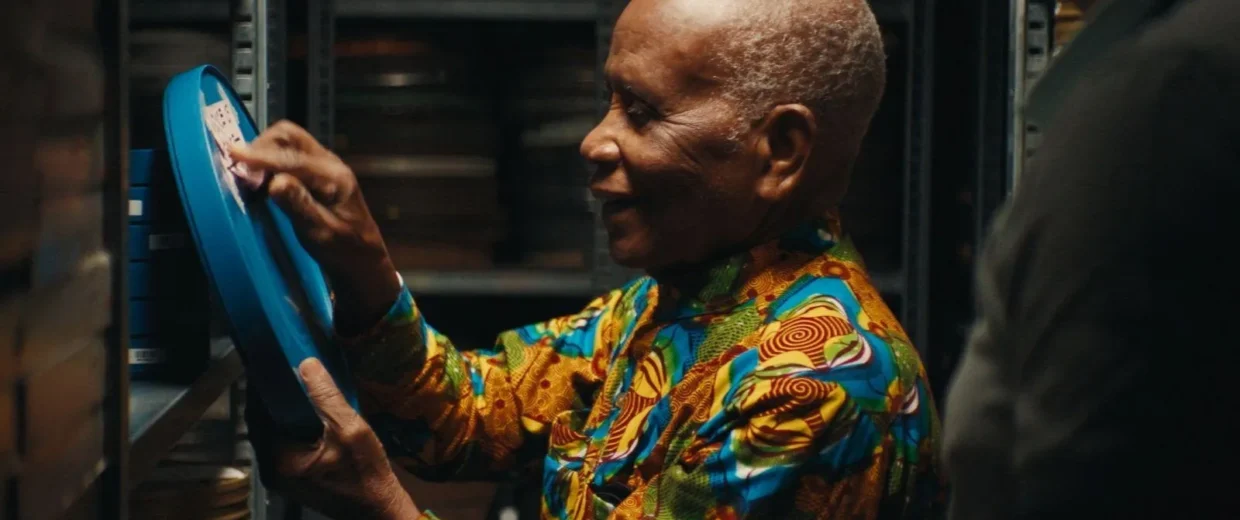
Hesse saved it. More than 1,300 reels. He had been Nkrumah’s personal cinematographer since the 1950s. He knew what he had. He hid what he could and waited, and guarded it, and waited some more. For sixty years, the most significant visual archive of African independence has been in the custody of one man.
That man is now ninety-three. His eyesight is fading. And at this writing, only fifteen minutes of the archive is in usable condition.
The documentary about his story is extraordinary. The documentary is not the point. The archive is the point, and the archive is in danger.
What Hesse Actually Has
The Eyes of Ghana, directed by Ben Proudfoot — a Canadian filmmaker who has won the Academy Award for Best Documentary Short Film twice — was born when Ghanaian journalist Justice Baidoo introduced Proudfoot to Hesse while Proudfoot was in Ghana shooting a UNICEF film. Hesse was ninety at the time. He told Proudfoot about the archive. He asked for help digitising it.
Proudfoot originally envisioned a short documentary. It was Moses Bwayo — the Ugandan filmmaker behind Bobi Wine: The People’s President — who told him to make it a feature. Bwayo understood what Proudfoot was looking at. So does anyone who has thought carefully about what those 1,300 reels contain.
Hesse filmed everything. State visits between Nkrumah and the leaders who were simultaneously building independent Africa — Julius Nyerere of Tanzania, Sékou Touré of Guinea, Modibo Keïta of Mali, Haile Selassie, Ben Bella, Lumumba. The formation of the Organisation of African Unity. The Casablanca Group. The meetings in which the political architecture of post-colonial Africa was being negotiated in real time, by the people who would have to live with the consequences. These are not symbolic events. They are the actual moments in which decisions were made that shaped every African nation’s subsequent history.
No other visual record of many of these events is known to exist. The coup destroyed what was in state custody. What Hesse saved is, in the most literal sense, irreplaceable. Proudfoot has said the footage “may not only rewrite Ghanaian and African history, but world history itself.” This is not promotional language. It is a description of what is on those reels.
The Deterioration Problem
Of more than 1,300 reels, fifteen minutes is currently usable.
The rest is in various stages of chemical deterioration — the vinegar syndrome, silver mirroring, and emulsion damage that attack film stock that has been stored for decades in conditions not designed for archival preservation. Hesse did what he could with the resources available to him across six decades. He is not a professional archivist. He is a filmmaker who understood that if he did not keep these reels, nobody would.
READ ALSO: Rwanda Did Not get Lucky At Cannes
The digitisation process that could halt and potentially reverse the deterioration requires equipment, funding, and specialist expertise that are not currently in place. Proudfoot has been public about this urgency since the film premiered in Toronto. At the documentary’s premiere screening in Accra — at the National Theatre, in April 2026 — he addressed the audience directly: “The goal is to make it so that no one ever drives by Kwame Nkrumah’s statue and says, who’s that? These films are Ghana’s visual memory. They cannot wait.”
At a screening at UniMAC-IFT on April 17, 2026, the conversation among Ghana’s film students turned to what the institutions responsible for cultural preservation in the country had done and were doing. The answers were uncomfortable. Hesse himself, in interviews conducted for the documentary, has spent decades advocating for digitisation. The advocacy has not yet produced the institutional response it requires.
The Documentary and Its Reach
Barack and Michelle Obama are executive producers on The Eyes of Ghana through their Higher Ground Productions company. The score was mixed at Abbey Road Studios by Kris Bowers. The film holds a 94% score on Rotten Tomatoes from its festival run. It is, by any measure, a film that has broken through to the level of visibility that its subject requires.
Anita Afonu — a Ghanaian filmmaker and Hesse’s mentee, a graduate of UniMAC-IFT, who appears in the documentary as his partner in the effort to recover and screen the archive — has said the film is also her story: a young filmmaker discovering, through her relationship with Hesse, that the visual history of her own country has been surviving against the odds in a private home, one generation removed from being lost forever.
The film is now at the New York African Film Festival, May 6–12, at Film at Lincoln Center. It will continue to travel the international circuit. The international attention is generating conversations about the archive that have not happened before at this scale.
What the Continent Needs to Do
The international festival circuit will not save those reels. Neither will a documentary, however acclaimed, however seen. What will save them is a funded, technically competent, institutionally supported digitisation project — and that project needs to be organised and resourced now, while Hesse is alive to provide the context that no written record can replace.
The Ghana Broadcasting Corporation, the National Film and Television Institute, the Nkrumah mausoleum and museum, the University of Ghana — the institutions with a mandate and a stake in this archive — have a window. The documentary has created visibility. Proudfoot’s public urgency has created pressure. The Obamas’ executive producer credit has created international attention of a kind that African archival projects almost never receive.
This window will close. Film deteriorates on a chemical timeline that does not wait for institutional processes. Every year that the digitisation does not begin is a year in which some portion of what Hesse saved becomes permanently unrecoverable.
The continent nearly lost this record to a coup. It would be an extraordinary failure if it lost the rest of it to inertia.
Rev. Dr. Chris Hesse is ninety-three years old. He kept the archive alive long enough for the world to learn it exists. The next part is not his responsibility.
The Eyes of Ghana screens at the New York African Film Festival at Film at Lincoln Center, May 6–12, 2026.
— Wanjiru Kamau covers African cinema and cultural preservation from Nairobi. She has reported on East and West African film archives for twenty-five years.