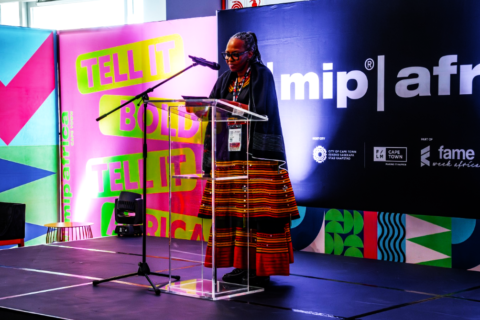
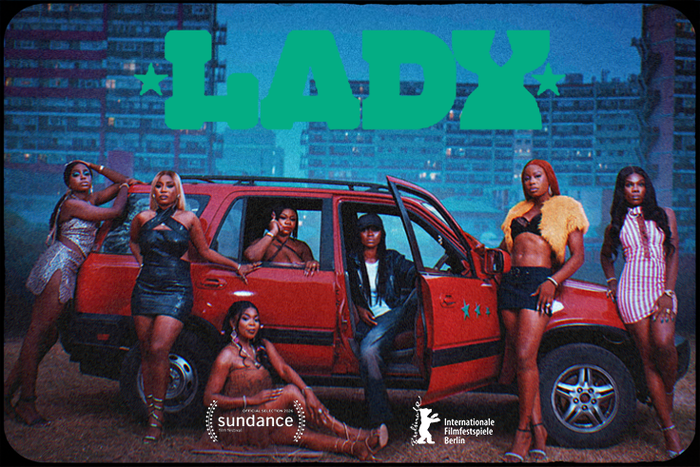
Olive Nwosu stood on stage at the Sundance Film Festival in January and said something that should have landed harder than it did: “Art travels across borders more easily than the bodies that make it.”
She was speaking about the women in her cast who could not travel to Park City for the premiere. Visas, costs, the bureaucratic weight of being an African body attempting to move through the Western world. The line was beautiful and it received the applause it deserved in that room. But it was also, if you have been watching this industry for as long as I have, a description of a problem that extends well beyond visa restrictions.
Art travels. Lady has been to Park City and Berlin. HanWay Films, one of the most respected independent sales companies in the world, is taking it to every market that matters. The BFI and Film4 and Screen Scotland financed the film’s existence, and they will ensure the film’s international visibility. The film will be seen. That is not in question.
The question is where.
As of this writing, there is no confirmed Nigerian theatrical release for Lady. There is no confirmed Ghanaian release, no Kenyan release, no South African release, no distribution deal for any African territory that Roll Call Africa has been able to verify. The film set in Lagos, shot in Lagos, made by a woman who grew up in Lagos, about women whose specific daily reality is Lagos — that film’s commercial life is organised, entirely, around London and Los Angeles and Berlin and New York.
The Pattern That Is Not New
I have been writing about this from Cairo for twenty-five years. The geography changes but the pattern does not.
In 2000, a North African film would win at Venice or Berlin, get acquired by a French or German distributor, screen at the Institut du Monde Arabe in Paris, and never be commercially available in the country that produced it. Cairo cinema audiences had no mechanism to see films by Egyptian or Tunisian or Moroccan directors that had been celebrated internationally, because the distribution infrastructure for those films ran through European independent distributors whose business model was calibrated entirely for European arthouse audiences.
READ ALSO: AMVCA is Now A French Award
In 2026, the same pattern plays out in West Africa with a different cast. Lady is a UK-Nigerian co-production financed by British institutions through a UK-based production company, handled for sales by a UK-based sales agent, having its commercial conversations with European and American distributors. None of this is suspicious or improperly arranged. It is simply how the financing structure determines the distribution outcome. The money came from London. The commercial interest follows the money back to London.
The same was true of Akinola Davies Jr.’s My Father’s Shadow at Cannes 2025. The same was true of C.J. Obasi’s Mami Wata at Sundance 2023. Both films were celebrated internationally. Neither had a straightforward, widely-accessible Nigerian theatrical run matching the scale of their international festival profile.
What Is Actually Different in 2026
The theatrical market in West Africa has matured significantly. The Nigerian box office broke records in 2025 and is tracking ahead of that pace in 2026. There is, for the first time in the history of the market, genuine commercial infrastructure capable of giving a film like Lady a real theatrical run — not a one-week prestige screening in one Lagos multiplex, but a genuine, multi-week, multi-city exhibition window.
That infrastructure exists. It did not exist in 2000, or 2010, or even 2015. It exists now.
What does not yet exist is the distribution relationship between internationally financed African films and African theatrical exhibitors. HanWay does not have a standing deal with FilmOne or Silverbird or Genesis. There is no established pipeline through which a film like Lady — which HanWay will sell to a French distributor for France, a German distributor for Germany, an American distributor for North America — would also arrive at the desk of a Lagos-based distributor as a commercial proposition rather than an afterthought.
Building that pipeline is not the responsibility of the filmmakers. It is the responsibility of the industry organisations and the distribution companies on both sides of the conversation. Moses Babatope’s Nile Media Entertainment Group, launched in Lagos in 2024, has positioned itself explicitly as a bridge between international and African theatrical markets. That positioning is exactly what this gap requires. Whether Nile — or whoever fills this role — can operationalise that bridge at the scale and speed that the current moment demands is the question that should be occupying industry conversations.
What We Owe Nwosu’s Film
Nwosu described Lady as her “love letter to the women of Lagos.” She spent months with Lagos sex workers, researching the film’s reality. Her cast is drawn from the city. Her cinematography — in luscious neon, kinetic and specific — captures Lagos as a living city rather than a developing-world backdrop.
The least the industry can do for a film made with that fidelity to its subject is ensure that the subjects can see themselves in it. Not at a festival. In a cinema. In their city.
If Lady arrives in Lagos cinemas in the next twelve months, Roll Call Africa will report it. If it does not, we will report that too — and ask who decided that the women of Lagos who made this film didn’t need to be the first audience for it.
— Nadia El-Rashid covers African film distribution and the continental exhibition landscape from Cairo. She has been writing about the gap between where African films are celebrated and where they can be seen since 2001.