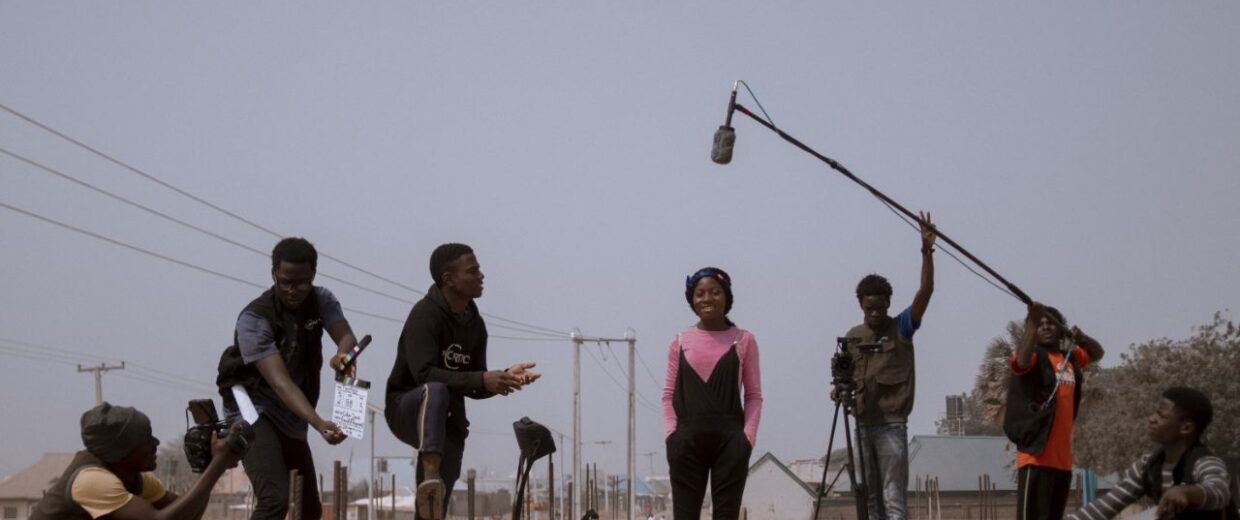
The story of The Critics Company is the story most people already half-know, because it went around the world once before. A group of teenagers in Kaduna, in northern Nigeria, taught themselves visual effects and filmmaking from YouTube tutorials. They worked with borrowed smartphones, improvised equipment, green screens made from whatever fabric they could find, and a level of technical ingenuity that produced science-fiction short films good enough to draw international attention and, eventually, support from figures in the global film and technology industries. They became a symbol — proof that the talent was there, everywhere, waiting only for the tools.
Now they are back with something more mature, and it has reached one of the most credible development platforms in world cinema. Their film Crocodile has been selected for Locarno Open Doors 2026 — the Swiss festival’s initiative supporting filmmakers from regions where independent cinema is most vulnerable, the same programme that has served as an early platform for filmmakers who later reached the major festivals. For RollCallAfrica’s Rising Watchlist, The Critics Company is not a curiosity or a feel-good story. They are the clearest evidence of where the next generation of Nigerian cinema is actually coming from.
Why They Belong on the Watchlist
The significance of The Critics Company is not that they overcame a lack of resources — though they did, and spectacularly. It is what their existence reveals about the distribution of talent versus the distribution of opportunity in Nigerian cinema. The formal infrastructure of Nollywood — the production houses, the film schools, the financing networks, the Lagos-centric industry ecosystem — never reached these young people in Kaduna. They built their capability entirely outside that infrastructure, from free tutorials and sheer determination. The talent was always there. The industry simply had no mechanism to find it.
That is the fact worth sitting with. If a group of teenagers in Kaduna can teach themselves world-class VFX from YouTube and reach Locarno, how much comparable talent exists across Nigeria — across the continent — that the industry’s infrastructure is not reaching? The Critics Company are not an exception to be celebrated and set aside. They are a signal about the scale of untapped capability that a better-built industry would be capturing. Every RollCallAfrica argument about infrastructure — the markets, the financing, the development labs — is ultimately about building the mechanisms to find and support the next Critics Company before they have to teach themselves everything from scratch.
What to Watch
Crocodile at Locarno Open Doors is the moment The Critics Company crosses from viral phenomenon to credentialed emerging filmmakers in the international system. Open Doors selection is a genuine marker — it puts them in the development pipeline alongside the projects that become the festival films of the next several years. The question now is whether the Nigerian industry, and the international system, will build the sustained support around them that turns a breakthrough into a career.
Their technical fluency is not in doubt — they proved that with borrowed phones. What they get now is access to the development infrastructure that can pair that fluency with the resources, mentorship, and financing to make films at the scale their ambition deserves. RollCallAfrica will be watching The Critics Company closely, because they represent something larger than themselves: the generation that will define Nigerian cinema in the 2030s is being built right now, and some of the most important members of it are people the industry almost missed entirely. Remember the name.
— Emeka Eze. RollCallAfrica, Lagos. 3 August 2026. Sources: Locarno Film Festival Open Doors 2026 official selection, The Critics Company public communications.