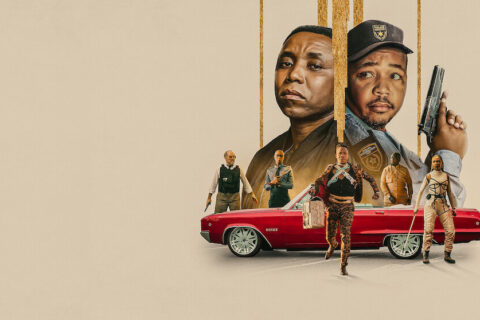
There is a version of the My Father’s Shadow story that the industry has been telling since Cannes 2025, and it is true as far as it goes. A British-Nigerian filmmaker makes his debut feature. He shoots on 16mm. He takes a semi-autobiographical script about a day in Lagos in 1993 — June 12, the day Nigeria voted and then had its vote annulled — and he renders it with an exactness that is visible in every frame. The film premieres in Un Certain Regard. It becomes Nigeria’s first official Cannes selection. It wins the Caméra d’Or Special Mention, a BAFTA nomination for Outstanding Debut, a British Independent Film Award, a Gotham Award. On Saturday night in Lagos, it wins Best Movie, Best Director, Best Writing, Best Music Score, Best Sound Design at the AMVCA 2026. Five awards. The night’s most decisive result.
That version of the story has a protagonist. His name is Akinola Davies Jr. He is the director. He is the face of the press tour. He is the one who walked the Cannes red carpet, gave the Cannes press conference, sat for the profiles in Dazed and AnOther and Deadline and The Guardian. He is, by any reasonable account, one of the most significant filmmakers to emerge from Nigeria in a generation, and the recognition he has received is merited.
But there is another version of the story. It begins not in a festival screening room, not on a Lagos film set, not in a Cannes press conference, but in a room somewhere in Nigeria, probably a decade or more ago, where a man who was working as a television screenwriter sat down and wrote a short story as a writing exercise.
The story was called My Father’s Shadow. He sent it to his younger brother unprompted.
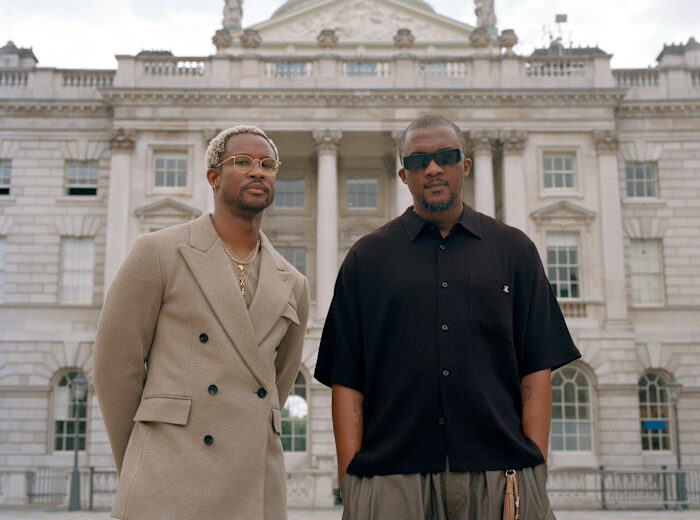
That man is Wale Davies. He is the older brother. He is the one the industry rarely discusses. He is the origin point of everything.
What the Short Story Was
Akinola Davies Jr. has described receiving the story in an interview with AnOther magazine, and the description is worth sitting with: “He sent it to me, really unprompted. I cried, as you can imagine, because our father passed when we were really young. I would have been 20 months and I think he would have been about three years old.”
Three years old. Wale Davies had three years with his father. Akinola had twenty months. A man died and left two boys behind — one of whom had the shadow of a memory, one of whom had essentially nothing. Wale Davies wrote the short story from the position of the child who had slightly more to remember and still could not hold it clearly.
That is the emotional and biographical territory at the centre of the film. A father who is mostly absent, suddenly present. Two boys who barely know him, spending one day in a city with him. The father as a figure assembled from the reports of others — from what their mother told them, from what people who knew him said in the years after he was gone: he was a rascal, he stole my girlfriend, he ran a record label. A man known more through the testimony of others than through the experience of his sons. A family rebuilding a portrait from fragments.
In 2012, Wale wrote the first full draft of the screenplay. By then he was living in Nigeria and working as a television screenwriter — building a professional skill set in an industry that in 2012 bore almost no resemblance to the one being celebrated at the AMVCA on Saturday. He was doing the practical work of writing for television while carrying this more personal material in his back pocket, waiting for the right form and the right collaboration.
The collaboration was with his younger brother, which meant it was a collaboration between two different kinds of memory and two entirely different creative orientations. Akinola has described their working dynamic with a precision that illuminates the screenplay’s final form: “I’m very introspective and confrontational in a way that’s compassionate, whereas my brother is more contextual. He’s more like, ‘One plus one equals two, but why?’ He’s more literal, and I’m more abstract and visual. He’s super-aware of politics, and the performance of being Nigerian. I’m more someone who falls in love with images.”
What this describes is not just a collaboration between two brothers. It is a collaboration between two complementary forms of intelligence — the political and the lyrical, the contextual and the visual, the person who wants to know why and the person who wants to know how it feels. The screenplay that emerged from that collaboration is simultaneously both of those things. That is not a coincidence. That is a structural achievement.
What Thirteen Years Means
Between the 2012 first draft and the 2025 Cannes premiere, Wale and Akinola wrote an earlier collaboration called Lizard during a ten-day trip to a location near the Volta River in Ghana, isolated, no internet. Lizard premiered at Sundance in 2020 and was nominated for Best British Short Film at the BAFTA Awards in 2021. Akinola won the Grand Jury Prize for Short Film. The collaboration worked. The brothers trusted each other’s creative instincts enough to keep returning to the bigger project.
They worked on the My Father’s Shadow screenplay in Jamaica. They worked on it again in Ghana. They debated their childhood recollections the way people debate things they cannot fully verify — not arguing about facts, because both of them knew the facts were largely unavailable, but arguing about the shape of what they felt. “He was very idolising of our father,” Akinola said of Wale. “I was more protective of our mother.” That difference — between the child who yearned for the father and the child who stayed closer to the mother who remained — is present in every scene the screenplay built around the two young brothers. Aki and Remi are not generic children placed in a political moment. They are specific emotional positions. They were worked out over thirteen years between two brothers who were also the boys.
Thirteen years is a long time to spend on a screenplay. It is also, when the screenplay is about memory, exactly the right amount of time. Memory does not improve with speed. It deepens with patience, with return, with the willingness to look at the same material from a different angle because you are now different from the person who looked at it last time. Wale Davies spent thirteen years asking the question the film ultimately asks: who was our father, really? The answer the screenplay arrives at is not a comfortable one. Folarin is charming and absent and complicated and flawed and capable of real tenderness. He is not a villain and he is not a hero. He is a man. A specific man in a specific Lagos in a specific political moment, with his sons seeing him, perhaps for the first time, as a person rather than a category.
That is a hard thing to write. It requires a discipline that sentiment wants to erode at every turn. Wale Davies held the line.
What the Screenplay Does
Most analyses of My Father’s Shadow focus on its direction — on Akinola’s choice of 16mm, on the intimacy of the camera’s relationship with Sope Dirisu’s face, on the hazy atmospheric quality that renders 1993 Lagos as a place both vivid and just out of reach. These are legitimate observations. The direction is extraordinary.
But direction renders. It does not invent. Every structural decision that makes the film cohere — the single-day architecture, the political backdrop as emotional weather rather than political argument, the choice to follow the boys rather than the father, the specific modulation of revelation so that what we learn about Folarin arrives at the precise moment we can absorb it — all of that is the screenplay. The direction makes it beautiful. The screenplay makes it true.
The single-day structure is worth considering specifically, because it is the most important decision in the film and it is a writing decision. The restriction of the story to one day is what gives the film its particular emotional compression. The audience knows, watching two young boys try to understand their father in real time, that this is the only day they will have — not because the film tells them so, but because the form creates that pressure. A film spread across weeks or months would allow for revision, for second chances, for the gradual understanding that extended time makes possible. The single day removes all of that. What happens today is what the boys will carry. The form is the argument.
That compression is Wale Davies on the page before Akinola ever lifted a camera.
Saturday Night
When Wale Davies won Best Writing at the AMVCA on Saturday, the ceremony had already distributed most of its major prizes. His brother had won Best Director. The film had won Best Movie. The major architecture of the night had been established. Wale Davies’s category was not the moment the evening turned on.
It should have been. Not because the other writing nominees were unworthy — they were not — but because the script Wale Davies wrote, or began, in Lagos as a writing exercise sometime around 2012 is the reason any of Saturday night happened. The script is why Akinola had something to direct. The script is why Sope Dirisu had something to inhabit. The script is why the real-life brothers who played Aki and Remi had scenes that required them to be specific rather than general, honest rather than performing. The script is why a jury at Cannes gave a Caméra d’Or Special Mention to a debut feature. The script is why Nigeria had its first film in the Cannes official selection. The script is why the AMVCA gave My Father’s Shadow five awards.
Every conversation about this film that centres entirely on the direction — and most conversations do — is telling an incomplete story. It is the version of the story that cinema culture consistently tells, because cinema culture has always been more comfortable with the image than with the words that determined what the image would contain. The director is the auteur. The screenwriter is the collaborator. That hierarchy is built into how we talk about film, and it misrepresents how films are actually made.
My Father’s Shadow is as much Wale Davies’s film as it is Akinola Davies Jr.’s. The industry knows this, in theory. In practice, it has given Wale Davies exactly one profile, one conversation, one piece that centres his contribution. This one.
What Comes Next
Akinola Davies Jr. has confirmed that his next project will be with his brother again. They want to investigate the Niger Delta region — the conflict, the generational trauma, the sacrifices made by the population, the biodiversity, the politics. They want to tell a simple story about a massive subject. The collaboration that produced My Father’s Shadow — Wale’s political contextualisation and Akinola’s visual poetry working against each other and together at the same time — will be turned toward one of the most consequential ongoing environmental and human rights stories on the continent.
That is a serious undertaking, and it begins with a screenwriter sitting somewhere and asking the question the film will eventually answer. It begins with Wale Davies doing the work that nobody watches because the camera is not present for it. It begins in the long before, with a blank page and a subject that resists easy treatment, and a writer who has already demonstrated that he is willing to spend thirteen years getting it right.
The AMVCA gave him Best Writing on Saturday night. The industry should give him a longer conversation than that.
He has earned it.
Emeka Eze is a RollCallAfrica staff writer covering craft, screenwriting, and the architecture of African cinema. He is based in Lagos.