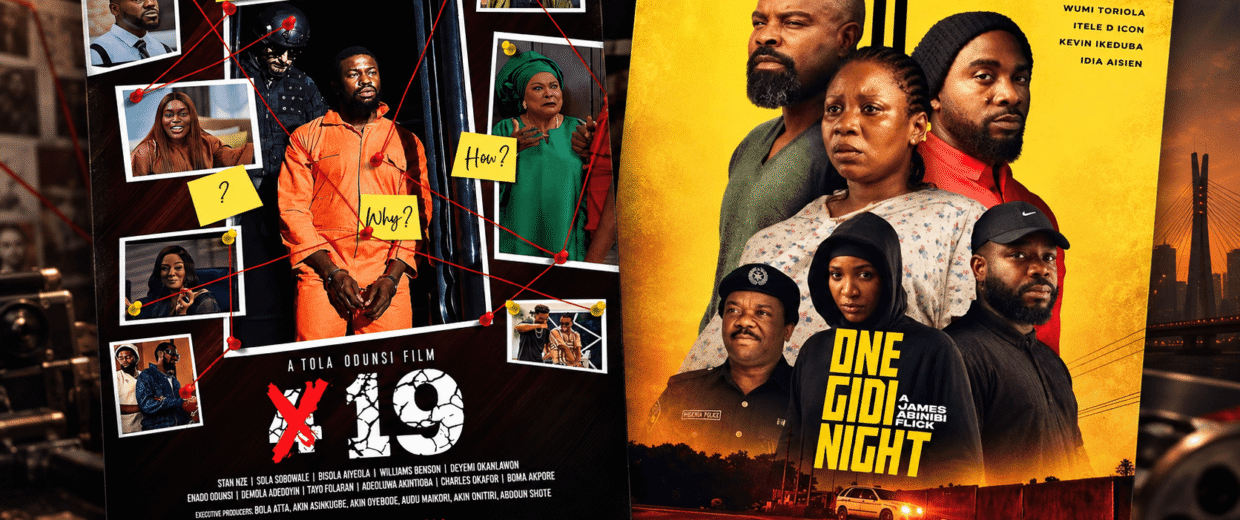
Two Nigerian thrillers are scheduled to enter cinemas on 11 September.
19, directed by Tola Odunsi, and One Gidi Night, written, directed and produced by James Abinibi, will arrive with different stories and creative teams. They will face the same commercial question.
Why must the audience see this film now, in a cinema, rather than wait for another release window?
That question is difficult for every theatrical title. It is particularly important for Nigerian films operating between event comedies, star-driven holiday releases and international productions carrying much larger campaigns.
A release date creates availability, not urgency
Getting a film into cinemas is a distribution achievement. It requires classification, delivery materials, exhibitor negotiation, publicity coordination and the confidence to expose the work to public ticket sales.
But availability is only the beginning. A cinema listing tells the audience where a film can be watched. It does not create a reason to rearrange a weekend around it.
Thrillers have a potential advantage because suspense can be communicated quickly. A threat, secret, pursuit or impossible decision gives a trailer a clear engine. The campaign can promise tension without explaining every relationship.
The risk is similarity. Posters filled with serious faces, weapons, dark colour grades and warnings can make several unrelated films look interchangeable. If the audience cannot describe the particular experience being sold, the film enters the market as another thriller rather than a specific event.
One Gidi Night is selling singular authorship
James Abinibi is credited as writer, director and producer of One Gidi Night, with FilmOne handling distribution.
That concentration of creative responsibility gives the project a clear authorial identity. It can also become a commercial asset if the campaign explains what makes an Abinibi film recognisable.
A filmmaker’s name becomes useful at the box office only when audiences connect it to an expected experience. The credit itself is not the brand. Repeated delivery, a visible body of work and consistent positioning create the brand.
For an independent producer, the theatrical release is therefore doing two jobs. It is attempting to sell tickets for the current film and building recognition that can lower the marketing burden of the next one.
The distributor’s task is to connect that authorship to a simple audience promise rather than asking the public to admire the number of credits.
19 has to make its title searchable and memorable
A numerical title can create curiosity, but it also carries a discovery problem.
“19” is brief, visually strong and open to interpretation. It is also a common number used across dates, ages, addresses and unrelated works. Search engines and social platforms need additional context to understand what a viewer is looking for.
The campaign should therefore use a consistent phrase around the title: the film name, director, lead cast and “Nigerian movie” or “in cinemas” language. Fragmented naming makes organic discovery harder at the point when trailers, interviews and audience reactions should reinforce one another.
This is not merely an SEO concern. Word of mouth depends on accurate recall. A viewer who cannot easily find the trailer, showtime or ticket page after hearing about the film is a lost conversion.
Opening together does not make them identical competitors
Two films can share a date without targeting exactly the same customer. Genre labels are broad. One thriller may sell action, another mystery, another crime or psychological tension.
The actual competition depends on cast appeal, rating, location, language, showtimes and the audience each campaign reaches. Both films will also compete against every other use of the customer’s time and money, including older cinema titles, streaming and social video.
That is why “support Nigerian films” cannot carry the full campaign. National identity may strengthen interest, but the ticket still needs a specific proposition.
The strongest positioning would allow a viewer to understand in one sentence why 19 is not One Gidi Night, and why either is different from the next imported thriller on the schedule.
Showtimes will reveal exhibitor confidence
The first meaningful commercial evidence will not be the premiere photographs. It will be the schedule.
How many cinemas carry each film? How many screenings are placed in evening and weekend periods? Does either title receive premium screens? What remains available after the opening weekend?
Screen count alone can mislead because session quality matters. A film with fewer well-placed shows can perform more efficiently than a title spread across weak times. Revenue per screen and admissions per session would provide a stronger comparison.
Neither film should be declared a hit or failure from a single ranking without that context.
Mid-scale films need disciplined marketing
Large releases can repeat a broad message until it becomes familiar. Smaller campaigns need precision.
The marketing should identify the most saleable conflict, the most credible audience segment and the pieces of content capable of moving that audience from awareness to a showtime. Cast interviews, clips and influencer posts are useful only when they reinforce the same promise.
Advance activity also matters. A theatrical film should enter release day with searchable ticket links, clear cinema information and a body of conversation. Waiting for opening weekend before concentrating promotion wastes the period when exhibitors are deciding whether initial demand exists.
After opening, the campaign should change. Audience reactions, specific scenes and the viewing experience become more persuasive than another version of the trailer.
The result should be measured beyond the winner
If one film grosses more than the other, the ranking will be easy to report. The industrial value lies in understanding why.
Did one receive more screens? Did a cast member convert a social following into attendance? Did the premise communicate more clearly? Did reviews change the second weekend? Did FilmOne’s distribution network give One Gidi Night an availability advantage?
A market learns when results are connected to decisions. Without that analysis, every release is treated as an isolated surprise.
The September 11 contest is therefore not simply between two titles. It is a test of whether Nigerian mid-scale thrillers can be positioned as cinema events without waiting for a holiday corridor or a record-size promotional budget.
The release date opens the door. The campaign, showtimes and audience response will decide whether either film remains in the room.