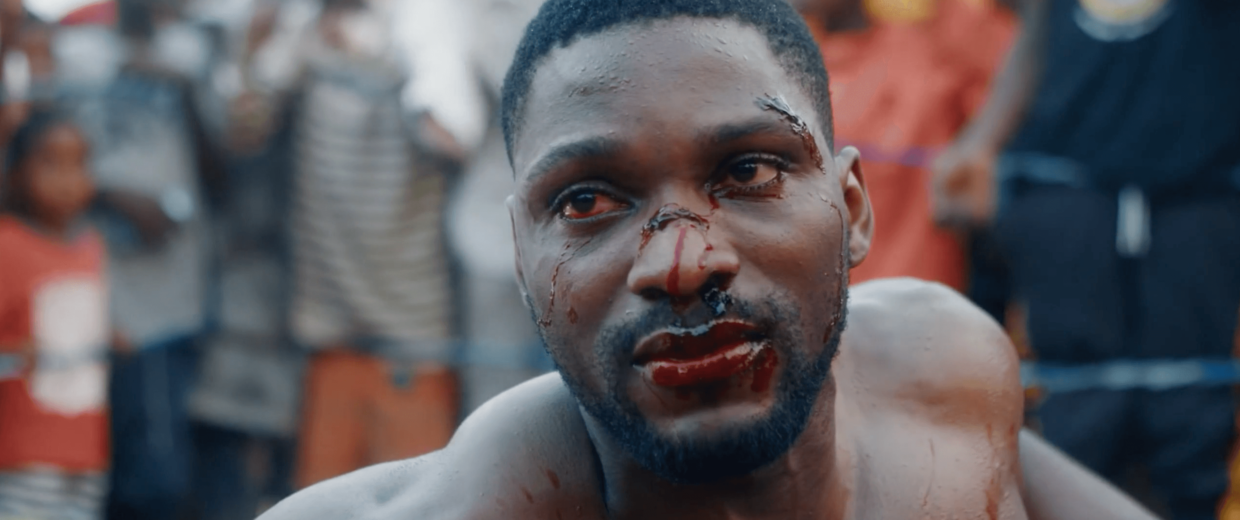
There is a specific thing that happens when an accomplished cinematographer directs their first film: you see the images before you see the story. The compositional intelligence that a DP has spent a career developing — the instinct for framing, for light, for the specific quality of a shot that makes it memorable — is the first thing to arrive on screen, and it arrives with a confidence that first-time directors who came up through writing or acting do not usually have. Ola Cardoso, who has been one of the most accomplished cinematographers working in Nigerian film — his work on Breath of Life established that — brings exactly this quality to Suky. The images are right before the story has fully earned them.
The film follows a young man on a quest for revenge following the brutal murder of someone close to him — a premise that has produced some of Nigerian genre cinema’s most effective work and some of its most formulaic. Cardoso, working from a screenplay by Isaac Ayodeji (whose writing is also in The Fire and The Moth this year, which tells you something about his current position in the craft hierarchy of Nollywood screenwriters), attempts the former. Keppy Ekpenyong-Bassey is in the cast, providing the kind of grounded authority that the film’s more intense sequences require.
The AMVCA gave Suky nominations in four craft categories: Best Art Direction (Victor Akpan), Best Score/Music (Isaac Ayodeji), Best Makeup (Ruth Harcourt), and Best Writing (Isaac Ayodeji). This nomination pattern — craft-heavy, acting-light — is exactly what you would expect from a film directed by a DP. The technical decisions are the strongest element. The emotional architecture that holds the technical decisions together is where the film still shows its debut seams.
The Visual Language
Cardoso shoots Suky with the specific patience of someone who knows how a shot can do the work that dialogue cannot. There are sequences in the film where the camera holds on a face longer than the conventional edit would allow, and the extended hold generates an intimacy that pays off in the subsequent scene. This is not accidental. It is the cinematographic intelligence being applied to directorial choices, and it works consistently enough to justify the 7.5 we are giving this film over a lower score that the narrative inconsistencies alone might warrant.
READ ALSO: On Becoming a Guinea Fowl — Rungano Nyoni Is Making the Film Language African Women Needed
The revenge narrative loses momentum in its middle section — the escalation of consequence that the genre requires becomes formulaic at the exact moment when the film’s visual confidence would have benefited from a more unexpected narrative choice. Ayodeji’s screenplay, which has been praised for its thematic precision in other reviews, sets up a moral question that the film does not fully pursue to its most discomforting conclusion. These are debut director problems, not debut director failures. They are the problems of someone learning to integrate their visual intelligence with their narrative intelligence in a single unified creative act, and Suky is far enough along that integration to be genuinely worth watching.
What RollCallAfrica is watching for in the second film: whether Cardoso gives his visual language a story that requires it fully, rather than a story that benefits from it partially. The eye is there. The question is the next screenplay.
Suky (2025) · Dir./DP: Ola Cardoso · Nigeria · Written by Isaac Ayodeji · Stars: Keppy Ekpenyong-Bassey · AMVCA 2026: 4 craft nominations