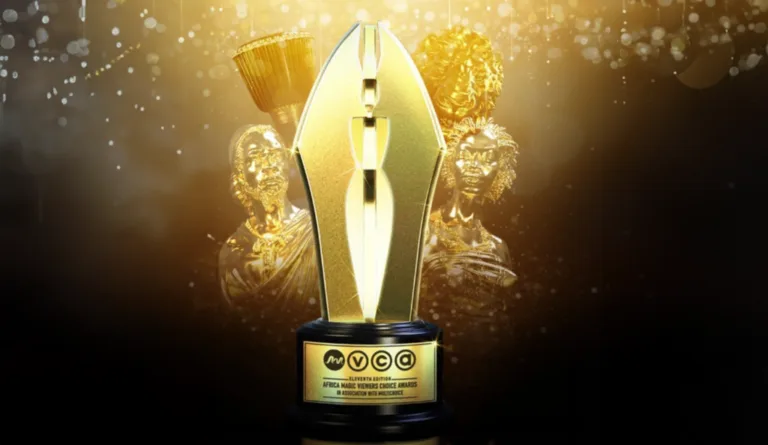
The 12th Africa Magic Viewers’ Choice Awards are over. And the industry will be thinking about what happened tonight for a long time.
Not because the ceremony was controversial — though some of its decisions will be debated. Not because it was unpredictable — though it produced genuine surprises. But because the jury, in the collective weight of its choices, made the most coherent and consequential statement the AMVCA has made in its thirteen-year history. It said: we know what the best film of the year was, and we are not going to pretend otherwise.
The best film of the year, in the AMVCA 12 jury’s assessment, was My Father’s Shadow.
Five Wins. One Film. The Cannes Film at the AMVCA.
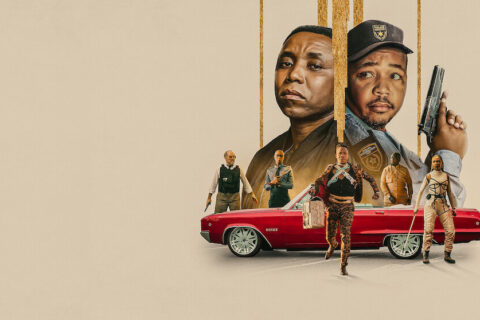
My Father’s Shadow won Best Movie, Best Director, Best Writing in a Movie, Best Sound/Sound Design, and Best Score/Music. Five wins from seven nominations. Akinola Davies Jr. directed it on 16mm in Lagos, set on June 12, 1993 — the day of the annulled presidential election — following a man and his two sons across the city as the political world collapses around their personal one. His brother Wale Davies co-wrote the screenplay. The film went to Cannes Un Certain Regard. It won Best Director at the British Independent Film Awards. It took two Gotham Awards. It earned a BAFTA nomination. It was the UK’s official Oscar submission. It holds 98% on Rotten Tomatoes. MUBI distributes it internationally.
And tonight, the AMVCA confirmed: yes, this is the film. Not despite its Cannes credential. Because of what it actually is — which is a formally precise, emotionally restrained, historically specific Nigerian film that refused every comfortable choice available to it and was made more powerful by every refusal.
Akinola Davies Jr. wins Best Director. The specific weight of that: he is, right now, at the Cannes Film Festival. His film is in the Cannes programme. He is also — simultaneously — the AMVCA Best Director. The international prestige circuit and the domestic awards circuit looked at the same work and arrived at the same conclusion. That convergence is the new condition of Nigerian cinema at its best. It is what RollCallAfrica has been arguing all year. Tonight the jury agreed.
Wale Davies wins Best Writing for the screenplay he co-wrote with his brother — a film about their own memory, their own family, June 12 seen through the eyes of a father and his sons. The writing prize going to a screenplay this personal is the jury saying: the most specific story in this category is also the most universal. That is always true of the best writing. The AMVCA recognised it here.
Best Sound/Sound Design and Best Score/Music both go to My Father’s Shadow. Pius Fatoke and CJ Mirra for sound. Duval Timothy and CJ Mirra for score. A film shot on 16mm with a documentary grain and a patience that digital cinema cannot reproduce — winning both sonic categories tells you that the jury was listening as carefully as it was watching.
Eighteen Nominations. One Win. The Gingerrr and Herd Story.
Going into tonight, Gingerrr and The Herd led the nominations with nine each. Between them: eighteen nominations. Between them, tonight: one win.
Gingerrr leaves with zero. Nine nominations, zero wins. The most-nominated film at the 12th AMVCA wins nothing. That is not a failure of the film as a commercial product — it performed, it found its audience, it generated the kind of social-media discourse that confirms cultural penetration. But the jury looked at nine categories and chose something else nine times. That is a verdict.
The Herd wins one — Best Supporting Actress for Linda Ejiofor. That is the only prize the most formally ambitious Nollywood debut of the year takes home from nine nominations. Daniel Etim Effiong’s film — ₦190 million at the box office, 30 million Netflix views, the most personal origin story behind any nominated film this year — loses Best Director to Akinola Davies Jr. and Best Movie to My Father’s Shadow. The jury did not diminish The Herd by making these choices. It placed it accurately in a field where a stronger film existed.
The combined failure of both nine-nomination frontrunners to win the night’s major prizes — to be displaced by a film with seven nominations and by a political drama nobody had centered in their predictions — is the most structurally interesting result the AMVCA has produced. It tells you the jury was not captured by narrative momentum or nomination volume. It was looking at the films.
Linda Ejiofor and the Double Crown That Has Never Happened Before.
Best Lead Actress: Linda Ejiofor — The Serpent’s Gift.
Best Supporting Actress: Linda Ejiofor — The Herd.
Two different films. Two different directors. Two different characters — one a lead, one a support. One night. The actress of the 12th AMVCA is not in any doubt. This has not happened at this ceremony before. It may not happen again for a long time.
What the double win says about Ejiofor is not merely that she is talented — the industry knew that. It says that she operates at a level of consistency where two different directors, making two different films for two different platforms and audiences, each looked at their casting and decided she was the right person for the most demanding role in their film. The Serpent’s Gift‘s lead: a woman navigating Igbo tradition and spiritual authority and the specific weight of a secret carried too long. The Herd‘s supporting performance: the wife who will not stop, the woman who carries the film’s emotional centre without the cinematically obvious scenes that would make the carrying visible.
Both performances, on the same night, confirmed by the same jury. The conversation about who is doing the most important work in Nigerian screen performance in 2026 now has a clear answer.
Colours of Fire — The Surprise That Was Not Random.
Colours of Fire was not in most people’s Best Movie conversations. Tonight it won three: Best Art Direction (Ajamolaya Bunmi), Best Costume Design (Valerie Okeke), and Best Lead Actor (Uzor Arukwe). Gabriel Afolayan’s political drama — set across the violence of Nigeria’s electoral history — swept the design categories and delivered the most unexpected individual acting award of the night.
Uzor Arukwe wins Best Lead Actor. Not Lateef Adedimeji, who carried the historical epic weight of Lisabi across nine nominations. Not William Benson, who bore the moral architecture of To Kill A Monkey. Not Wale Ojo, who was the defending champion. Uzor Arukwe, in a film that most awards forecasters had not placed in the acting conversation, gives the performance the jury identifies as the year’s most complete individual male screen achievement.
That result demands a revisiting of Colours of Fire by anyone who has not seen it. When the AMVCA jury chooses a Lead Actor from a film that was not the conversation, it is usually because that performance, on close watching, is doing something the louder films were not. Three wins for Colours of Fire is not a consolation distribution. It is an argument.
To Kill A Monkey — The Technical Verdict.
Kemi Adetiba’s Netflix series wins Best Cinematography (Kabelo Thathe), Best Editing (Daniel Anyiam), and Best Supporting Actor (Bucci Franklin). Three craft awards for a production the critical community spent the year debating.
The debate is now settled in a specific way: whatever the arguments about narrative, resolution, or Adetiba’s choice to abandon the King of Boys aesthetic for something rawer and smaller — the execution was impeccable. The jury looked at the craftsmanship in the image, the construction of the scenes, and Bucci Franklin’s contained, authoritative supporting presence, and said: this was made at the highest available standard. Three craft prizes say that louder than any review.
Kabelo Thathe’s win over Emmanuel Igbekele — who had three cinematography nominations for three different films — is the specific craft result of the night. Three nominations, zero wins for Igbekele. The industry should sit with that. It is not a dismissal. It is the AMVCA saying that the camera on To Kill A Monkey, in this specific year, was the most complete single achievement in the cinematography category. Igbekele’s nominations are already the acknowledgement. The win will come.
What Was Left Unsaid — And What It Means.
Sola Sobowale was nominated competitively for Best Lead Actress and Best Supporting Actress. She wins neither. She receives the Industry Merit Award. The AMVCA gave her the honour that sits above competition — and the competitive prizes went to Linda Ejiofor.
That is not a diminishment of Sola Sobowale. The Industry Merit Award is not a consolation. It is a different kind of accounting: the recognition that a career of this magnitude exceeds what any competitive category can hold. But the industry will ask whether a career of this magnitude, in a year of this calibre of work, deserved both — the merit recognition and a competitive win. The answer is probably yes. The AMVCA will have to sit with that question until next year.
Uche Montana receives the Trailblazer Award. A career still being built, recognised while it is building. That is the correct time to give a Trailblazer Award — not retrospectively, but as a statement of institutional confidence in a trajectory that is visible and accelerating.
Lisabi: A Legend Is Born wins Best Indigenous Language Film — West Africa. The historical epic takes the prize that was most specifically built for it. Hussaini wins Best Short Film for producers Orire Nwani and Josh Olaoluwa — the same Josh Olaoluwa whose One Woman, One Bra is currently playing New York and London. Two international milestones and an AMVCA short film prize in the same calendar year from the same producer.
The Full Winners.
Best Movie: My Father’s Shadow
Best Director: Akinola Davies Jr. — My Father’s Shadow
Best Writing in a Movie: Wale Davies — My Father’s Shadow
Best Writing in a TV Series: Annette Shadeya, Natasha Likimani, Mkamzee Mwatela, Arnold Mwanjila, Makgano Mamabolo — MTV Shuga Mashariki
Best Lead Actress: Linda Ejiofor — The Serpent’s Gift
Best Lead Actor: Uzor Arukwe — Colours of Fire
Best Supporting Actress: Linda Ejiofor — The Herd
Best Supporting Actor: Bucci Franklin — To Kill A Monkey
Best Cinematography: Kabelo Thathe — To Kill A Monkey
Best Editing: Daniel Anyiam — To Kill A Monkey
Best Sound/Sound Design: Pius Fatoke and CJ Mirra — My Father’s Shadow
Best Score/Music: Duval Timothy and CJ Mirra — My Father’s Shadow
Best Art Direction: Ajamolaya Bunmi — Colours of Fire
Best Costume Design: Valerie Okeke — Colours of Fire
Best Makeup: Hakeem Onilogbo — Warlord
Best Indigenous Language Film — West Africa: Lisabi: A Legend Is Born — Lateef Adedimeji
Best Documentary: Beyond Olympic Glory — Shedrack Salami
Best Short Film: Hussaini — Orire Nwani and Josh Olaoluwa
Best Digital Content Creator: Leave To Live — Emmanuel Kanaga and Sophia Chisom
Trailblazer Award: Uche Montana
Industry Merit Award: Sola Sobowale
What the AMVCA 12 Said About Nigerian Cinema in 2026.
Earlier this week, we wrote that the AMVCA nominations were a document. Tonight’s results are the second half of that document. Read together, they say something clear.
Nigerian cinema in 2026 is not one thing. It is not the commercial ensemble film that fills multiplexes on public holidays. It is not the streaming series that draws thirty million views. It is not the political drama that won three design awards from a film nobody expected. It is not the 16mm debut that went to Cannes on the day of the annulled election. It is all of those simultaneously — and the conversation about which one represents “real Nollywood” is the wrong conversation.
What the AMVCA 12 said, in distributing its prizes across My Father’s Shadow, To Kill A Monkey, Colours of Fire, and The Herd, is that the industry is wide enough to honour all four at once. The most formally ambitious film wins the most prizes. The most precisely crafted film wins the craft prizes. The most surprising performance wins the acting prize. The double crown goes to the actress who was working at the highest level across the most different demands.
That is an industry in conversation with its own complexity. That is the AMVCA doing its job.
The 12th edition of the Africa Magic Viewers’ Choice Awards was held at Eko Hotel and Suites, Lagos, on 9 May 2026. Hosted by Bovi Ugboma and Nomzamo Mbatha. Head Judge: Joke Silva. Headline sponsor: Don Julio.
— Adaeze Okoye and Rotimi Fash. RollCallAfrica, Lagos. 9 May 2026.