Filed from the Croisette · Friday, 8 May 2026 · Exclusive
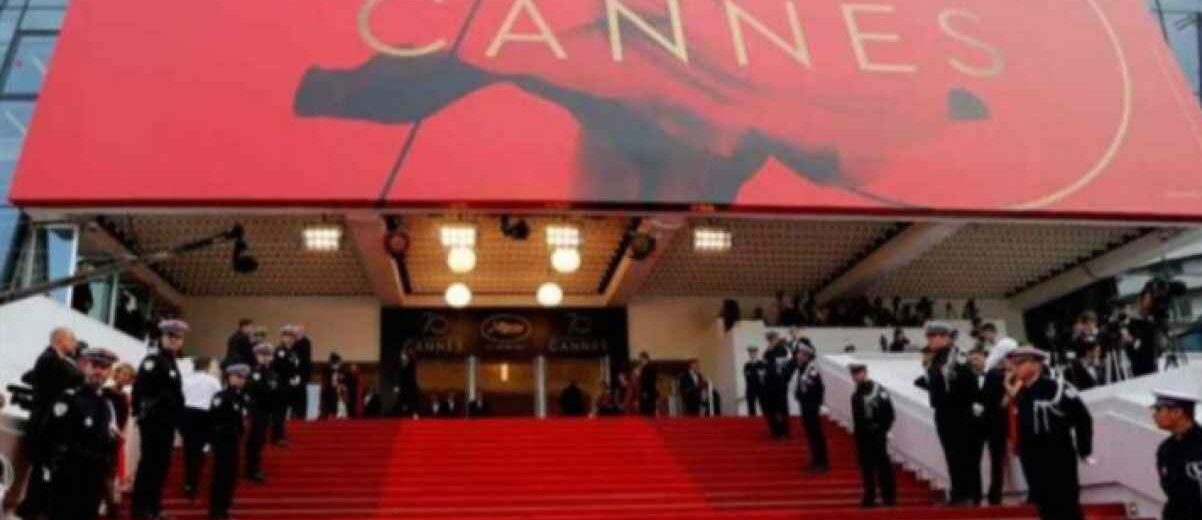
The 79th Cannes Film Festival opens on Tuesday. The red carpet goes out. The jury takes its seats. The world’s cameras turn toward a film that most people attending this festival will never be able to see publicly in their home countries. The spectacle begins.
But I am not here for Tuesday. I am here for now — the four days before the festival opens, when the Palais des Festivals fills not with critics and celebrities but with producers and distributors and sales agents and financiers who are here to make the deals that determine whether the films that need to exist will exist. The Cannes market opened before the festival does. It always has. And for African cinema in 2026, the pre-festival week is carrying more institutional weight than anything that will happen under the lights.
I have been covering Cannes since 1999. I have never arrived in a buildup week that felt like this one.
The Nomadic Film Space — The Story That Broke This Morning
At 6am French time today, Variety published an exclusive: a new traveling market platform called Nomadic Film Space — curated by pan-African film studio Yetu (Un)limited, in partnership with Ctrl + Alt + Shift, Sanusi Development Studio, and Kiasi — is launching with a series of events on May 14 and 15 at the Cannes Marché du Film.
I want to be precise about what this is because the press release language — “fill a critical gap in the international film industry by connecting African and diaspora creative producers with private equity and institutional capital” — is exactly the kind of sentence that sounds important and says very little on its own. So let me say what it means in practice.
On May 14, at the Marché du Film’s Producers Network, Nomadic Film Space will run a workshop titled “Producing the Future: Innovative Financing Models for African Cinemas.” The session opens with Women in Film’s content analysis framework and ecosystem mapping in Nigeria and Kenya. Then a panel featuring leaders from Docubox, Afreximbank, and the Great Lakes Creative Producers Lab. Later that same day, a dedicated case study on Afreximbank’s CANEX Creations investment strategy — how it selects projects, how it structures financing, how it builds cross-territory partnerships. This is the session where a producer from Nairobi or Ouagadougou or Accra sits in a room and learns, in practical terms, how the largest African institutional film investor makes its decisions. Information that was previously available only to those with existing CANEX relationships becomes accessible.
On May 15, at the Hotel Canopy, the second edition of the African and Diasporic Audience Development Think Tank. Launched by Yetu (Un)limited in 2025 in Salvador, Brazil, it produced case studies and audience design frameworks examining how African cinema builds the revenue-generating audiences it needs to sustain itself commercially. The Cannes session presents the Brazil findings and sets the strategic framework for an ongoing support platform.
Nomadic Film Space is backed by Afreximbank, Film Fund Luxembourg, SACD (France, Belgium and Canada), Institut Français, SODEC, and Téléfilm Canada. When that specific combination of institutional backers signs onto the same platform, you are looking at the full weight of public film financing in the Francophone world aligned behind an African-led market initiative. That is not a press release. That is a structural event.
What I Have Been Watching This Week
I arrived in Cannes on Tuesday. Since then I have been doing what journalists at the market do: walking the Palais corridors, sitting in the café terraces on the Croisette, attending the early market meetings that begin before the official programme opens. I want to tell you what the atmosphere is, because atmosphere is intelligence.
The African presence in the pre-festival market week is the largest and most organised I have seen in twenty-five years of attendance. Not just in the number of individuals present but in the quality of their institutional preparation. The producers I have spoken to this week are not here looking for someone to notice them. They are here with specific targets — specific distributors they need to close, specific co-production conversations they need to advance, specific financing gaps they need to fill. The shift from hoping to be seen to knowing what they need is the structural change this market has been building toward for years.
Ben’Imana is the name I hear most frequently in corridor conversations. MK2 Films has confirmed international sales for the film. In the Palais, MK2’s reputation is its own credential — the Paris company will be in Cannes this year carrying Official Competition titles including Marie Kreutzer’s Gentle Monster and Andrey Zvyagintsev’s Minotaur. When a sales company carries an African debut alongside those titles, it is making a statement about where it places that film in the hierarchy of the work it believes in. A decade in the making, Ben’Imana is an African majority co-production, with a cast composed almost entirely of non-professional actors. Dusabejambo and her producer Samantha Biffot have been building this film through the development circuit since 2022. The Cannes selection is the outcome of patience and rigour. What MK2’s involvement means is that the patience is about to be rewarded commercially.
Clarissa is quieter in the corridor conversations, because NEON’s acquisition before the premiere means the deal is done. There is nothing left to negotiate. The Esiri Brothers are at the Directors’ Fortnight. They do not need to work the market this week because the market already came to them. That is what it looks like when a film has the infrastructure it needs before the festival begins.
The AFRIFF Goes to Cannes pitch sessions run May 15 to 18. Five Nigerian and African projects presenting to international distributors and sales agents. One will receive a €10,000 minimum guarantee from Sideral Cinema. I have spoken to several of the filmmakers this week and what strikes me is their level of preparation. They are not arriving to make an impression. They are arriving to close specific conversations that began at AFRIFF in Lagos in November.
The Conversation I Keep Having
There is a conversation that I have had in some form with every African producer I have encountered this week. It circles around the same central anxiety: the financing infrastructure is growing — CANEX is real, the Nomadic Film Space is real, the co-production frameworks are developing — but the distribution infrastructure has not kept pace.
“African storytelling is increasingly legible, competitive and valued at the highest global levels. This matters for reputation, deal-flow and future financing.” That sentence is true. It is also incomplete. Legibility at the highest global levels has not yet translated into the domestic and regional distribution infrastructure that would allow African films to build sustainable commercial careers on the continent itself. My Father’s Shadow is on MUBI in the UK, Ireland, North America, and Turkey. Where is it playing in Accra? In Nairobi? In Cairo? The question is not rhetorical. It is the central market problem that the conversations in the Palais corridors this week keep returning to.
The Nomadic Film Space’s audience development think tank is the most direct institutional response to this problem that I have seen at Cannes. The Brazil pilot session generated audience design frameworks that try to answer, concretely, how you build the revenue-generating African audience that makes African cinema commercially self-sustaining rather than perpetually dependent on international institutional support. I will be at both sessions on May 14 and 15. RollCallAfrica will report from them in full.
Four Days
The festival opens Tuesday. Ben’Imana screens in Un Certain Regard on May 14. Congo Boy screens in Un Certain Regard. Clarissa screens in the Directors’ Fortnight. Four African films in the official selection of the most important film festival in the world.
But Tuesday is not when this story begins. The story begins now — in the market, in the corridor conversations, in the Nomadic Film Space sessions, in the AFRIFF pitch meetings, in the deals being structured this week that will determine whether the films that should exist in 2027 and 2028 will have the financing and the distribution they need to reach the audiences that are waiting for them.
I am here for that story. RollCallAfrica will be here all week.
Full market coverage begins Monday. Ben’Imana screening response: Wednesday. Clarissa Directors’ Fortnight response: to follow. AFRIFF pitch session report: May 16.
— Amara Diallo. Roll Call Africa, Cannes. Friday, 8 May 2026.
Sources: Variety (exclusive, 8 May 2026 — Nomadic Film Space launch at Cannes), Deadline (April 2026 — Ben’Imana/MK2), Variety (February 2026 — African filmmaking talent/market analysis), RollCallAfrica correspondent reporting from Cannes.