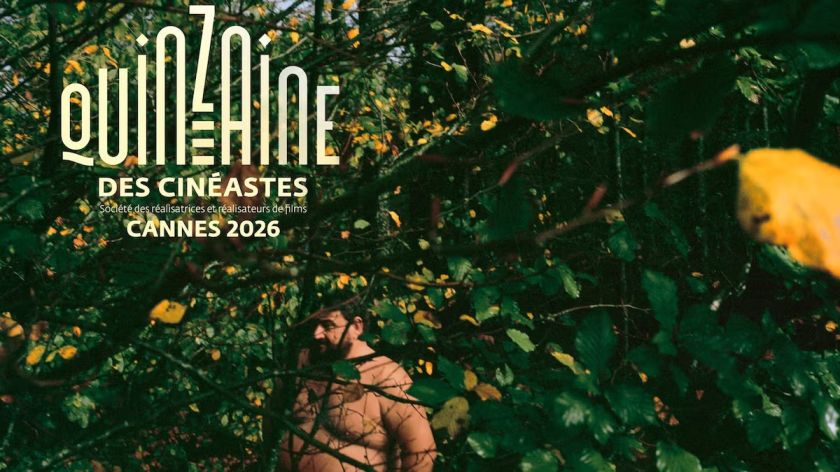
It is Day Two of the 79th Cannes Film Festival and I have been in this building since before the opening ceremony. I want to write about something specific that happened yesterday, in the first hours of the Directors’ Fortnight, that captures the condition of African cinema at Cannes 2026 more precisely than any statistic or selection announcement can.
I was standing in the corridor outside the Fortnight screening room, talking to a Cameroonian producer I have known for twelve years, when a French journalist walked past and stopped to ask what we were waiting for. “Clarissa,” the producer said. The French journalist wrote something in his notebook and said, “Ah — the Lagos one.” Not “the Esiri Brothers.” Not “the NEON film.” The Lagos one. He has not yet seen it. He has already categorised it by its geography rather than its formal ambition or its commercial positioning or the fact that it is a Virginia Woolf adaptation starring Sophie Okonedo and Ayo Edebiri and David Oyelowo and financed by CANEX Creations and acquired by NEON before it screened anywhere.
This is not a complaint about one French journalist. It is a description of the condition. African films at Cannes — even the ones that arrive with everything the industry says it wants — are still encountered through the frame of their origin first and their content second. The twenty-five years I have been coming here have not fully changed that. What has changed is the films. They no longer need the framework to validate them. The framework is the problem that remains.
What Clarissa Carries
Clarissa arrives at the Directors’ Fortnight as the Esiri Brothers’ second feature. Their first, Eyimofe (This Is My Desire), premiered at the Berlinale in 2020 and won five Africa Movie Academy Awards. That is not a debut trajectory. That is a career already underway. What the Fortnight selection of Clarissa represents is not discovery but confirmation — the international film circuit recognising that the work it saw at the Berlinale five years ago was the beginning of something rather than an exception to a general pattern.
The film is a reimagining of Virginia Woolf’s Mrs Dalloway transposed wholesale from Edwardian London to contemporary Lagos. Shot on 35mm across Lagos and Delta State in late 2025, it unfolds over a single day as a society hostess — played by Sophie Okonedo — prepares for an evening gathering while confronting memories, past relationships, and the life she has built. David Oyelowo, Ayo Edebiri, Toheeb Jimoh, India Amarteifio, and Nikki Amuka-Bird fill the world of the film. NEON acquired distribution rights before the premiere. CANEX Creations Inc. produced it, which means African institutional capital financed a film that a major American distributor wanted before it screened publicly at any festival. That is not a marginal outcome. That is the most commercially sophisticated path a Nigerian film has ever walked.
I will write about the film after I see it. What I am writing now is about the context — about what it means that the most commercially and formally ambitious Nigerian film in the Cannes 2026 programme is in the Directors’ Fortnight and not in the Competition. The Competition has twenty-two films and zero African directors. Zero. The most important film festival in the world, in a year when Nigerian cinema has just swept its domestic awards ceremony and when three African films are in the official selection, finds no African director worthy of the Competition.
That absence is a conversation the Croisette has not yet had loudly enough.
What Ben’Imana Carries Tomorrow
Ben’Imana screens in Un Certain Regard tomorrow — May 14. Marie-Clémentine Dusabejambo’s debut feature is the first film by a Rwandan director in the Cannes official selection. The film follows Veneranda, a survivor of the 1994 genocide against the Tutsi in Rwanda, who has built a life around healing and reconciliation. When her teenage daughter becomes pregnant, the unresolved trauma resurfaces. It is a Rwanda-Gabon-Côte d’Ivoire-France-Norway co-production, with MK2 Films handling international sales. The Caméra d’Or jury has already acknowledged its quality by including it on the longlist.
I spent twenty minutes yesterday talking with a member of the Un Certain Regard jury — I will not name her — and she used one word about Ben’Imana that tells you everything: “necessary.” Not “interesting.” Not “beautiful.” Necessary. The word a jury member chooses before the competition has formally opened tells you something about the weight of their attention.
Four Days After Lagos
Four days ago, the Africa Magic Viewers’ Choice Awards gave My Father’s Shadow Best Movie, Best Director, Best Writing, Best Score, and Best Sound. Akinola Davies Jr.’s 16mm Lagos film swept the domestic ceremony in the same week his country’s industry arrived at Cannes with a NEON-acquired Directors’ Fortnight feature. These are not separate events. They are the same story told in two registers — the domestic and the international, finally running in parallel rather than in opposition.
The French journalist who called Clarissa “the Lagos one” will see it this week. He will write about it afterward. What he writes will be different from what he would have written before he saw it. The films are doing the work that the frameworks cannot. They are making themselves impossible to categorise narrowly. That has always been the only strategy available and it is, finally, working.
I will be at Ben’Imana tomorrow. I will be at Clarissa when it screens. Full dispatches from both to follow.
— Amara Diallo, Cannes. RollCallAfrica, 13 May 2026. Sources: Cannes 2026 official programme, Hollywood Reporter, Criterion Collection (Directors’ Fortnight lineup), France 24.