This morning at 8:30am, Ben’Imana — the first film directed by a Rwandan filmmaker to premiere in the Cannes Official Selection in the festival’s seventy-nine-year history — has its world premiere in Un Certain Regard. Marie-Clémentine Dusabejambo walks up the stairs of the Palais des Festivals with a cast that is, as she has said, ninety percent Rwandan and one hundred percent African. The Caméra d’Or jury, which awards the best debut film across the entire festival in all its sections, has this film on its longlist.
Four days ago, in the same section, something else happened that I have been carrying with me since.
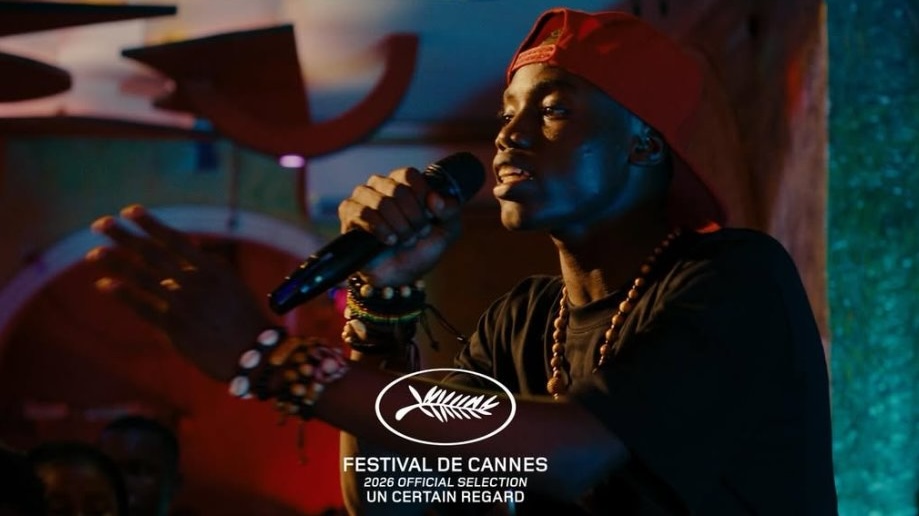
Rafiki Fariala — twenty-eight years old, born in South Kivu, in the war-torn east of the Democratic Republic of Congo — introduced his cast and crew at the Un Certain Regard premiere of Congo Boy by singing. Not announcing. Not speaking. Singing. The song was his own. It was written for the film. The audience, which had no idea this was coming, fell into a silence and then into something that cannot be manufactured or orchestrated: genuine collective feeling. The premiere ended with a prolonged standing ovation that reporters from AFP, present in the room, described as the audience “cheering to its feet.” Two of the African words that describe what happened that night — ubuntu, kweli — do not fully translate into French or English.
What Congo Boy Is
I want to be specific about Rafiki Fariala’s life because the film is specific about it. He was seventeen years old. His father and mother were in prison. The fighting that had torn through Bangui in 2013 — the anti-Balaka militias moving through the city, the specific organised violence of Central African Republic’s civil war — was everywhere around him. He was working for a colonel, as many young men in desperate circumstances did, when the anti-government militia overran the compound. He was shot. He was left for dead. He still has the scar — he showed it to AFP journalists after the screening. “I still carry it,” he said. “If I take off my shoe, you will see.”
For a year after that, he was alone, navigating survival for himself and his siblings. Music saved him — he became a local rap star in Bangui, performed in the city’s clubs, built an identity out of the specific creative defiance of making art in conditions designed to prevent it. Congo Boy is that story. Not a version of it. Not an adaptation. The story itself, told with a cast found in a street casting in Bangui, with a lead actor — Bradley Fiomona Dembeasset, eighteen years old — who sings the songs himself, because Fariala taught him to sing them, because those songs are the film’s emotional spine and they had to be real.
The film follows Robert, a teenage Congolese refugee in Bangui, whose parents are in prison and who brings up his brothers and sisters alone while pursuing a dream of music against every obstacle the civil war and the poverty and the absent state place in his way. It is ninety-five minutes. It was produced by Boris Lojkine, whose previous film Souleymane’s Story won the Jury Prize and Best Actor at Cannes Un Certain Regard in 2024. International sales are handled by The Party Film Sales. French distribution by Jour2Fête.
Fariala said after the premiere: “For a year, I was completely on my own. I tried to find solutions for my family. Thankfully, music saved me. Without music, I don’t know if I would be here in front of you.” He said this standing in the Cannes press room, having just introduced his cast by singing to the festival’s Un Certain Regard audience, having just watched his own survival story receive a standing ovation from some of the most discerning film audiences in the world.
Ben’Imana This Morning — And What Lee Isaac Chung Gave the World
Dusabejambo’s story begins almost twenty years ago, when she was a recent college graduate brought into the Almond Tree filmmaking collective — a Kigali-based production outfit set up by then-unknown filmmaker Lee Isaac Chung, who was filming his first feature, Munyurangabo, in Rwanda. Chung, who later made Minari — the Korean-American film that went to Sundance, won the Grand Jury Prize, received BAFTA and Academy Award nominations, and was one of the most celebrated films of its year — was then a young filmmaker working in Kigali with local talent. Under Chung’s tutelage, Dusabejambo directed the short film Lyiza, which premiered at Tribeca and began her ongoing cinematic exploration of the Rwandan genocide and its aftermath.
Ben’Imana is the feature that has been building from Lyiza for nearly a decade. Co-written with Delphine Agut, developed at La Fabrique Cinéma, the Marrakech Atlas Workshops, and the Ouaga Film Lab, funded by the Berlinale’s World Cinema Fund, the Red Sea Souk Post-Production Award ($40,000), and Norway’s Sørfond. The film stars a cast of almost entirely non-professional actors — Clémentine U. Nyirinkindi, Kesia Kelly Nishimwe, Leocadie Uwabeza, Antoinette Uwamahoro, Aime Valens Tuyisenge, with the only professional actress being Isabelle Kabano, known from Abderrahmane Sissako’s Black Tea. French distributor: Ad Vitam. French sales: MK2 Films.
Dusabejambo said of the Rwandan women who shared their memories of the genocide with her during the research: “People gave so much to this film. Now I have a story to go back and tell them.” That is the most complete description of what a documentary sensibility does when it becomes a fiction film: it accumulates the truth of actual lives and returns it to those lives as something they can watch and recognise.
What the Croisette Is Holding
In the same week: Clarissa standing ovation on May 16 (Nigerian/UK, Lagos). Congo Boy standing ovation on May 15 (DRC/CAR). Ben’Imana world premiere on May 19 (Rwanda). Three African films. Three standing ovations or their equivalent. All in the official selection or the Directors’ Fortnight. All made with casts that are overwhelmingly from the countries whose stories they tell. None of them made with the expectation of Cannes. All of them made with the expectation of truth.
There is a word Rafiki Fariala used in his press conference that I have not heard used at Cannes before in quite this way. He was asked what he wanted audiences to understand about the Central African Republic after seeing his film. He said: “I want them to know that we were a family. We have always been a family. The war came and politics tried to separate us. But the music — the music is still ours.”
That is the sentence the Croisette is holding this week. The music is still ours.
— Amara Diallo, Cannes. RollCallAfrica, 19 May 2026.
Sources: Channels Television (AFP, 16 May 2026 — Congo Boy premiere/standing ovation, Fariala interview), Orange Actu (AFP — Fariala gunshot wound interview), Cannes 79th official programme (19.05.26 Ben’Imana screening time), Variety (May 2026 — Ben’Imana/Dusabejambo/Chung), Wikipedia (Congo Boy production credits), Cineuropa (15 May 2026 — Congo Boy review, The Party Film Sales), Ateliers Varan official (Congo Boy selection).