I want to begin with what the Central African Republic has in terms of film industry infrastructure. There are no cinema screens. There is no national film fund. There is no state body for film production. There is no formal film education institution beyond the workshops that the French NGO Ateliers Varan periodically runs in Bangui. There is no distribution network for domestic films. There is, effectively, no industry. There is just the city, the story, and the people who decide to make films there regardless.
Rafiki Fariala decided to make films there. In 2018 and 2019, he attended a documentary filmmaking course at Ateliers Varan in Bangui — the organisation that has been running intensive documentary workshops across Francophone Africa and globally since 1981. He is from the DRC. He has been living as a refugee in Bangui for years. In 2022, his debut documentary — We, Students!, which he made about his friends and his life in the CAR — became the first Central African film to be selected for the Berlinale’s official programme. It won the Silver Stallion for Documentary at FESPACO 2023.
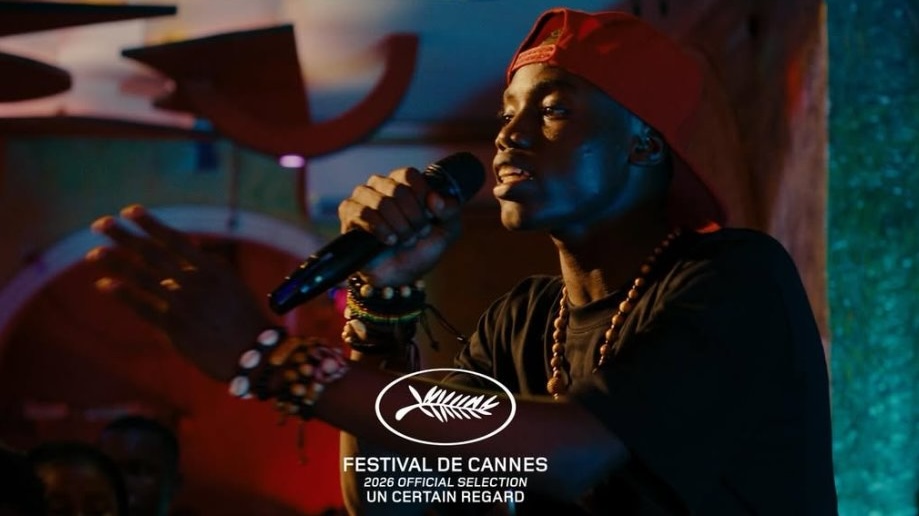
His first fiction feature, Congo Boy, screens in the Un Certain Regard section at the 79th Cannes Film Festival on May 15, 2026. It is the first fiction feature by a Central African filmmaker in the Cannes official selection.
I have been covering Francophone African cinema for twenty-five years. I have watched filmmakers from Burkina Faso, Senegal, Mali, Côte d’Ivoire, Cameroon — territories with at least some production infrastructure, some national fund, some institutional support — build careers across decades of labour. What Fariala has done in four years, from a territory with none of that, is not a story about talent alone. It is a story about a specific architecture of determination that the African cinema development ecosystem made possible — and about a man who used every brick of it.
The Secret
Congo Boy is semi-autobiographical. Not “inspired by” in the soft sense that most films deploy that phrase. Autobiographical in the way that the producer, Vicky Nelson Wackoro of Makongo Films in the CAR, described it to Variety when the project was presented at Atlas Workshops in Marrakech in 2022: “It’s a film, but also his own story with his family living as refugees in the Central African Republic for many years without even being able to tell their secret to those nearest to them.”
The secret was their status. A family from the DRC, living as refugees in Bangui, not telling the people around them what they were. The specific vulnerability of that concealment — building a life in a city on the condition that the city does not know the terms on which you are there — is the texture the film is made of. The protagonist Robert, seventeen years old, cares for his four younger siblings while trying to build a music career after both parents are imprisoned. In 2013, Fariala himself launched a music career in Bangui, recording several tracks. The film is not an allegory. It is a portrait.
“Living as a refugee is living like a free prisoner,” Fariala told Variety at the time. “You have to keep hoping. Being a refugee isn’t an end in itself. That was my motivation for writing my project Congo Boy.”
The Architecture of Getting Here
The path from that statement at Atlas Workshops in 2022 to the Cannes Un Certain Regard selection in 2026 is worth mapping in detail, because it is the clearest available illustration of how a filmmaker from a territory with no film industry builds an international career — and what the pan-African and international development infrastructure looks like when it functions as intended.
Fariala began with Ateliers Varan in Bangui in 2018-2019 — the foundational technical training. We, Students! was produced with that foundational training and reached Berlinale in 2022, which created the international visibility that allowed him to present at Atlas Workshops in Marrakech later that year. Atlas is the Marrakech International Film Festival’s co-production development programme — it is where projects are taken from concept to the point where they can be seen by international co-producers and distributors. Congo Boy was developed there. It was then developed at Ouaga Film Lab in Ouagadougou — the Burkina Faso development programme attached to FESPACO that has been one of the most productive incubators of Francophone African cinema for two decades.
The production structure reflects the co-production relationships those development programmes built: Makongo Films (CAR) as lead producer, Kiripifilms (DRC) as co-producer, Unité (France) and Karta Film (Italy) as international co-producers. Sales through The Party Film Sales — which also handles the work of Maïmouna Doucouré, Alain Gomis, and other significant Francophone African directors. The architecture of the film’s existence, in other words, is the full continental and international development ecosystem operating as it was built to operate: from the Varan workshop in Bangui to Atlas to Ouaga Film Lab to Berlinale to Cannes Un Certain Regard.
What This Film Is at Cannes
I am writing this from the Croisette, where I have been for several days before the festival opening. The African presence at this edition is the richest in my experience — three films in Un Certain Regard, Clarissa in the Directors’ Fortnight, Arthur Harari in Competition. Within that presence, Congo Boy occupies a specific position: it is the film that has travelled the furthest from the institutional conditions in which it was made. The distance between the CAR — a country currently governed by a military junta, in the midst of a years-long security crisis, with no film industry infrastructure — and the Palais des Festivals is not a geographic distance. It is a structural one. The story that Rafiki Fariala could not tell the people closest to him will be told at Cannes on May 15 to an audience of international distributors, programmers, and critics who will carry it forward into the world.
He said that being a refugee is not an end in itself. That you have to keep hoping. The film at Cannes is what the keeping-hoping looked like, concretely, across eight years of building in a country where there was nothing to build with except the story and the people willing to help tell it.
Congo Boy (2026) · Dir. Rafiki Fariala · Cannes Un Certain Regard, May 15 · CAR/DRC/France/Italy · Produced by Makongo Films · International sales: The Party Film Sales
— Amara Diallo, Cannes. RollCallAfrica, May 2026. Sources: Variety (November 2022), Ateliers Varan announcement (April 2026), Afrocritik/Culture Custodian (April 2026), Cineuropa (May 2026), The Party Film Sales.