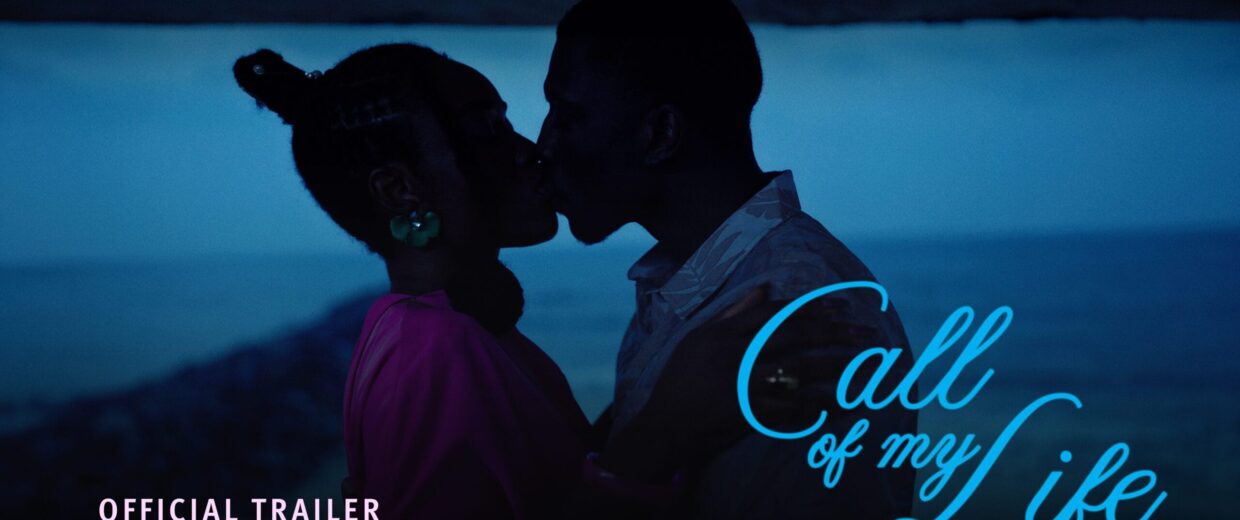
There is a specific kind of creative confidence in writing yourself a role and then filling it completely. Uzoamaka Power wrote the screenplay for Call of My Life, stars in it as its lead, and uses both positions to create the kind of romantic comedy heroine that Nigerian cinema has been circling without quite centering: a Catholic Igbo woman who wants love loudly and without apology, who has been told that her wanting is too much, and who spends the film learning that it is not.
Soluchi — Power’s character — works at a call centre in Lagos. She is heartbroken; her ex-boyfriend Kalu (Zubby Michael) left her, and the specific shape of that loss, the particular kind of man Kalu is, is one of the film’s most observant details. Kalu is not a villain. He is the kind of man many Nigerians know from their own families: a provider by instinct, not by temperament; dependable in a way that slowly stops being sufficient; incapable of giving the kind of sustained emotional presence that Soluchi needs and has been made to feel ashamed for needing. Zubby Michael plays him without caricature, and that restraint is the correct choice. The film does not need a bad man. It needs a man who simply isn’t enough for this woman, and Michael delivers exactly that.
Into this carefully calibrated heartbreak comes Eli (Andrew Bunting) — a wrong number that becomes a right one, a voice on the phone that responds to Soluchi’s voice the way she has always wanted someone to respond, with immediate and uncomplicated delight. The film knows that this premise is a genre contract rather than a realistic scenario. Producer Blessing Uzzi said in the film’s production materials: “At a time when many feel jaded about love, I wanted to create a film that is hopeful and uplifting, a story that reminds us to believe in love again.” That is the film’s declared intention and it fulfils it honestly.
What Dammy Twitch Brings
Dammy Twitch is a music video director — his credits include Davido’s “Kante” and Angélique Kidjo’s “Joy” — and his feature debut carries the specific visual sensibility of someone who has spent years making things beautiful in a compact frame under time pressure. Call of My Life was shot across Lagos, Abuja, and Enugu, and each city’s distinct aesthetic registers differently in the film. The cinematography is warm without being saccharine, polished without the over-lit corporate gloss that undermines the intimacy of lesser Nigerian romantic comedies.
The directorial intelligence is most visible in the film’s musical sequences. Johnny Drille and Cobhams Asuquo both deliver live performances within the narrative — not as music video inserts but as scenes the story earns. Cobhams Asuquo in particular, whose musical identity is built on the specific intersection of love, faith, and longing that this film occupies, fits the world of Call of My Life as though he were written into it. Twitch’s comfort with performance — with framing a musician in a way that gives both their artistry and their presence on screen full weight — is the most distinctly his contribution to the film, and it is considerable.
Power and Bunting, who previously played a couple in Power’s own short film My Body, God’s Temple (2025), have a specific chemistry that no first-time pairing could manufacture. They already know each other’s rhythms, and the film benefits from that knowledge in the scenes where Soluchi and Eli are figuring out whether they are what they think they are. The figuring-out is the best writing in the screenplay — the specific texture of two people who like each other too much to be casual about it.
Where It Strains
The film goes through its romantic comedy obligations with full awareness that they are obligations. The coincidences that bring Soluchi and Eli into each other’s physical orbit — meeting at the same restaurant, a mutual friend who turns out to be a coworker — are genre conventions the film accepts rather than interrogates. Within the contract of the romantic comedy, this is permissible. But the screenplay’s best moments — the specific cultural texture of Soluchi’s Igbo-Catholic identity, the way her faith and her femininity sit together without conflict — are sharp enough to make you wish the structural scaffolding had been built with the same care as the character at its centre.
Nkem Owoh and Patience Ozokwor, in supporting roles, are used well but not used enough. The film has two of the most beloved and technically accomplished performers in Nollywood in supporting positions, and the screenplay gives them the functional scaffolding of the genre rather than the scene-stealing space that the cast’s collective talent warrants. This is the specific constraint of a first feature working within a budget and a genre brief simultaneously — you cast the best people available and then discover, in the edit, that there was not always room for everything they could have given.
The Specific Thing This Film Gets Right
The thing Call of My Life gets right that most Nigerian romantic comedies do not is its refusal to treat Soluchi’s wanting as a character flaw she needs to correct. The conventional arc of the Nollywood romance involves a woman who is too something — too ambitious, too independent, too loud, too much — learning to become less in order to deserve love. Soluchi does not become less. She becomes more certain that she deserves the kind of love that responds to her at full volume. The screenplay is making a specific feminist argument inside a mainstream commercial romantic comedy, and it makes it without ever stopping to announce itself. That is the hardest kind of argument to make in this genre, and Power makes it.
Bluhouse Studios, which also produced Freedom Way (2024), is building a consistent identity: technically polished, commercially aware, creatively specific in its representation of Nigerian women who are not asking permission to be themselves. Call of My Life is the most explicitly romantic entry in that identity so far. It is not the most formally ambitious film of 2026. It is exactly as ambitious as it needs to be, and it delivers on that ambition without compromise.
RCA Score: 7.2 — Watchable
Call of My Life (2026) · Dir. Dammy Twitch · Written by and starring Uzoamaka Power · Nigeria · 2026 · Production: Bluhouse Studios (Blessing Uzzi) · Distribution: FilmOne Entertainment · Cast: Uzoamaka Power, Andrew Bunting, Zubby Michael, Beverly Osu, Nkem Owoh, Patience Ozokwor, Broda Shaggi, Justin ‘UG’ Ugonna · Music performances: Johnny Drille, Cobhams Asuquo · Shot in Lagos, Abuja, Enugu · Released: 15 May 2026.
— Adaeze Okoye. RollCallAfrica, Lagos. 21 May 2026.
Sources: Bluhouse Studios official press release (April 2026), FilmOne Entertainment, African Movie Database (production data).