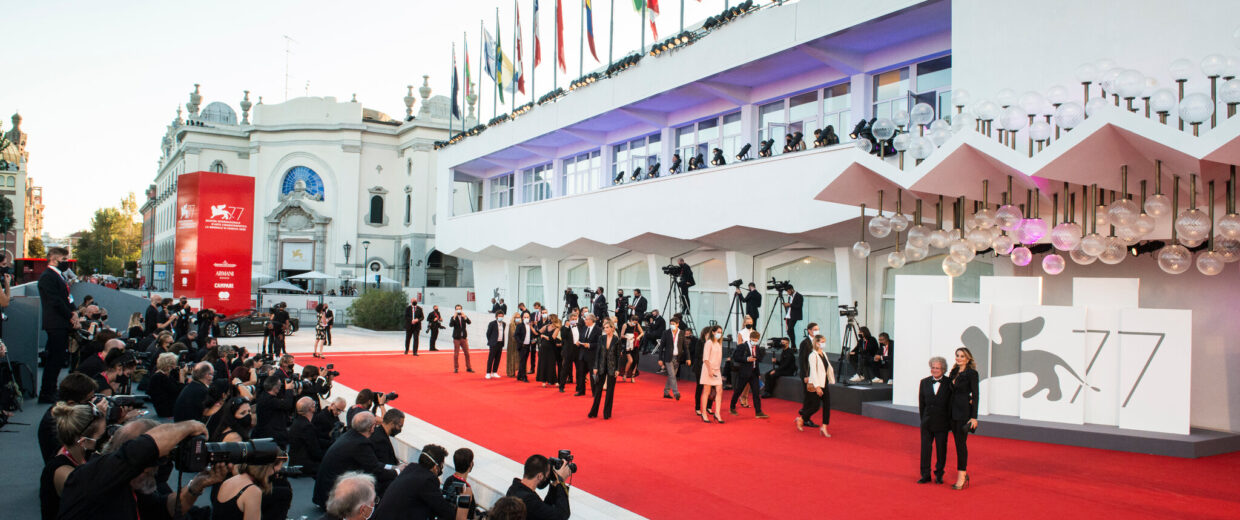
The 83rd Venice International Film Festival runs from September 2 to 12, 2026, and the pattern this publication has tracked all year holds on the Lido: African cinema is no longer an occasional guest at the major festivals but a consistent presence across their sections. Venice has unveiled a lineup in which African filmmakers and productions have secured places across both the competitive official selection and the festival’s influential industry programmes.
The headline selection is in Orizzonti — the section dedicated to debut films, emerging talents, and new aesthetic trends in world cinema, and historically one of Venice’s most important discovery platforms. Cameroonian filmmaker Auguste Bernard Kouemo Yanghu competes with La Maison du Vent (House of the Wind), a film that follows an eighty-year-old woman who forms an unexpected bond with a young woman in her neighbourhood — a relationship that gradually reshapes her family, her responsibilities, and her hopes. A Cameroonian film in the Venice Orizzonti competition is a significant marker: Cameroon is not among the African film industries that regularly reach the major festivals, and a debut feature competing at the Lido expands the map of which African cinemas are being seen internationally beyond the usual Nigeria–South Africa–Morocco axis.
The Gap-Financing Market
Beyond the screening selection, the more structurally consequential African presence at Venice 2026 is in the Venice Gap-Financing Market — the three-day project financing programme running September 4 to 6 during the festival. Four African projects have been selected among 66 titles from around the world in the final stages of development and financing: three Moroccan projects (Don’t Let the Sun Go Up On Me, Stallions, and Wolfmother) and one Kenyan title (Tithes & Offering, a fiction project from Tony Koros developed under the Biennale College Cinema programme).
RollCallAfrica has argued repeatedly through 2026 that the festivals demonstrate African talent while the markets build the infrastructure that sustains it. The Gap-Financing Market is exactly the infrastructure that matters. These are films in the final stretch before production — the point where a financing gap can kill a project that has everything else in place. Four African projects in that programme means four African films closer to existing because of what happens at Venice this September. That is worth more to the long-term health of the continent’s cinema than any single competition slot.
The Moroccan Strength
Three of the four African Gap-Financing selections being Moroccan is worth naming. Morocco has quietly built one of the most internationally connected film industries on the continent — a deep co-production infrastructure with Europe, a festival circuit anchored by Marrakech, and a generation of filmmakers moving fluidly between Moroccan and European production systems. The Moroccan presence at the Venice market is the visible result of that infrastructure. It is the model that the rest of African cinema is working to build: the connective tissue between African stories and the international financing that lets them reach the screen at scale.
The Kenyan selection, Tithes & Offering, extends the East African momentum that has run through 2026 — from Ben’Imana‘s Caméra d’Or to the East Africa Content Marketplace in Nairobi. Developed through the Biennale College Cinema programme, the same initiative that produced One Woman One Bra, it is another Kenyan project moving through the international development pipeline toward completion.
RollCallAfrica will be covering Venice 83 across its run, tracking both the Orizzonti competition and the market outcomes. The Lido in September is now a fixture on the African film calendar. The continent is not visiting. It has a permanent seat.
— Amara Diallo. RollCallAfrica. 3 August 2026. Sources: La Biennale di Venezia official (83rd Venice International Film Festival lineup and Gap-Financing Market selections), Venice Biennale College Cinema programme.