Kamo State does not need Starlomo to introduce him to Nigerian audiences.
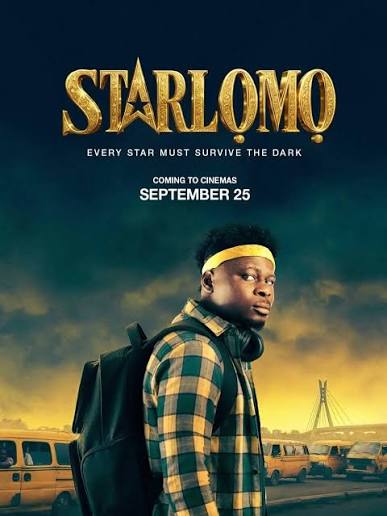
The comedian and actor, whose real name is Akinyoola Ayoola, has spent years building recognition through digital comedy. On September 25, that recognition enters a different economy when Starlomo opens in cinemas nationwide.
The film is directed by Kayode Kasum, stars Kamo State alongside Odunlade Adekola, Ibrahim Chatta, Lateef Adedimeji, Oluwabukunmi Adeaga-Ilori, Abiola Adebayo and others, and is produced through Film Tribe Media, FilmOne Studios and Kamo State’s production company. FilmOne Entertainment is distributing.
The interesting question is not whether Kamo State has an audience. It is whether that audience behaves differently when the content is no longer free.
Digital attention and theatrical demand are different assets
Social platforms allow creators to build characters, recurring jokes, familiarity and personal brands without waiting for a television network or film studio to provide exposure. That lowers one of entertainment’s biggest costs: discovery.
But digital reach can hide a difficult conversion problem. Watching a skit requires seconds, a phone and little direct payment. Watching a film in a cinema requires transport, time, a ticket and a decision to choose one title over every competing form of entertainment available that day.
The gap between those behaviours is where Starlomo becomes commercially useful.
The film has to be larger than the creator brand
Starlomo is being positioned as a Lagos story about ambition, survival, family and resilience rather than an extended skit. Kasum brings an established theatrical directing profile, while the ensemble cast gives the project recognition beyond Kamo State’s own following.
That matters because creator-led films can fail when the entire proposition is simply: you like this person online, so pay to see more of the same.
A cinema film has to justify the scale of the format.
The involvement of FilmOne Studios, Film Tribe Media and FilmOne Entertainment makes the project a hybrid proposition: digital celebrity supplies awareness, while established film infrastructure supplies production and theatrical access.
Opening weekend is only the first conversion metric
If the film opens strongly, the industry should look beyond the headline gross. Where do admissions come from? Does performance hold beyond Lagos and the South West? Do showtimes survive into a second week? Does social engagement correlate with actual ticket sales by city?
Those numbers would help separate fandom from purchasing behaviour.
That distinction matters to producers considering other creators with large online followings. A follower count can make a pitch deck attractive, but theatrical economics require evidence that the audience will cross a paywall.
Creators are becoming their own pre-release media channels
Kamo State’s advantage is not only fame. It is distribution before distribution. A creator with an active community can repeatedly place trailers, behind-the-scenes clips and ticket calls in front of viewers without buying every impression from an external media platform.
That can reduce customer-acquisition cost, but it can also create misleading confidence. Online engagement is often strongest around personality and short-form moments. A feature film needs sustained interest in a story.
The strongest creator-led campaigns use the creator to open the door, then give the film enough identity to keep selling after the personality-driven launch.
Starlomo is a test for a wider creator economy
Nollywood has a growing class of skit makers and digital personalities who can command large audiences before a feature is announced. That changes casting, marketing and financing conversations.
Starlomo gives the industry a clean case because Kamo State is not merely appearing in the film. He is also a co-producer. His audience is therefore part of the commercial logic.
By the end of the theatrical run, the most useful number may not be how many people follow Kamo State online. It will be how many of them paid to follow him into a cinema.