
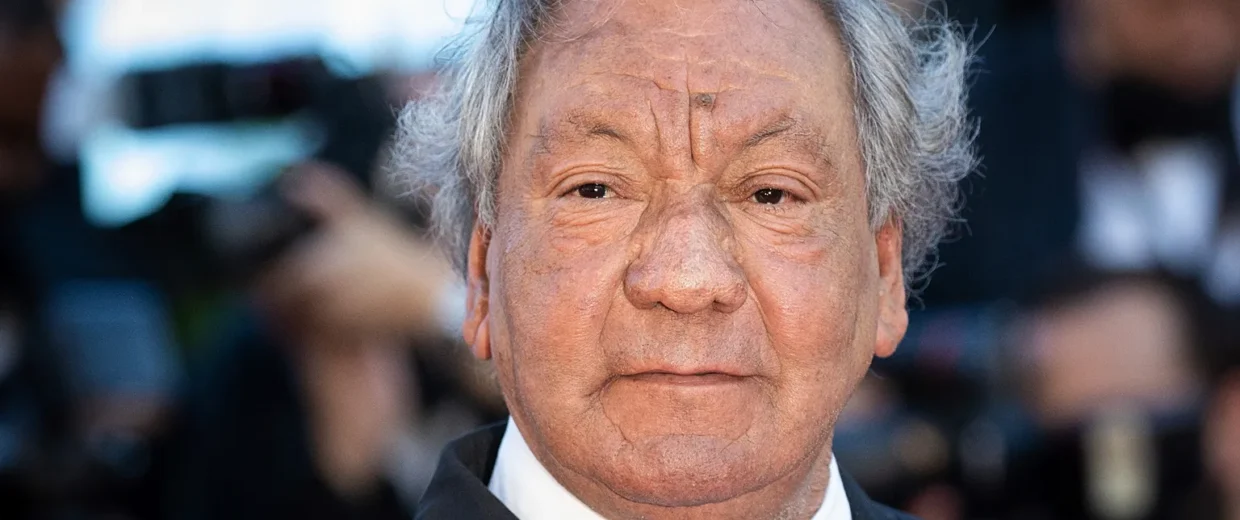
Tony Gatlif spent much of his career filming people who could not be contained by the borders drawn around them.
They travelled through countries, languages and musical traditions. They carried exile with them, but they were never reduced to victims of it. In Gatlif’s cinema, movement could mean displacement, survival, resistance or freedom. Music often said what dialogue could not.
The Algerian-born French filmmaker died on 2 September at the age of 77. According to a statement from his family, he died from a health problem while working on a historical film project in Arles, southern France.
His death closes a career of more than 20 films, but it should also reopen an African conversation about where Gatlif belongs in film history.
He left Algeria, but Algeria did not leave the films
Gatlif was born Michel Dahmani in Algiers in 1948, with Berber and Roma heritage. He left Algeria for France in 1960 during the war of independence. He was 12.
That early rupture became more than biography. It shaped the questions his films repeatedly asked: What happens when a person leaves a country but continues to carry it? Who decides where someone belongs? Can music preserve an identity when geography, politics and official history fail?
Gatlif eventually took his professional name from a park in Algiers. Even the identity under which he made his films retained a connection to the city he had left.
His career began in the 1970s. By the early 1980s, Roma lives and histories had moved towards the centre of his work. He was not approaching that world as a fashionable subject or an occasional social concern. It became the ground from which he built a cinema about marginalisation, movement and cultural survival.
Latcho Drom made music the map
His international breakthrough was Latcho Drom, released in 1993. The film follows Roma music and movement across a route that stretches from India towards Spain. It does not depend on a conventional narrator explaining the community to an outside audience. Songs, faces, landscapes and performances carry the history.
The film won the Un Certain Regard award at Cannes. More importantly, it established the method that would define Gatlif’s strongest work. Music was not decoration placed over the image. It was evidence, memory and structure.
That approach continued through films including Gadjo Dilo, Vengo, Transylvania, Korkoro and Djam. Different countries and musical traditions entered the frame, but the deeper concern remained consistent: cultures that official institutions had pushed to the edges were still speaking, dancing and remembering.
Gadjo Dilo, released in 1997, won a Silver Leopard at Locarno and a César for its music. The film follows a French traveller searching for a Roma singer in Romania. Again, the journey is not merely a plot device. It becomes a way of testing the distance between fascination and understanding.
Exils turned the journey towards Algeria
In 2004, Gatlif made Exils, the film that most directly confronted his Algerian roots. It follows two young people travelling from France through Spain and Morocco towards Algeria. The route reverses the familiar direction of migration. Instead of leaving North Africa for Europe, the characters move towards the history from which they have become disconnected.
Gatlif won Best Director at Cannes for the film.
Exils matters within African cinema because it refuses a clean separation between North Africa and Europe. Its characters occupy both spaces and feel completely secure in neither. Algeria is memory, destination and unresolved inheritance at the same time.
That condition remains familiar to generations of African and diasporic filmmakers. Their work is often sorted according to passports, financing structures or festival categories that cannot fully describe the lives inside the films. Gatlif’s career demonstrated that cinema could work inside that uncertainty rather than tidy it away.
He filmed communities without making still photographs of them
There is always a danger when filmmakers represent communities that have been exoticised, criminalised or treated as culturally frozen. The camera can turn difference into spectacle. It can admire music and costume while ignoring political reality.
Gatlif’s work was not beyond criticism, but his films usually resisted the museum approach. His characters were rarely presented as relics from a disappearing world. They argued, desired, performed, travelled and made decisions. Tradition was active rather than decorative.
His use of music was central to that achievement. Performance allowed people to occupy the frame on their own terms. It also prevented the films from becoming solemn exercises in worthy representation. Anger and historical pain existed beside humour, sensuality and celebration.
This is one reason his work travelled widely without becoming generic. The films crossed borders because they were committed to particular rhythms and communities, not because they removed those differences.
A useful legacy for African filmmakers
African film is still frequently discussed through national labels that are necessary for funding and classification but insufficient for understanding the work. Algerian film. Nigerian film. Senegalese film. South African film. The labels locate a production, but migration, colonial history and co-production regularly complicate them.
Gatlif’s career offers another way to think about belonging. A filmmaker can be formed by a country he left as a child, make films within a European industry, devote much of his work to Roma experience and still create cinema that speaks directly to African histories of exile and return.
He did not build that relationship through branding. He returned to it through form, sound and movement.
Gatlif’s final completed feature, Ange, was released in 2025. He died while another historical project was still in progress. There is something painfully consistent in that unfinished journey.
His family ended its statement with “Latcho Drom”, the Roma expression translated as “safe journey”. It was the title that made him internationally known, but it also describes the cinema he left behind: always travelling, never completely detached from where it began.