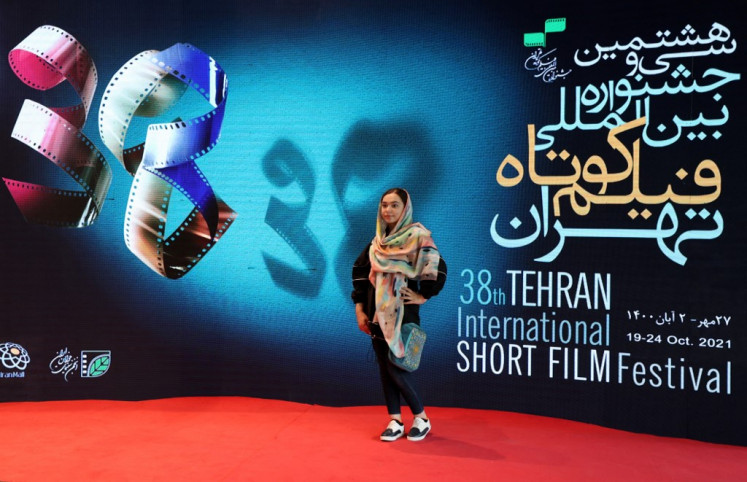
Sixteen African short films will screen in African Horizons, a special programme at the 43rd Tehran International Short Film Festival in October.
The number gives the announcement weight. The geography makes it more interesting.
African cinema’s international festival route is usually described through Europe and North America. Cannes, Berlin, Venice, Toronto, Sundance and Rotterdam dominate the calendar, the funding language and the idea of what global recognition looks like.
Tehran offers a different question: can African filmmakers build durable festival and audience relationships across Asia without passing through the familiar Western gatekeepers first?
A showcase is useful, but temporary
Curated programmes can introduce filmmakers to audiences that would not otherwise encounter their work. Short films especially depend on festivals because their commercial distribution options remain limited.
But a one-off showcase can also end when the final screening ends. The films collect another laurel, the festival records geographic diversity and little changes in the market around the filmmakers.
The stronger outcome would include filmmaker attendance, subtitling support, rights conversations, invitations to other festivals, educational use and reciprocal African programming of Iranian and Asian shorts.
Why the Asian route matters
Asia is not one market, just as Africa is not one market. It contains different production systems, censorship regimes, audience traditions and levels of theatrical development.
There are still useful points of connection. Filmmakers in both regions regularly work outside Hollywood’s commercial centre. They navigate strong local languages, uneven access to finance and international festivals that sometimes value their work mainly as cultural representation.
Short-film networks can create relationships before feature financing enters the conversation. A programmer who encounters a director’s short may follow the feature project. A distributor may identify a thematic package. A university or cinematheque may create a longer exhibition life.
Selection must lead to discoverability
The programme should make its catalogue easy to find. That means reliable English-language information, filmmaker contacts, rights details, trailers and clear records of screenings.
African shorts often disappear from public view after successful festival runs because the basic information required by later programmers is scattered. Festivals can help by treating metadata and industry access as part of exhibition.
The filmmakers also need to know what rights they are granting. A festival screening licence should not quietly become broad digital distribution or indefinite promotional use.
The measure comes after October
African Horizons is a welcome act of programming. RollCall Africa will judge its industrial value by what follows.
Do participating filmmakers receive further invitations? Are any works acquired? Does the festival establish a recurring African strand? Do African festivals build a return programme with Iranian filmmakers? Are the films made available to audiences legally after the event?
If those connections emerge, Tehran’s 16-film selection will represent more than inclusion. It will mark another route through which African cinema can travel on terms not entirely organised by Europe.
Follow RollCall Africa’s coverage of Festivals & Awards and the distribution business behind African film.