In 1968, Ousmane Sembène gave an interview in which he described himself not as a filmmaker but as a griot — a custodian of collective memory using the only contemporary tool available for the scale of the work. He was one man making films for a country, for a continent, in a language and a form that had never been used for this purpose before. The weight of that was not metaphorical. It was operational. Every film he made had to carry more than a film should be required to carry, because it was, for a long time, the only one.
I think about Sembène when I think about Rafiki Fariala.
Rafiki Fariala is from the Central African Republic — a country of five million people, rich in geography and in crisis, that has not had a functioning film industry at any point in its post-independence history. In 2022, his documentary Nous, étudiants! became the first Central African film to screen at the Berlin International Film Festival. He won the Prix des Bibliothèques at Cinéma du réel and took the Silver Stallion for Documentary at FESPACO 2023. The film was made about students at the University of Bangui managing their daily lives against a backdrop of political instability and institutional collapse. He made it because nobody else was going to.
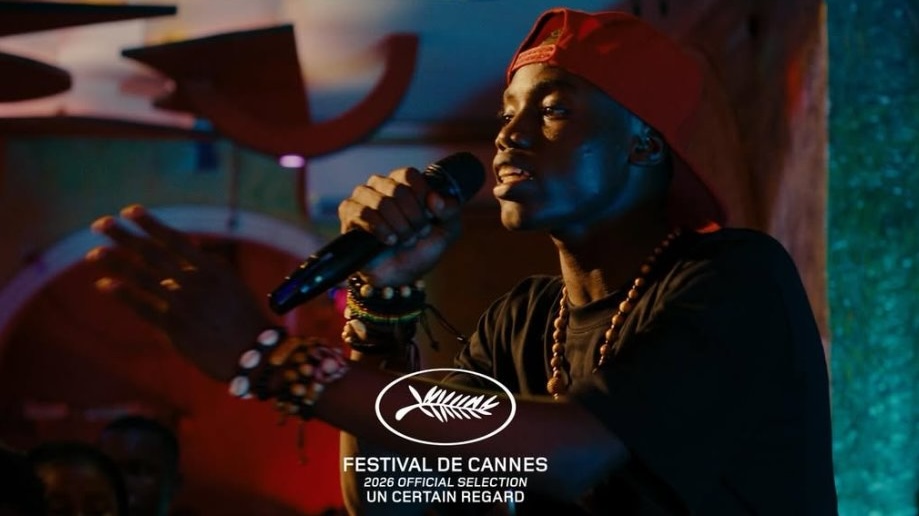
Now his second film, Congo Boy — a CAR-DRC and France co-production, following Robert, a seventeen-year-old Congolese refugee in Bangui who cares for his four younger siblings while trying to become a musician after his parents’ imprisonment — is in Un Certain Regard at Cannes 2026. Two films in. Two international landmarks. Both of them firsts.
What the Firsts Actually Cost
I have watched this pattern across the continent. Mahamat-Saleh Haroun carried Chadian cinema to Berlin, to Cannes, to international distribution for two decades largely by himself — the weight of being the reference point, the only name that international programmers could attach to a country’s cinema, the figure who had to simultaneously make his own work, mentor the next generation, and represent an entire national cinematic tradition in every press interview.
Abderrahmane Sissako did the same for Mauritania — a country whose cinema would be functionally invisible to the international market without his body of work. He has spoken, carefully but clearly, about the exhaustion of being a national cinema rather than a filmmaker. He is both, and for years he was not permitted, by the structure of the situation, to be only one.
Fariala is twenty-nine films away from having made enough work that the Central African Republic can be described as having a film tradition rather than a filmmaker. Everything he makes before that is simultaneously his own artistic statement and an act of infrastructure-building that carries implications for everyone who comes after him.
Congo Boy and What It Attempts
Congo Boy is, by its premise alone, an act of political courage. The story of a Congolese refugee in Bangui is a story about a country receiving displaced people while itself being a country from which people are displaced — a complexity of movement and crisis and belonging that a less committed filmmaker might flatten into the single emotional register that international festival audiences have learned to expect from Central African subject matter.
READ ALSO: Rwanda Did Not Get Lucky At Cannes
Fariala’s record suggests he will not flatten it. Nous, étudiants! was remarkable precisely for its refusal to produce suffering as spectacle. The students he filmed were depicted as people with full interior lives — desires, humour, strategic intelligence, aesthetic preferences — who happened to be navigating an extremely difficult material reality. That is a harder film to make than a film about people defined by their difficulty. It requires the filmmaker to believe, against considerable external pressure, that his subjects deserve the full frame.
Congo Boy extends this commitment to a refugee and a musician — two identities that international cinema has a strong tendency to reduce to their most legible emotional content. Whether Fariala holds the complexity in a fiction feature the way he held it in a documentary is the formal question that Cannes will answer.
What the Industry Owes the Firsts
The international festival circuit will celebrate Congo Boy. It will describe Fariala as a significant voice, a filmmaker to watch, a representative of an underrepresented cinema. This language is accurate and it is also, in a way I have been noticing for a quarter century, a substitute for something more practical.
The practical thing is this: Fariala needs co-producers who will return to the Central African Republic and work with him there. He needs training programmes that develop the second generation of Central African filmmakers so that he is not, ten years from now, still carrying the entire tradition on one set of shoulders. He needs the French CNC’s Fonds Sud to continue to function as a meaningful financing mechanism for Central African productions at a moment when that fund’s priorities are under pressure. He needs African co-production relationships — with Cameroon, with the DRC, with Gabon — that give Central African cinema a regional context rather than requiring it to locate all its financing in Europe.
Cannes will give him visibility. Visibility is necessary but not sufficient. What comes after the applause is the work — and the work requires infrastructure that applause alone cannot build.
I hope the industry is paying attention to more than the selection.
— Amara Diallo has covered African cinema from Dakar for twenty-five years. He has attended every FESPACO since 1999 and has followed Central African cinema since Fariala’s documentary debut.