The 79th Cannes Film Festival opens on May 12. In Un Certain Regard, the official sidebar that has historically been African cinema’s primary entry point into the Cannes official selection, there are three African films. This is the second consecutive year that three African productions have appeared in the section. In 2025, it was Morad Mostafa’s Aisha Can’t Fly Away (Egypt/Sudan/Tunisia), Erige Sehiri’s Promised Sky (Tunisia/France), and Akinola Davies Jr.’s My Father’s Shadow (Nigeria/UK). In 2026, it is Marie-Clémentine Dusabejambo’s Ben’Imana (Rwanda), Rafiki Fariala’s Congo Boy (Central African Republic/DRC/France), and Laïla Marrakchi’s La Más Dulce (Morocco/France/Spain/Belgium).
Two years. Six African films in the official selection. Different directors, different territories, different languages, different subjects. This is no longer an accident or an act of curatorial benevolence. This is a pattern, and patterns have causes. The question RollCallAfrica is asking as the 79th edition opens is not whether Africa belongs at Cannes — that question has been answered — but what the structural conditions are that have produced this concentration, and whether they are sustainable without the infrastructure investment that would make them routine.
The Three Films
Ben’Imana is the first film by a Rwandan director in the Cannes official selection. The previous closest point was Lee Isaac Chung’s Munyurangabo in 2007 — a US-Rwandan co-production directed by an American. Dusabejambo’s film is a Rwanda-Gabon-Côte d’Ivoire-France-Norway co-production that spent seven years in development, appearing at Ouaga Film Lab in 2019, La Fabrique Cinéma at Cannes in 2022, Durban FilmMart in 2024, and the Red Sea Souk in 2025, where it received a $40,000 post-production grant and a $32,500 Filmmore in-kind award. MK2 Films holds international sales rights. It is nominated for the Caméra d’Or. The international film press described Cannes artistic director Thierry Frémaux calling it “astounding” for a debut.
Congo Boy is the second feature from Rafiki Fariala, whose Nous, étudiants! (2022) was the first Central African film in Berlin’s official selection and won the Silver Stallion for Documentary at FESPACO 2023. Congo Boy follows Robert, a seventeen-year-old Congolese refugee in Bangui who cares for his four younger siblings while trying to become a musician after his parents’ imprisonment. A CAR-DRC-France-Italy co-production with international sales through The Party Film Sales, it was developed through Atlas Ateliers in 2022. Fariala is the first filmmaker from the Central African Republic in the Cannes official selection.
La Más Dulce — also titled Strawberries — is Moroccan director Laïla Marrakchi’s third feature, twenty-one years after her Cannes debut with Marock in the same Un Certain Regard section. The film follows two young Moroccan women who travel to southern Spain for seasonal strawberry-picking work and choose to report the abuse and harassment they face. A Morocco-France-Spain-Belgium co-production with French distribution through Lumen, it brings a contemporary subject — the labour conditions of African seasonal workers in Europe — into the Cannes official selection in a year when Cannes’s artistic director noted that MENA cinema was, unusually, underrepresented in the main Competition.
Also in the 2026 official selection is Arthur Harari’s The Unknown, in the main Competition. Harari is Egyptian-French — the son of Egyptian-born filmmaker Moshe Mizrahi — and his presence in Competition, following his Cannes debut in Un Certain Regard in 2021 and his Academy Award for Best Original Screenplay for Anatomy of a Fall in 2024, is the clearest signal yet that the journey from Un Certain Regard to Competition is navigable. It requires, by Harari’s trajectory, roughly five years and an Oscar. That is a demanding pathway. It is also a pathway.
AFRIFF at the Cannes Market
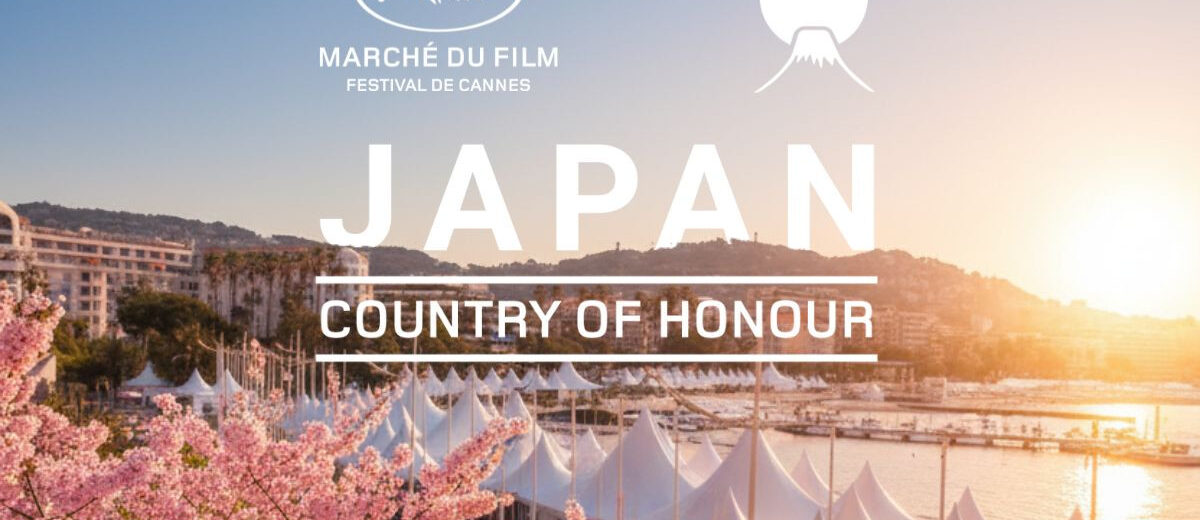
Running alongside the festival proper, from May 15 to 18 at the Palais des Festivals, is the Marché du Film’s Goes to Cannes programme — a market initiative that invites selected film festivals from around the world to curate and pitch works-in-progress to distributors, sales agents, and festival programmers. Lagos is a partner city for the 2026 edition, represented by AFRIFF — the Africa International Film Festival — which is bringing five Nigerian and African projects in post-production to the market. One project will receive a €10,000 minimum guarantee from Spanish distributor Sideral Cinema.
This is, structurally, a different kind of African presence at Cannes from the screening-and-awards circuit. It is the industry infrastructure arriving — productions not yet finished, seeking the international sales and distribution relationships that will determine whether they reach the audiences they were made for. AFRIFF founder Chioma Ude signed a landmark Memorandum of Understanding with the Nigerian Ministry of Art, Culture, and the Creative Economy at Cannes in 2025, which led directly to the creation of AFRIFF’s Film and Content Market. The Goes to Cannes partnership is the first major output of that structural work.
What the Pattern Requires
Two consecutive years of three African films in the Cannes official selection raises a question that has not yet been asked publicly in the African trade press: at what point does consistent Un Certain Regard presence become the ceiling rather than the breakthrough? The main Competition has had occasional African presence across its history — Ousmane Sembène in the 1960s and 70s, Abderrahmane Sissako’s Timbuktu in 2014, Arthur Harari in 2026 — but it has never had the consistent, multiple-film presence that Un Certain Regard is now building.
READ ALSO: Every Best Movie Nominee at AMVCA 2026 Had a Theatrical Run
The conditions that produce main Competition films are different from the conditions that produce Un Certain Regard films. Competition films, in the current Cannes landscape, almost universally come with established international sales relationships in place before the selection, with production budgets that attract talent of the specific kind that Competition juries respond to, and with the long-term auteur careers that Cannes has historically rewarded with its highest prize. Building those conditions across multiple African territories simultaneously is a structural project, not a curation project. It requires co-production financing at scale, training pipelines that develop directors across multiple features rather than rewarding debuts, and the kind of institutional patience that the continent’s current film infrastructure does not consistently provide.
What Cannes 2026 proves, for the second year running, is that the talent and the creative vision are there. The question for the continent’s film industry infrastructure is whether it can build the conditions that convert recurring Un Certain Regard presence into the kind of Competition regularity that would make African cinema’s place at the world’s most important film festival structurally inevitable rather than annually earned.
RollCallAfrica will be in Cannes from May 12 to 23. Full coverage of all three African Un Certain Regard films across our Film and Festivals sections.
— Amara Diallo. RollCallAfrica, May 2026. Sources: Cannes official selection announcement (April 9, 2026), Afrocritik, The British Blacklist, The National, Marché du Film Goes to Cannes announcement, AFRIFF/Culture Custodian (February 2026).