
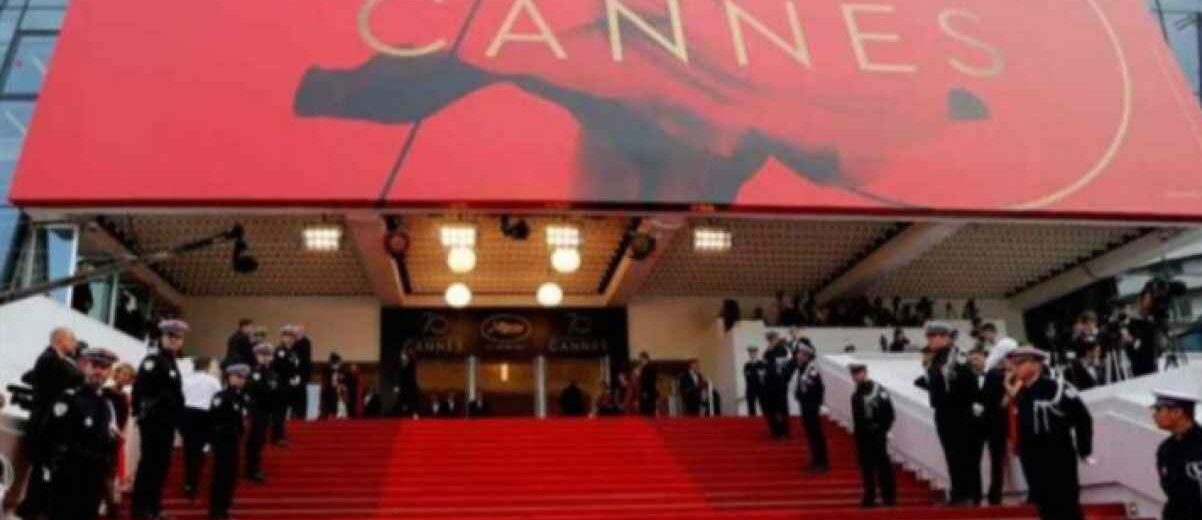
From May 15 to 18, 2026, at the Palais des Festivals in Cannes, five Nigerian and African film projects will be pitched to international distributors, sales agents, and festival programmers as part of the Marché du Film’s Goes to Cannes programme. Lagos is one of the programme’s official partner cities. AFRIFF — the Africa International Film Festival — will represent Lagos, presenting the five selected projects over a dedicated two-hour session. One project will receive a minimum guarantee of €10,000 from Sideral Cinema, a Spanish independent distributor specialising in international independent films. The remaining 2026 partner cities include Adelaide, Hong Kong, Montevideo, Rio de Janeiro, Tallinn, and Tokyo.
This is the first time Lagos has participated in Goes to Cannes as a partner city. It is worth pausing on what that means, because the industry coverage has largely presented it as a good news item and moved on. RollCallAfrica wants to hold it for longer than that.
The Difference Between Showing Up and Being Invited
For the past decade, Nigerian filmmakers have appeared individually at the Cannes market — paying for stands, attending screenings, making connections on their own account with varying degrees of success. The market is large, expensive, and organised around relationships that take years to build. Individual filmmakers arriving without institutional backing are at a structural disadvantage relative to filmmakers who arrive as part of a curated, institutionally supported national or city delegation. France arrives at Cannes as France, with UniFrance coordinating dozens of French productions for the market simultaneously. South Korea arrives with KOFIC. Japan with the Japan Film Commission. The infrastructure of national representation at Cannes is part of how national cinemas build sustained commercial relationships with the international distribution market.
Lagos is now arriving at Cannes as Lagos — with AFRIFF as the curatorial body, with a government memorandum of understanding as the institutional backing, and with a prize fund that creates a real incentive for international distributors to pay attention. This is not a symbolic gesture. It is the beginning of the infrastructure of market presence.
How It Came About
In May 2025, at the previous edition of the Cannes market, AFRIFF founder Chioma Ude signed a landmark Memorandum of Understanding with the Nigerian Ministry of Art, Culture, and the Creative Economy. That MoU led directly to the creation of the AFRIFF Film and Content Market — AFCM — which launched at AFRIFF 2025 in Lagos in November, selecting five projects from a pitching initiative. Those five projects are the ones now heading to Cannes.
Ude has described the MoU as creating an institutional framework for what AFRIFF had previously been doing through individual effort and personal relationships. “Among the various activities, sales, and pitches conducted by AFCM,” she wrote on Instagram following the Goes to Cannes announcement, “five films were selected. These films will proudly be represented at the Marché du Cannes. Impact continues to be the soul of the festival and now the film market, AFCM.”
The Goes to Cannes format is specific: each selected project must be in post-production, not yet screened at any international festival, and not released online. The filmmakers present ten to fifteen minutes of extended teaser and a live pitch for what they need to finish the film. The audience is distributors and sales agents actively looking for acquisitions. This is not a celebration of African cinema. It is a commercial transaction being facilitated at the highest level of the international market.
What AFRIFF 2026 Builds On
The Goes to Cannes participation is the international context for what AFRIFF is building at home. The 15th edition of the Africa International Film Festival is confirmed for November 1 to 7, 2026 in Lagos — its largest edition yet, following the 2025 edition that launched the AFCM film market. AFRIFF is in the process of transforming from a screening festival into what Ude has called a full commercial hub: a platform where deals are made, co-productions are structured, and African films acquire the international relationships that determine whether they reach global audiences.
READ ALSO:Three African Films at Cannes 2026
The model is not new — it is what FESPACO built in Ouagadougou over decades, what DIFF’s FilmMart has been building in Durban since 2010, what the Joburg Film Festival has been developing in Johannesburg. What is new is the scale of the institutional ambition at AFRIFF — the explicit commitment to building Lagos as a market city rather than purely a festival city, and the government partnership that gives that ambition a structural foundation it previously lacked.
Whether the Nigerian government delivers on its end of the MoU in the way that the South African government has repeatedly failed to deliver on its rebate commitments is the question that will determine whether the Goes to Cannes partnership is the beginning of something durable or a single good cycle. RollCallAfrica will be watching both the Cannes market and the November festival with that question in mind.
AFRIFF Goes to Cannes runs May 15–18, 2026 at the Palais des Festivals. AFRIFF 2026 (15th edition) runs November 1–7 in Lagos. Submissions for AFRIFF 2026 open Q3 2026.
— Kwame Asante. RollCallAfrica, May 2026. Sources: Marché du Film / Afrocritik (February 2026), Culture Custodian (February 2026), What Kept Me Up (February 2026), AFRIFF Instagram, AFRIFF website.