African animation has spent years proving that it has talent. Abidjan now wants to prove that the continent can build a market around it.
The inaugural African Animation Film Market, known as MAFA, is scheduled to take place in Côte d’Ivoire in November 2026. Organisers describe it as the first African marketplace dedicated entirely to the business of animation.
That distinction is the reason the event matters.
A festival can screen finished work, celebrate artists and introduce audiences to new styles. A market has a harder responsibility. It must put unfinished projects before people who can finance them, connect studios to buyers, create co-production relationships, clarify rights and help completed work reach paying audiences.
If MAFA succeeds, its most important result will not be the number of people who attend. It will be the number of projects that leave Abidjan with a credible route to production and distribution.
What MAFA says it will do
The market was announced in May by Simon Adayé, secretary-general of MAFA and president of the Fédération Africaine du Film d’Animation. It will be held at the Institut Coréen in Abidjan and will bring together creators, producers, broadcasters, investors, digital platforms, television networks, animation studios and training organisations.
The call for projects covered short films, feature films, television series, student work and immersive XR. Eligible projects required meaningful participation by an African or diasporic creator and clear broadcasting rights. The submission window closed on 31 August.
Organisers expect more than 10,000 participants. That is a striking projection for a first edition, but attendance is not the best commercial metric for a market. Ten thousand visitors can produce excitement without producing a single greenlight. Twenty serious buyers in rooms with properly prepared projects can change several companies.
The question is whether MAFA has built the second kind of event inside the first.
African animation has visibility. It still lacks deal infrastructure
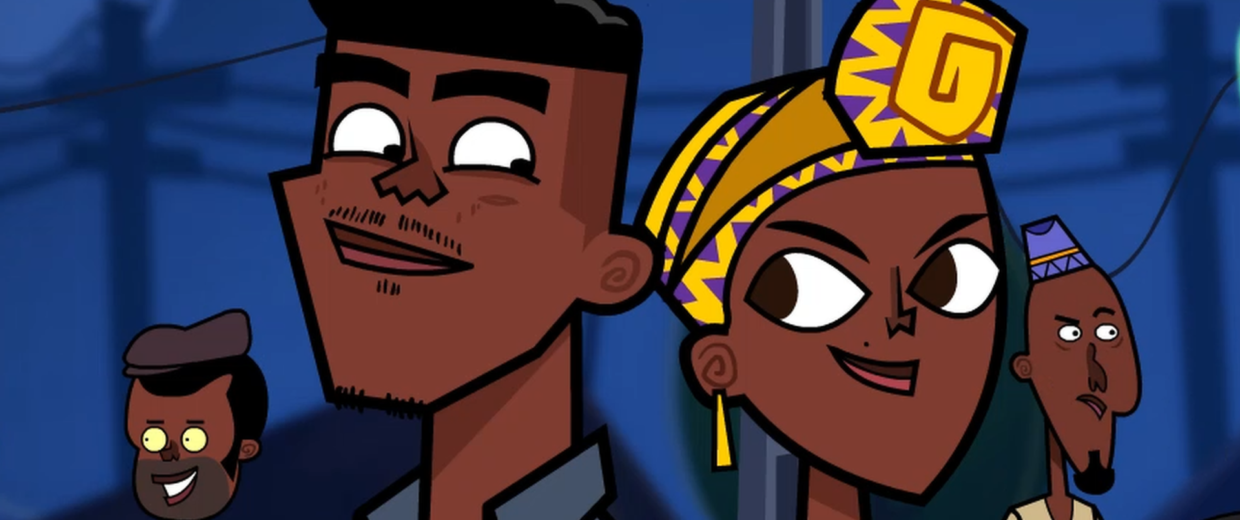
The international conversation around African animation has changed. African artists are no longer treated only as a future possibility. Studios and creators from the continent have worked on global features, streaming series, games, advertising and short-form projects. African-inspired properties have reached Cartoon Network, Disney+, Max, Netflix and other platforms.
But global visibility does not automatically produce African ownership.
A studio can receive outsourced production work without owning the characters it animates. A creator can contribute to a successful international anthology without controlling the property after delivery. A project can win a development prize and still spend years looking for the money required to enter production.
This is where a market should intervene. It should help creators understand what they are selling, what they retain and how a single commission can become a company-building asset rather than a temporary contract.
Intellectual property is especially important in animation because a successful world can produce value beyond its first screen. Characters can move into books, games, education, licensing, merchandise, sequels and live experiences. If the African creator gives away those rights too early, the project may be culturally African while its long-term commercial value sits elsewhere.
The financing problem begins before production
Animation demands long development timelines, specialised labour and significant upfront spending. A promising idea must become designs, scripts, storyboards, animatics, production schedules and a budget before many buyers will assess it seriously.
That creates a difficult cycle. Investors want proof that a project is ready. Small studios need investment to produce that proof.
Research on South Africa’s animation ecosystem offers one indication of the wider problem. The South African Cultural Observatory found limited public funding for animation, with 58% of available financing coming from private sources and studios’ own funds. It also found that most animation markets and distributors were located outside Africa, especially in Europe and the United States.
That geography affects who gets into the room. African studios already paying to develop their projects must also find the money to travel abroad repeatedly, build relationships and keep returning before a buyer takes the meeting seriously.
An African market can reduce some of that distance. But simply relocating the networking does not solve the financing unless actual commissioners, distributors and investors arrive with decision-making authority.
Abidjan has to bridge more than language
Côte d’Ivoire is a sensible location. Abidjan already has a growing animation community and has hosted the Abidjan Animation Film Festival since 2017. The city can become a stronger commercial meeting point for Francophone West Africa while connecting creators from Anglophone, Lusophone and Arabic-speaking markets.
That continental role will require deliberate design.
Project materials need translation. Producers need common budget templates and a clear understanding of delivery standards. Broadcasters should explain which territories, languages and age groups they are buying for. Creators need legal support before signing co-production, option or distribution agreements.
The market must also avoid becoming another place where international guests explain Africa to African creators. The strongest panels will be the ones that reveal how deals work: licence periods, rights reversions, recoupment, development fees, production cash flow, merchandising participation and who controls a property when the first season ends.
The numbers that should matter after November
UNESCO estimates that Africa’s wider film and audiovisual sectors employ about five million people and contribute approximately $5 billion to the continent’s economy, with the potential to reach 20 million jobs and $20 billion in annual revenue. Animation can take a larger share of that opportunity, but only if creative activity becomes sustainable business.
MAFA should therefore publish outcomes after the market.
How many buyers attended? How many one-to-one meetings took place? How many projects received paid development? What value of financing was committed? How many distribution agreements were signed? How many creators retained ownership of their underlying intellectual property? How many participating studios secured work that will last beyond one production cycle?
Those figures will tell the industry more than a crowded venue or a long list of speakers.
Africa does need an animation market. It needs a place where a creator from Accra, Abidjan, Nairobi, Lagos, Cape Town, Kigali or Dakar can meet partners without first travelling to Europe. It needs buyers who understand that African animation is not one visual style or one cultural category. It needs patient capital and better routes from local screens to international catalogues.
Abidjan has created the meeting point. November will show whether MAFA can create the market.