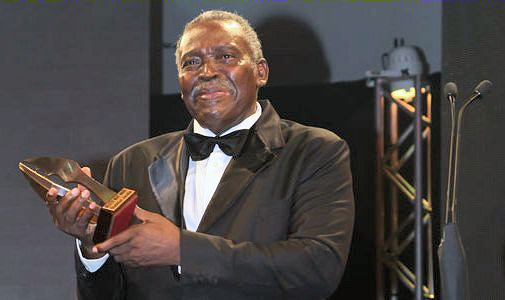
Olu Jacobs left behind a career that travelled through British television, Nigerian theatre, NTA drama, international cinema and commercial Nollywood. The public record can name some of the productions. It cannot confidently tell us where the complete record of that career is kept.
Where are the original television recordings, rehearsal notes, scripts, contracts, photographs, call sheets, interviews and correspondence? Which institution knows what exists, what has already been lost and what is sitting in private homes under conditions that will eventually destroy it?
Jacobs died on 16 September 2026. His death should not turn film preservation into a conversation about one actor. It should force the Nigerian screen industry to confront a structural weakness it has postponed for decades.
Nollywood knows how to produce. It has not built an equally serious system for remembering.
An industry can be famous and still lose its history
Nigeria has a National Film, Video and Sound Archive in Jos. The Nigerian Film Corporation describes its work as preserving and digitising the country’s audiovisual history. That mandate is important. The difficult question is whether the archive has the funding, equipment, staffing, acquisition system and public access required by the scale of Nigerian production.
A 2025 study of film archiving in Nigeria described the Jos archive as the country’s only functional institution dedicated to preserving film heritage. It also identified inadequate funding, limited specialist training, weak policy support and technological constraints.
The problem extends beyond old celluloid. Much of Nollywood’s video era was recorded and distributed on formats that deteriorate, become obsolete or survive only in low-quality digital copies. Films that once circulated in large numbers can become difficult to locate in their original form.
A YouTube upload is not an archive. A compressed copy without production records, rights information or reliable metadata is merely a surviving file.
Ownership makes preservation harder
Preserving Nigerian screen history is not simply a technical exercise. It is also a rights problem.
Broadcasters may hold recordings. Producers may own masters. Distributors may control particular versions. Families may possess scripts and photographs. Foreign archives may hold programmes produced during an actor’s international career. In many cases, the paperwork required to establish ownership or permit restoration is incomplete.
This fragmentation explains why a complete archive cannot be built by waiting for material to arrive at a government office. It requires an active acquisition programme, rights research and working relationships with broadcasters, guilds, production companies, estates and private collectors.
The industry also needs a standard for what producers deposit after completing a project. A master file alone does not explain how a film was made, financed, marketed or received.
The commercial value is being ignored
Archives are often treated as cultural charity. That misunderstands their economic value.
A properly documented catalogue can support restoration, theatrical reissues, retrospective programming, documentary licensing, academic research, books, exhibitions and new streaming packages. It can clarify rights for remakes and adaptations. It can also protect estates from losing control of valuable work.
Other film industries regularly turn preserved catalogues into new revenue. Nigerian producers frequently have neither the materials nor the chain-of-title documentation required to do the same.
This is particularly serious as global platforms search for established African intellectual property. A film that survives only as an unclear online upload cannot be exploited with confidence.
Families should not carry the burden alone
When a major screen figure dies, the family is expected to preserve a public legacy while dealing with a private loss. That is an unfair and unreliable system.
Families may not know which papers matter, how magnetic tape should be stored or which institution can digitise it safely. They may also face pressure from people seeking access before the estate has established its legal position.
Guilds and cultural institutions should have a clear protocol for offering archival support. That support should begin before death. Senior actors, directors, writers and producers should be able to deposit or catalogue their professional papers while they can still explain them.
What a serious preservation plan requires
Nigeria does not need another ceremonial declaration about protecting culture. It needs an inventory.
The first task is to identify what the national archive currently holds and publish a searchable catalogue. The second is to map collections held by NTA, state broadcasters, production companies, universities, guilds and families. The third is to create technical standards for depositing contemporary productions.
Access must be part of the design. Material can be protected without making it invisible. Researchers, filmmakers and rights holders need a transparent process for discovering what exists and requesting lawful use.
Preservation also needs a budget line that survives changes in leadership. Digitisation is not a one-off project. Digital files require continuing management, migration and verification.
The record must outlive the applause
Nollywood has spent years arguing for global recognition. Recognition without preservation produces a strange outcome: the world knows the industry’s name while the industry loses the evidence of how it was built.
Olu Jacobs’ work belongs first to his family and the rights holders connected to each production. It also forms part of Nigerian and African screen history. Respecting both facts requires institutions capable of protecting material, documenting ownership and making responsible access possible.
The next generation should not have to reconstruct Nollywood’s foundations from damaged tapes, incomplete internet biographies and memories recorded too late.
Read more of RollCall Africa’s independent industry reporting in Analysis and our coverage of the business of African film.