Let us be specific about what is happening this week in African cinema.
Ben’Imana — the first film by a Rwandan director in Cannes history — screened yesterday to significant critical reaction, with MK2 Films handling international sales. Rwandan audiences cannot watch it in Rwandan cinemas. There are no commercial cinemas operating in Rwanda at the level that would enable a theatrical release of this kind of film.
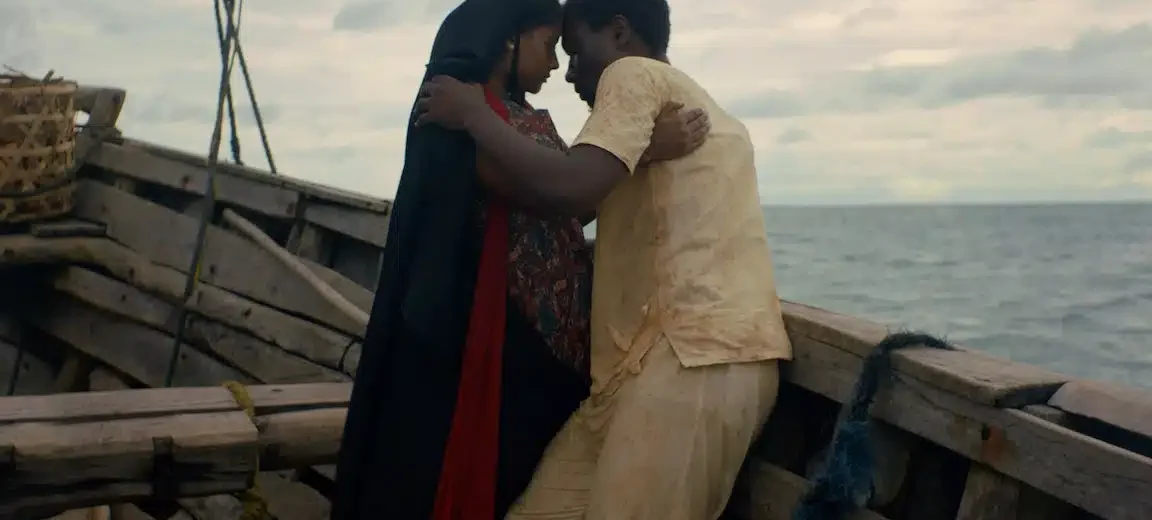
My Father’s Shadow won Best Movie at the AMVCA on Saturday. It is the Nigerian film of the year by any available critical consensus. It is on MUBI in the UK, Ireland, North America, and Turkey. Its theatrical and streaming availability in Accra, Nairobi, Cairo, and Abidjan is: not confirmed.
Cotton Queen opened in Egyptian cinemas today. It was made in Sudan. Sudan’s cinemas are largely closed because Sudan is at war. The filmmaker’s country cannot watch her film.
Clarissa — Virginia Woolf in Lagos, NEON distribution, Directors’ Fortnight at Cannes — will reach American and European audiences through NEON’s theatrical pipeline and whatever streaming deal follows. Its West African theatrical release has not been publicly confirmed.
This is the central structural failure of African cinema in 2026. The films are extraordinary. The audiences in the countries that made them cannot access them. The gap between where African films are celebrated and where Africans can actually watch them is not a footnote to the festival success story. It is the story.
The Numbers Behind the Gap
Africa has a population of approximately 1.4 billion people. The continent has approximately 1,800 cinema screens — fewer than France, which has a population of 68 million. Sub-Saharan Africa outside South Africa has approximately 200 operational commercial cinema screens. Nigeria, with 220 million people and the continent’s most commercially developed film industry, has approximately 200 screens for a population that dwarfs the entire European Union.
The implication: when a Nigerian film generates ₦190 million at the box office — as The Herd did — it does so across a screen count that is structurally limited in ways that have nothing to do with audience appetite. The audience is there. The screens are not. The infrastructure that would allow an African film to reach its natural domestic audience at scale does not exist in most African countries at any commercially meaningful level.
The streaming platforms that were supposed to solve this — to make the screen count irrelevant by going directly to mobile and connected TV — have retreated. Showmax is closed. Netflix commissions conservatively from two countries and its African content strategy has contracted rather than expanded. Amazon has exited. The FAST platforms launch but do not commission. The gap that exists in theatrical infrastructure has not been closed by digital distribution. It has been managed, partially, intermittently, and not at scale.
Who Benefits From the Current System
The current system benefits three groups. International sales companies — MK2, HanWay, The Party Film Sales — who sell African films to European and North American distributors and collect the fees from those sales. International streaming platforms who acquire African content for their global subscriber base and pay accordingly. International film festivals whose prestige is enhanced by the inclusion of significant African work and who curate that inclusion on their own editorial terms.
None of these three groups are primarily invested in ensuring that the African audiences for whom these films were made can watch them. Their commercial interests run in a different direction. The MK2 deal for Ben’Imana will produce deals in France, Germany, the UK, Japan, and the US. It may or may not produce a deal that brings the film to Rwandan audiences. If it does not, MK2 has still fulfilled its commercial mandate and no one in the international film industry has failed in any institutional sense.
The failure is structural, not individual. It is the failure of an industry whose financing, distribution, and exhibition infrastructure is designed primarily to serve audiences in wealthy countries and to treat audiences in the countries where the films are made as secondary.
What a Different System Would Look Like
The Nomadic Film Space, launching at Cannes this week, addresses part of this: building the financing infrastructure that gives African producers the institutional relationships to develop commercial African cinema without full dependence on European development funding. AFRIFF Goes to Cannes addresses part of this: building the market relationships between African producers and international distributors that create the commercial conditions for wider distribution. The East Africa Content Marketplace, launching in Nairobi on May 26, addresses part of this: creating regional co-production and distribution relationships across East African territories.
None of these individually solves the exhibition gap. The screens still do not exist. The digital infrastructure that would substitute for screens — fast, affordable mobile internet across the continent — exists in urban centres and is expanding but has not reached the scale that makes pan-African digital distribution commercially sustainable for the kind of films Ben’Imana and My Father’s Shadow represent.
The honest statement of the problem is this: African cinema is experiencing its most creatively and institutionally significant moment in decades. The audiences who should be at the centre of that moment are at its periphery. Fixing that requires investment in exhibition infrastructure, in digital distribution at scale, and in the kind of institutional will that regards African audiences as the primary commercial constituency of African cinema rather than a secondary one after the international festival circuit has been served.
RollCallAfrica will be tracking every deal, every platform launch, and every distribution announcement that moves the needle on this gap. It is the most important story in African cinema right now. It is also the least told one.
— Rotimi Fash. RollCallAfrica, Lagos. 14 May 2026. Sources: AmeyawDebrah.com guest opinion (May 2026), Screen International Africa exhibition data, UNIC (European cinema association), FilmOne theatrical data, MUBI international rights information, Nomadic Film Space/Variety (May 8, 2026).