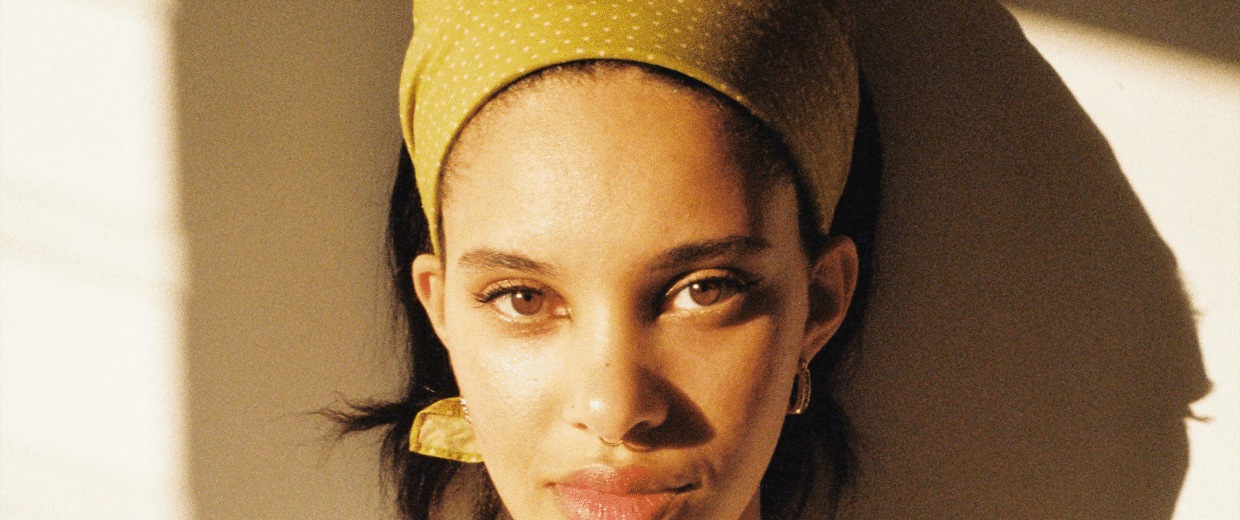
Jabu Nadia Newman arrived at the 2026 Toronto International Film Festival with something more useful than a general invitation to network. She arrived with a feature project.
The Cape Town filmmaker was selected as one of 20 participants in TIFF’s Directors’ Lab, a five-day programme held from 9 to 13 September during the festival and its inaugural market. She was the only filmmaker from Africa in the cohort.
Newman used the lab to develop FIEND, her planned debut feature, described as a queer horror-romance set against the fading neon lights of Johannesburg.
The selection is worth celebrating. The next step is harder. Development programmes create access, feedback and visibility. A first feature still needs producers, finance, rights clarity, a cast plan and a path to market. The opportunity now has to become a film.
Newman has already built a recognisable screen language
Newman’s name first travelled widely through The Foxy Five, the Cape Town web series about young women negotiating feminism, friendship, race and patriarchy. The project was direct, politically alert and designed for the online audience that found it.
Her later work moved across short film, fashion, music and commercial production. Untitled: Friends examined the intimacy and complexity of femme relationships. The Dream That Refused Me, made with support from Nowness, the British Council and BFI, extended her interest in interior life and image-making.
Commercial directing has also given Newman experience with clients, crews, time pressure and visual execution. That work matters because the mythology of the debut feature often ignores the years of practical craft that come before it.
FIEND therefore does not emerge from an unknown filmmaker waiting to discover a voice. It comes from an artist who has tested tone across several formats and is now trying to sustain a world at feature length.
The project sits inside a useful genre tension
A queer horror-romance is not an easy label. That is part of its promise.
Horror can externalise fear that social drama leaves internal. Romance creates emotional stakes. Queer storytelling can reveal the rules a city imposes on desire, safety and belonging. Johannesburg’s fading neon suggests a setting where glamour and decay can occupy the same street.
The risk is that the project may be asked to simplify itself for financing. Markets prefer clear comparisons, recognisable genres and evidence of audience demand. FIEND will need a strong commercial proposition, but its value may lie in refusing to become only one of its components.
Newman’s body of work suggests she understands how identity operates through friendship, fashion, space and performance. A feature gives her room to turn those interests into a larger dramatic system.
Being the only African filmmaker should raise a question
Newman’s selection places South African work inside an important international development room. It also shows how narrow Africa’s representation remains.
A cohort of 20 directors with one participant from a continent of 54 countries cannot carry the range of African cinema. The issue is not TIFF alone. Across major labs and markets, African filmmakers often appear as exceptional individuals rather than as part of a well-supported production pipeline.
That creates too much pressure on every selection. One filmmaker is expected to represent a country, a region, an identity and an industry while also developing a specific project.
Newman should be allowed to make FIEND, not an explanatory document about African cinema. At the same time, funders and industry programmes should ask why so few African projects reach the stage at which they can compete for these spaces.
A lab is valuable when it changes the project’s position
TIFF describes the Directors’ Lab as a professional development programme connecting filmmakers with mentors, industry figures and other directors. The timing alongside TIFF: The Market increases the possibility of encounters with financiers, producers and sales companies.
But access should produce a measurable change. After the lab, is the screenplay stronger? Has the budget become more realistic? Has the project identified a lead producer or co-production route? Does Newman retain control of the work while adding partners capable of moving it forward?
These are not cynical questions. They are the difference between development activity and production.
Many African projects spend years circulating through workshops because each programme rewards the promise of a future film. The filmmaker gains experience, but the underlying financing problem remains.
What to watch next
The next important announcement around Jabu Nadia Newman will not be another selection. It will be a producer joining FIEND, a financing commitment, casting, a co-production structure or a production date.
Her TIFF place has already confirmed that the project can attract institutional attention. The task is to convert that attention into leverage without sanding away the qualities that make the film distinct.
That is why Newman belongs on the RollCall Africa Rising Watchlist. She has a record of work, a visible point of view and a debut feature positioned at the difficult border between development and production.
If FIEND crosses that border, the TIFF lab will have been more than an impressive line in a biography. It will have helped create the first long-form expression of a filmmaker Africa should already be watching.
Follow RollCall Africa’s Rising Watchlist for filmmakers moving towards their defining projects, and our Festivals & Awards coverage for the industry value behind international selections.
Sources include TIFF, IOL/Cape Times, The National, Nowness, Sarafina Magazine and Newman’s publicly available filmography.