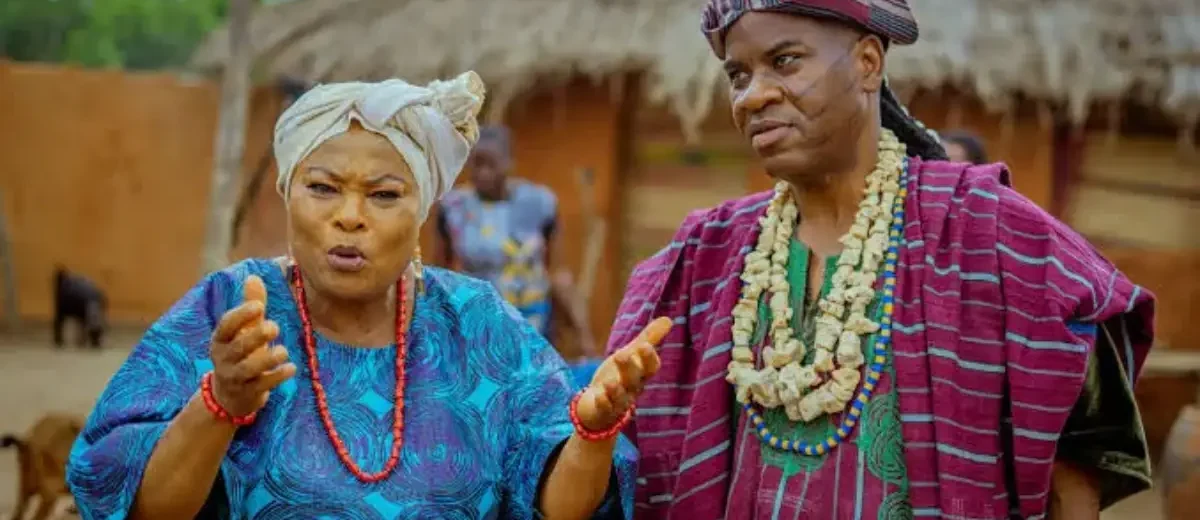
When Netflix confirmed its 2026 African slate, the biggest title on it was Aníkúlápó Season 2 — the continuation of Kunle Afolayan’s pre-colonial Yoruba mythology franchise. The franchise began as a 2022 feature film, expanded into a series, and established itself as the most formally ambitious African content Netflix has commissioned anywhere on the continent. Its return for a second season is the most significant African television event on Netflix’s calendar this year.
The original Aníkúlápó told the story of Saro, a travelling cloth weaver in the old Oyo Empire who dies and is resurrected by Akala, a mystical bird with the power over life and death, and the moral consequences that follow from a man being given a second life he must then prove he deserves. The film’s commitment to its Yoruba cosmological framework — not as exotic decoration but as the genuine logic of its narrative world — and its visual realisation of pre-colonial Yoruba life set it apart from almost everything else in the Nigerian streaming catalogue. It was the rare African Netflix title that international audiences encountered as genuine discovery and Nigerian audiences experienced as cultural recognition.
Why the Pressure Is So High
The context for Season 2’s arrival is a Netflix that has contracted its African ambitions. As RollCallAfrica has reported, the platform’s 2026 African slate spans only three countries — Nigeria, South Africa, and Ghana — and represents a cautious response to the Parrot Analytics data confirming that global demand for African content has outpaced supply for five years. In an environment where Netflix is commissioning conservatively, the titles it does commission carry disproportionate weight. Aníkúlápó Season 2 is not just another series. It is, in effect, Netflix’s statement about whether it still believes in ambitious, culturally specific, formally adventurous African content at all.
If Season 2 performs — if it draws the engagement that justifies the investment in its elaborate production, its mythological scope, its commitment to Yoruba language and cosmology — it strengthens the argument for Netflix continuing to commission this kind of work. If it underperforms, it gives the conservative voices inside the platform’s commissioning apparatus the evidence they need to retreat further into safe, format-driven, internationally legible content. The stakes of a single season are higher than they should be, precisely because the platform has narrowed its African ambitions to the point where each remaining title has to carry the weight of the whole strategy.
What Afolayan Represents
Kunle Afolayan is one of the most important filmmakers in Nigerian history — a director who has spent his career insisting that Nigerian cinema can be both commercially successful and formally serious, both rooted in Yoruba cultural specificity and capable of reaching a global audience. Aníkúlápó is the fullest realisation of that career-long argument. Its second season is his opportunity to prove that the world he built can sustain and deepen across a longer narrative.
The franchise carries something larger than its own commercial fate. It carries the proposition that African mythology, African languages, and African historical worlds are sufficient material for the most ambitious screen storytelling — that they do not need to be simplified, translated, or made legible to a foreign audience to succeed globally. The Cannes Caméra d’Or made that argument for African film this week. Aníkúlápó Season 2 will make it, or fail to make it, for African television. RollCallAfrica will be watching closely.
— Adaeze Okoye. RollCallAfrica, Lagos. 24 May 2026. Sources: Netflix official communications (2026 African slate), Kunle Afolayan / Golden Effects Pictures public statements, Next Narrative Africa Fund / Parrot Analytics (2026).