Q2 2026 · Roll Call Africa Rising Watchlist™
The Rising Watchlist™ has a specific principle about entries like this one: we do not include people who are simply associated with a significant project. Association is not trajectory. Proximity to important work is not evidence of upward momentum.
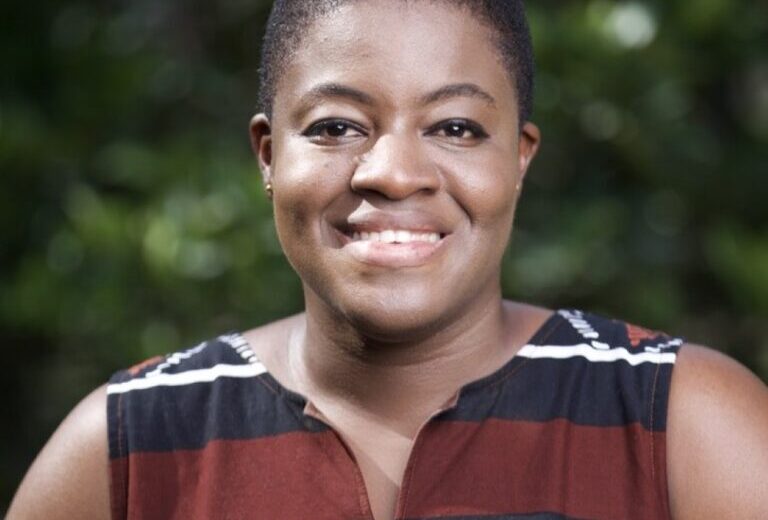
What places Anita Afonu on this list is different. It is the specific combination of two things that rarely exist in the same person at the same stage of a career: the filmmaker’s training and creative instinct, and the archivist’s irreplaceable knowledge.
Afonu is a graduate of the University of Media Arts and Communication — the UniMAC-IFT in Accra — Ghana’s primary institution for film training. She is Rev. Dr. Chris Hesse’s chosen mentee and the person he partnered with in the decade-long effort to screen and recover the archive of more than 1,300 film reels he has been guarding since the 1966 coup that overthrew Kwame Nkrumah — reels documenting the birth of African independence that were thought destroyed and that may, in the words of the documentary that tells their story, “rewrite not just Ghanaian and African history, but world history itself.”
The Eyes of Ghana — directed by two-time Oscar-winning documentary filmmaker Ben Proudfoot, executive produced by Barack and Michelle Obama through their Higher Ground Productions company, with a score mixed at Abbey Road Studios — is the film about Hesse’s archive and the effort to recover it. Afonu appears in the documentary as Hesse’s creative partner in this work, not as a subject but as an active participant in the recovery project. She was present at the film’s Accra premiere at the National Theatre in April 2026. She appeared at the screening at UniMAC-IFT on April 17, 2026, alongside Proudfoot, in a conversation with Ghana’s next generation of film students about what it means to be the custodians of this kind of material. The film is currently at the New York African Film Festival at Film at Lincoln Center, May 6–12.
The argument for Afonu’s Watchlist inclusion is this: she is the young Ghanaian filmmaker who has most directly inherited the knowledge of what is in that archive. She understands, from her time with Hesse, the specific historical and cultural significance of the footage that has not yet been recovered. She is a trained filmmaker. She is, at this moment, one of the most visible young Ghanaian filmmakers in international consciousness — because the documentary she collaborated on reaches the Obama production and international festival circuit levels. And she is at the beginning of a creative career that will be shaped, necessarily, by this archival knowledge and the responsibility that comes with it.
The continent does not have enough filmmaker-archivists. It does not have enough people who understand that the visual record of African history is a creative and political and commercial resource as much as it is a preservation problem. Afonu sits at that intersection. She is young, she is trained, she is positioned, and the platform that The Eyes of Ghana has created for her is the kind of visibility that most young African filmmakers spend a decade trying to acquire.
What she does with it is the Watchlist question. We will be watching.
Territory: Ghana · Role: Filmmaker, Archivist, Documentary collaborator · Watch for: First independent film project, 2026–2027; archival recovery developments at UniMAC-IFT and the National Theatre