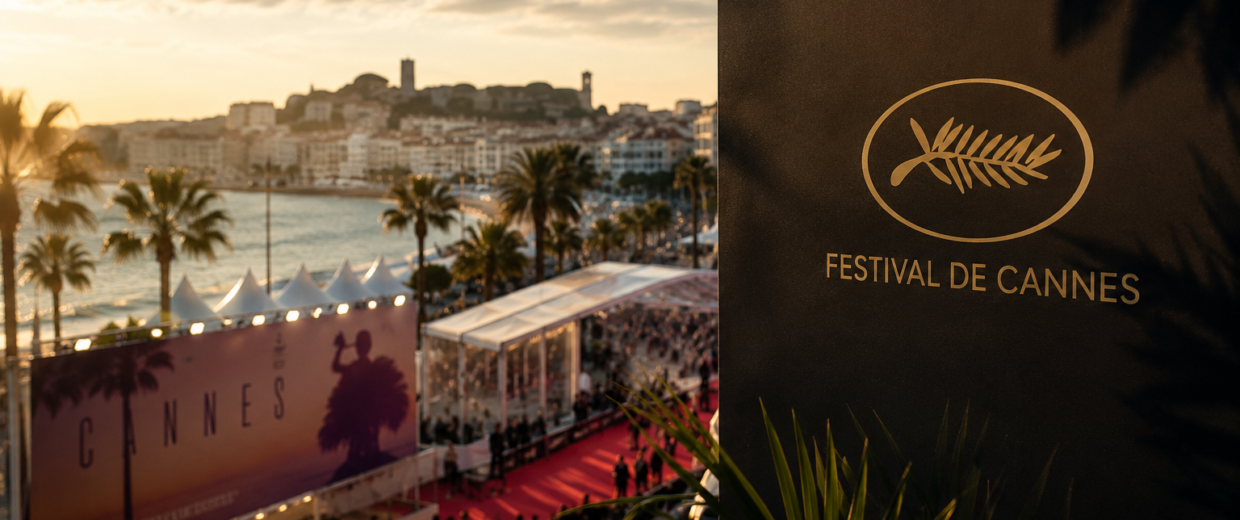
I am writing this from the Croisette in the specific state it occupies six days before the festival opens: full of people here for the market rather than the screenings, working the deals that determine which films exist and how they travel. The 79th Cannes Film Festival opens Thursday, May 12. After twenty-five years of attending this festival, what the African continent is bringing to this edition is unlike what it has brought to any previous one.
Three African films in Un Certain Regard: Marie-Clémentine Dusabejambo’s Ben’Imana from Rwanda — the first film by a Rwandan director in the Cannes official selection in the festival’s entire history — Rafiki Fariala’s Congo Boy from the Central African Republic and DRC, and Laïla Marrakchi’s La Más Dulce from Morocco. In the Directors’ Fortnight: Arie and Chuko Esiri’s Clarissa, financed entirely by CANEX/Afreximbank and MBO Capital, acquired by NEON before its premiere, shot on 35mm in Lagos and Delta State. Arthur Harari — Egyptian-French — is in the main Competition with The Unknown.
Why This Week Is Structurally Different
Ben’Imana spent seven years in development across Ouaga Film Lab, La Fabrique Cinéma, Durban FilmMart, and the Red Sea Souk. MK2 Films holds international sales. It is nominated for the Caméra d’Or — the best debut film prize across the entire festival in all sections. Congo Boy is Rafiki Fariala’s second feature; his first won the Silver Stallion for Documentary at FESPACO 2023. Clarissa was financed with African institutional money and acquired by NEON — the distributor of Parasite and Past Lives — before its premiere. These are not coincidences arriving simultaneously. They are outcomes of infrastructure that has been accumulating across a decade of development labs, co-production funds, and market relationships.
READ MORE: Katanga: The Dance of the Scorpions — Dani Kouyaté Gives Africa Its Own Macbeth
The structural argument: Clarissa was made with African capital and acquired by a global distributor before the festival saw it. If African institutional money can produce a film that NEON wants before Cannes, then the structural dependency on European development finance that has governed African art cinema for sixty years is not an inevitability. It is a default position that can be changed.
Lagos at the Market
Running May 15–18 at the Palais des Festivals, Lagos is an official partner city in the Marché du Film’s Goes to Cannes programme. AFRIFF is bringing five Nigerian and African projects in post-production to pitch to international distributors. One will receive a €10,000 minimum guarantee from Sideral Cinema. I have been at this market since 1999. I have watched African filmmakers arrive as individuals, paying for market passes, making introductions through personal relationships. What AFRIFF is doing this week is different: institutional representation, government MoU backing, a prize fund creating commercial incentive for buyers. The difference between individual presence and institutional presence at Cannes is the distance between a promising tradition and a durable industry.
What the Caméra d’Or Would Mean
Ben’Imana screens May 14. The Caméra d’Or is awarded May 24. If Dusabejambo wins — and she is nominated, which means the jury has already identified her debut as among the most formally significant at the entire festival — it would be the most prominent individual prize an African filmmaker has received at Cannes since Sissako’s Best Director for Timbuktu in 2014. RollCallAfrica will report from all three African sections and the market. Full Cannes coverage begins May 12.
Sources: Cannes 2026 official selection, Marché du Film Goes to Cannes programme, AFRIFF/Culture Custodian (February 2026). — Amara Diallo, Cannes. RollCallAfrica, May 2026.