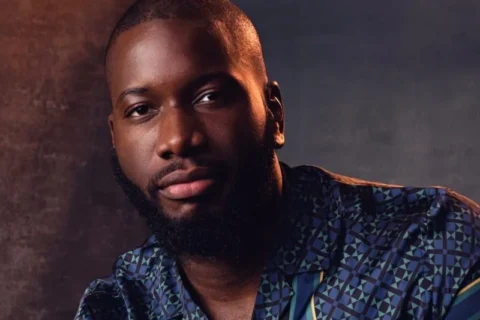
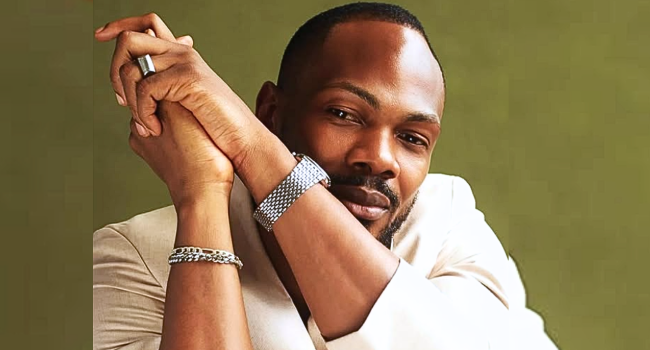
When Daniel Etim Effiong describes the origin of The Herd, he describes it as “a simple pitch”: a man on his way to his best friend’s wedding is kidnapped. His wife spends the film going through unimaginable lengths to bring him home. The premise mirrors something Effiong has lived through — or rather, something that happened before he was old enough to understand it and that he has spent his adult life processing in the only language that works for him: stories.
When Effiong was one year old, his father was arrested by the military government of Ibrahim Badamasi Babangida, imprisoned for allegedly plotting against the regime. His mother spent the years that followed doing everything available to her to secure his father’s release — the journeys from Benin City to the prison in Kano, the advocacy, the exhaustion of every avenue. When Effiong was four years old, his mother died during one of those journeys.
The film he made at thirty-eight is about a man imprisoned, and the woman who refuses to stop until he comes home. It is a genre thriller — crime, kidnapping, the specific brutality of what that experience costs a family in Nigeria in 2025. It is also, underneath those mechanics, the story of the family that made him. He has said this publicly, without drama. “Its premise mirrors realities Effiong has lived through,” he told BellaNaija in December 2025. The realities he lived through — the arrest at one year old, the journeys, the death at four — are the realities The Herd is built on. He spent three years building it.
What Responsibility Sounded Like
Nigeria has a kidnapping crisis that produced verifiable numbers across the period of the film’s development: between July 2024 and June 2025, 4,722 people were kidnapped across the country, with ransom payments reaching ₦2.57 billion. The film’s release in October 2025 arrived as those numbers were being published. For Effiong, the timing was not coincidental — it was the urgency that had been building behind the film since the pitch. “Though three years in the making, the film’s release coincides with yet another rise in kidnappings,” he told BellaNaija. “For Effiong, the timing underscored its urgency and validated the risks he took.”
The risk he was most precise about in his press appearances was the risk of irresponsibility. When you are making a film about a national trauma that millions of people in your audience have experienced personally — not as entertainment, not as genre reference, but as something that happened to their family — the question of how much to show is not aesthetic. It is ethical.
“Storytelling must be sincere and honest, as factual as you want it to be, but it also has to be responsible,” he told the press ahead of the film’s release. “And that responsibility comes down to deciding how much you choose to show.” He had already made the decision: “We were hard-hitting with the facts, but we were careful not to be too graphic. We wanted the film to be accessible, and we didn’t want to push the audience past a certain threshold or traumatise them.”
The phrase “traumatise them” carries weight that the review discourse has not fully inhabited. He was not primarily thinking about box office accessibility. He was thinking about the people who would sit in the cinema and recognise what they were watching because it happened to someone they know. The responsibility he named is the responsibility of a filmmaker who knows his audience is not hypothetical.
“Evil Has No Tribe”
The film’s other deliberate risk was the tribalism question. Nigeria’s kidnapping crisis has been represented in public discourse through a specific ethnic and regional lens — certain communities as perpetrators, certain communities as victims, a framing that both reflects some realities and distorts others. Effiong’s film refuses that framing explicitly. “Evil has no tribe,” he said in his BusinessDay TV interview in December 2025, and the film is constructed to prove it: the kidnappers, the victims, the people who help, the people who betray — distributed across the country’s ethnic and religious landscape without the moral cartography that the easier narrative would have drawn.
This is a political as well as artistic choice. In Nigeria, where every story about violence carries an implicit question about which communities it implicates, a filmmaker who distributes guilt across ethnic lines is making a specific claim about what the country is. He is saying that the crisis is not a crisis of one group’s pathology. It is a national crisis, and the film names it as such.
Nine Nominations and What They Say
The Herd received nine AMVCA nominations, including Best Movie, Best Director — Effiong’s debut — Best Lead Actress for Genoveva Umeh’s first-ever nomination in that category, and triple Best Cinematography nominations for Emmanuel Igbekele across the same ceremony. The film’s theatrical gross was ₦190 million. Its Netflix viewership was 30 million.
What those numbers together describe is a film that earned its audience rather than defaulting to it. Three years of development. A deeply personal origin. A deliberate decision to show only what the story required and no more. A refusal of the convenient ethnic framing. A debut director who also starred in the film he was directing. The result: the most debated Best Movie race at the AMVCA since the award began.
Effiong said The Herd is deeply close to his heart. The story of a man imprisoned, a wife who would not stop until he came home, a family held together by the effort — this is what he made his first film about, at thirty-eight, three years in the making, after living with it since he was four years old. The industry noticed. The audience noticed. Saturday’s ceremony will say whether the jury agrees.
The Herd (2025) · Dir. Daniel Etim Effiong · FilmOne Entertainment · Co-produced by FilmOne Studios, ToriTori Films, Serendipity HHC, Airscape · Now on Netflix
— Sade Bello. RollCallAfrica, May 2026. Sources: BellaNaija (December 2025), BusinessDay TV exclusive interview (December 20, 2025), ShockNG/Stars and Pups (November 2025), AMVCA 2026 nominations.