There is a specific courage required to make historical epic cinema in Nollywood in 2025. Not because the audience is not there — the success of Shanty Town, King of Boys, Anikulapo, and the entire Yoruba epic tradition tells you the audience is there. The courage is technical and financial: the commitment to production design at a scale that period cinema demands, to costume work that can hold scrutiny from an audience that knows this culture from the inside, to the kind of cinematography and visual effects that allow a 18th century Yoruba uprising to feel like it is actually happening rather than being approximated. Niyi Akinmolayan and Anthill Studios made that commitment for Lisabi: A Legend Is Born, and for most of the film, the commitment earns its return.
Lisabi Agbongbo Akala was a historical figure — an Egba warrior and farmer from Igbehin who, in the late 18th century, organised and led the revolt that ended the Oyo Empire’s tribute-collecting domination of the Egba people. The specific detail of the revolt’s origin — Lisabi gathering farmers rather than warriors, organising through a weaving society called the Ologede, building a resistance across multiple Egba towns before the uprising — is the kind of historical complexity that most epic cinema flattens. Lisabi preserves enough of that complexity to give the film real weight. You understand, by the time the uprising arrives, that this is not a hero film in the simple sense. It is the story of a community deciding, collectively, that the cost of submission has exceeded the cost of resistance.
Lateef Adedimeji as Lisabi is the performance the film is built around, and it supports the weight. He does not play Lisabi as a pre-existing hero who reveals himself — he plays him as a man who becomes what his community requires him to become, which is the historically plausible and dramatically more interesting reading. The gradual transformation from ordinary farmer to organised resistance leader is the film’s dramatic arc, and Adedimeji navigates it with the patience the arc requires. His AMVCA Best Lead Actor nomination for this role is the most defensible individual nomination in the acting categories this year.
The Technical Achievement
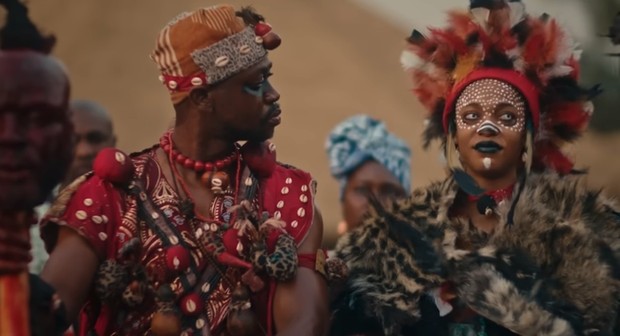
Akinmolayan’s direction is confident in the action sequences — the revolt, when it arrives, has kinetic force and spatial coherence — and more measured in the quieter character scenes. The production design places you in a pre-colonial Egba settlement with enough specificity to be convincing without overwhelming the human story at its centre. The Yoruba dialogue and costume work, which the AMVCA’s Best Makeup nominations acknowledge, are the film’s most consistent achievements across its entire running time.
The film’s eight AMVCA nominations — including Best Indigenous Language Film (West Africa), Best Lead Actor, Best Makeup, and other technical categories — reflect the industry’s recognition of the cumulative quality of the production rather than any single outstanding element. This is what good historical epic filmmaking produces: a consistent level of quality across multiple craft disciplines that adds up to an experience greater than any single part.
Where It Falls Short of the Best Version of Itself
The screenplay could have done more with the Oyo Empire’s perspective. The most interesting historical dramas are the ones where you understand the antagonists as agents with their own logic rather than as obstacles to the protagonist’s heroism. The Oyo overlords in Lisabi are functional rather than complex — which serves the film’s pacing but limits its political depth. The historical record of what it meant to be the administering power over a network of tribute-paying communities, and how that power experiences its own end, is available for a director willing to pursue it. Akinmolayan chose the cleaner dramatic line. The result is a very good Nollywood historical epic. With the harder choice, it could have been an exceptional one.
Lisabi: A Legend Is Born (2025) · Dir. Niyi Akinmolayan · Nigeria · Anthill Studios · Stars: Lateef Adedimeji · AMVCA 2026: 8 nominations including Best Movie, Best Lead Actor, Best Indigenous Language Film (West Africa)