MultiChoice’s latest call for projects is asking African producers for unscripted ideas. The important word is not “call.” It is “unscripted.”
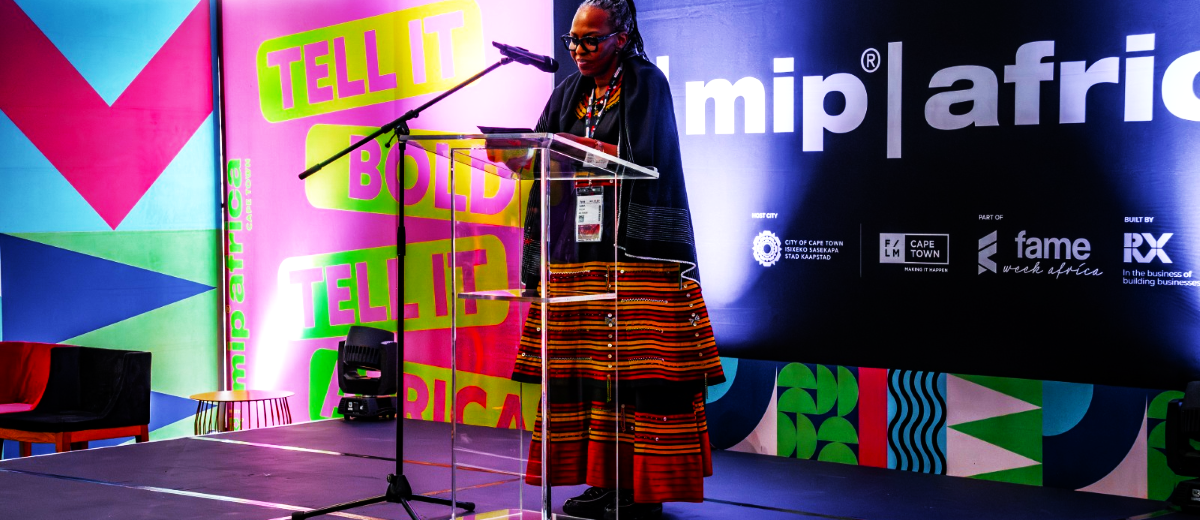
The broadcaster, now part of CANAL+, has partnered with FAME Week Africa on an unscripted commissioning opportunity connected to MIP Africa 2026. Selected producers are expected to pitch during the Cape Town market.
For applicants, this is a chance to enter a commissioning conversation. For the wider industry, it is a signal about the type of television that may look useful to a large broadcaster operating under pressure to control costs, hold audiences and produce across several markets.
Unscripted television can answer all three needs.
Why unscripted works for a cautious commissioner
“Unscripted” covers a broad field: factual entertainment, reality competition, lifestyle, dating, talent, documentary formats, game shows and social experiments. The production economics differ, but many formats share advantages that scripted drama cannot always offer.
A format can return for several seasons. It can be adapted across countries. Its set, rules and production system can be reused. Sponsors may be integrated into the programme without breaking the story. Casting can generate conversation before transmission, while weekly episodes extend audience engagement.
Most importantly, a successful format can become an operating model rather than a one-off title.
Premium drama still carries prestige and subscription value. It also requires substantial upfront investment in scripts, cast, locations, sets and post-production. The risk is concentrated before the audience responds. An unscripted series can often be commissioned in stages and adjusted using early production or audience information.
For a group serving markets with different currencies, languages and advertising conditions, repeatability is a serious commercial advantage.
The timing changes the meaning
The call arrives during a period of visible restructuring around MultiChoice and CANAL+. Recent channel closures have raised questions about the future of local commissioning spaces. RollCall Africa reported that four DStv channels going dark represented a loss of production relationships and specialist outlets, not merely channel numbers.
Against that background, a new commissioning call is welcome, but it should not be read as proof that all parts of the content pipeline are expanding.
A broadcaster can reduce one kind of programming while increasing another. The strategic question is where the budget moves.
If more resources are directed towards repeatable unscripted formats, producers need to understand whether this represents additional commissioning or a substitution for scripted development. That distinction affects writers, actors, directors and production companies built around drama.
Format ownership will decide the long-term value
The best unscripted ideas are not just programmes. They are intellectual property systems.
A locally created format can be licensed into other territories, remade in different languages and extended through live events, digital clips, sponsorship and branded integrations. The creator’s long-term position depends on the contract.
Does the broadcaster acquire the programme for one territory or the underlying format worldwide? Can the producer take the concept to another market? Who controls adaptations? Is there a format fee when another version is produced? Does the originating producer remain involved?
A production fee can keep a company busy for one season. Retained format rights can create an asset that earns for years.
African producers should therefore approach the call with two documents in mind: the pitch deck and the rights position. A compelling concept may open the door, but the contract determines whether the producer leaves with a commission or builds a business.
Cross-market reach is the larger prize
CANAL+ and MultiChoice together have access to a wide network of English, French, Portuguese and local-language audiences. In theory, that creates a rare opportunity for an African format to move across the continent.
In practice, cultural translation is more complicated than replacing presenters. Humour, family dynamics, dating expectations, class, religion and attitudes to competition vary widely. A format designed in Lagos may need more than cosmetic changes to work in Abidjan or Johannesburg.
The strongest submissions will probably combine a clear repeatable engine with enough flexibility for local producers to make culturally credible versions.
That is where African format creation can move beyond copying global television templates. The continent does not need another imported concept wearing local clothes. It needs structures built from African social behaviour that can still travel.
What producers should ask before pitching
The opportunity will be most useful if its commercial terms are clear. Producers need to know whether selected projects receive paid development, what budget range is available, which territories are included and how ownership will be treated.
They should also know what happens after the market presentation. A pitch without a decision timeline can leave a project frozen while the producer waits. An exclusivity period without development money can prevent the same idea from being taken elsewhere.
These are not reasons to avoid the call. They are the questions that separate industry access from industry value.
RollCall Africa’s current cover story on the expanding African pitch economy places this opportunity inside a larger pattern. Producers are being offered more rooms in which to pitch, while still carrying much of the cost of becoming pitch-ready.
The signal behind the call
MultiChoice is not abandoning scripted television because it has opened an unscripted call. The group is also connected to premium drama opportunities through FAME Week Africa. The useful conclusion is narrower.
Unscripted formats can offer lower or more controllable risk, repeatable production, sponsor compatibility and the possibility of adaptation across the enlarged CANAL+ and MultiChoice footprint. Those qualities are likely to matter more in the next phase of African television commissioning.
For producers, the task is not simply to create a lively show. It is to build a format with a clear engine, defensible rights and enough cultural intelligence to travel without becoming generic.
Source: FAME Week Africa press announcements.