An African film can become internationally celebrated before an audience in another African country has a straightforward opportunity to watch it. Its reviews circulate. Its festival selections become headlines. Its director gives interviews about the importance of African storytelling. The film itself remains difficult to find.
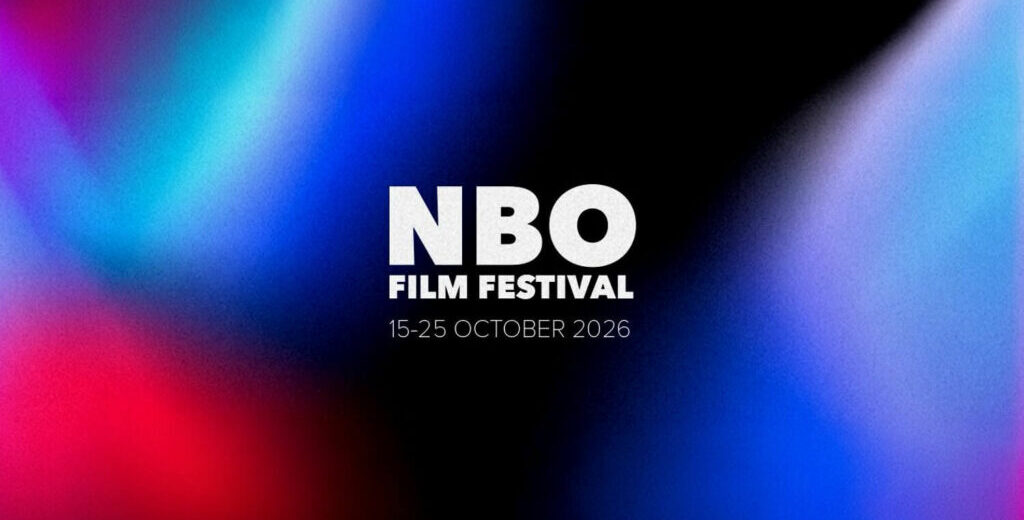
NBO Film Festival is building its seventh edition around that disconnect. Returning to Nairobi from October 15 to 25, it will spread screenings and events across Prestige Plaza, Unseen Cinema, Kaloleni Social Hall and Alliance Française Nairobi. Its theme, “Cinema for Us,” places local participation at the centre of the programme. KBC’s September 3 report.
The immediate announcement is an expansion: more competitions, a filmmaker retrospective and a larger industry programme. The more interesting proposition is what those activities could achieve together. NBO is trying to make Nairobi somewhere African cinema is encountered, discussed and evaluated, not simply somewhere its international achievements are applauded.
Two New Competitions Change What Gets Attention
The returning fiction-feature competition will sit alongside two new categories: the Nick Wambugu Prize for Documentary and a short-fiction competition. That gives the festival three separate juried competitions rather than asking one category to carry the weight of its competitive identity. NBO’s official announcement.
A dedicated category changes how a film enters the conversation. Documentary no longer has to compete for attention solely through the urgency of its subject. Short fiction need not be treated as an introduction to the “real” programme of features. Each gets a defined space in which to be selected, discussed and judged.
That does not make an award equivalent to production financing or distribution. It does make the festival’s attention more specific.
For filmmakers, specificity matters. A short may demonstrate a director’s control of performance, rhythm and visual storytelling without suggesting that a feature is the only worthwhile next step. A documentary may be formally ambitious as well as socially important. Separate competitions create room to recognise those distinctions rather than flatten different kinds of filmmaking into a single celebration of African talent.
Alain Gomis Is More Than a Visiting Name
NBO’s first filmmaker retrospective will be dedicated to Senegalese director Alain Gomis, with support from EUNIC, the European Union National Institutes for Culture. Gomis is scheduled to participate in audience and industry events. The festival says it will announce the retrospective’s titles on September 9. NBO’s retrospective announcement.
A retrospective asks an audience to do something different from watching a new release. It places films in conversation with one another. Choices that might look incidental in a single work can become recognisable interests across a career: the subjects a filmmaker returns to, the ways performances are framed, the relationship between a character and the surrounding city.
Bringing that experience to Nairobi is a useful form of exchange between African film cultures. A Senegalese filmmaker’s work becomes available for sustained discussion in an East African setting, with the filmmaker present to take part.
The value is not simply that Gomis will attend. It is that the programme creates an opportunity to encounter a body of work rather than a reputation. Audiences should not have to know a director principally through the festivals that selected him.
Four Venues Are a Starting Point, Not Proof of Access
The decision to programme across several venues gives NBO more than one point of contact with the city. But a larger footprint should not automatically be read as a wider audience.
Access depends on practical choices: ticket prices, screening times, transport, publicity and whether someone unfamiliar with the festival feels invited to attend. A screening can be geographically close and still feel socially distant.
For an audience-centred festival, those details belong inside the strategy. The person who already follows festival announcements is the easiest person to reach. The harder task is attracting someone who might enjoy a film but does not yet think of an African film festival as somewhere to spend an evening.
This is where the cultural ambition becomes commercially relevant. A distributor needs more than evidence that a film has prestige. It needs some understanding of who will watch it, what persuaded them to attend and whether that interest can support further screenings.
A festival cannot answer every distribution question. It can make the audience less hypothetical.
The Industry Programme Has a Concrete Entry Threshold
NBO is also connecting its screenings to work that has not yet been made. Its Project Showcase invited African fiction features and creative documentaries in development or pre-production, requiring applicants to have at least 20% of their budgets secured.
Selected projects are offered pitching slots, individual meetings with international buyers and festival scouts, and eligibility for a KES 250,000 development grant. The published application window closed on August 20. Eligibility for the grant does not mean every selected project receives it. NBO Project Showcase requirements.
The financing threshold reveals the kind of intervention this is. The showcase is designed for projects that have already assembled some support and are looking for further partners. It is not an open-ended solution for every filmmaker starting with an idea.
That makes it useful, but also limited. The next question is whether the meetings help participating producers make identifiable progress: a stronger development plan, an appropriate partner or a credible route towards production.
Putting those conversations alongside public screenings creates an opportunity to connect two groups that industry events can keep apart: the people discussing what should be made and the people choosing what to watch.
The Measure Is What Nairobi Keeps
NBO’s competition selections are scheduled for September 7, followed by the Gomis retrospective programme and then the opening film and major special presentations. The complete shape of the edition is still emerging. Official announcement schedule.
What is already clear is the festival’s proposed direction. It wants to recognise different forms of filmmaking, give audiences access to an established African filmmaker’s work and help new projects move forward.
The strongest outcome would be more than a successful eleven-day event. It would be viewers discovering filmmakers they want to follow, exhibitors seeing reasons to programme further screenings, and producers finding an audience relationship they can build on.
African cinema reaching the world remains worth reporting. Nairobi is asking an equally important question: what arrangements are being made for the people closer to home?