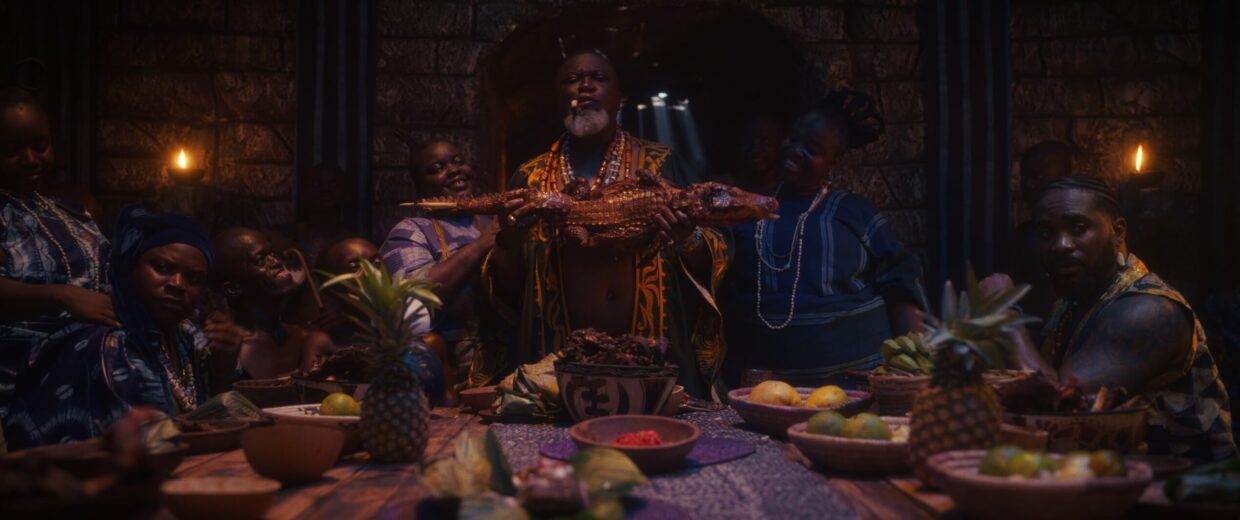
Niyi Akinmolayan’s Colours of Fire begins streaming on Netflix across Africa on August 7, following its December 2025 theatrical release. On its own, it is a straightforward acquisition — a commercially successful Nigerian film reaching the streaming audience after its cinema run. But placed in sequence, it reveals a pattern. Colours of Fire is the fifth Nigerian film Netflix has licensed for post-theatrical streaming in 2026, following Behind the Scenes, Gingerrr, King of Thieves, and King of Thieves 2. Five films, one clear strategy.
The strategy is this: let Nollywood take the production and box office risk, then license the films that have already proven themselves commercially. Every film on that list of five was a theatrical performer before Netflix acquired it. Netflix is not commissioning these films, financing their production, or betting on their success. It is waiting for the Nigerian theatrical market to identify the winners, and then buying the winners after the risk has been retired. This is a fundamentally different relationship from the one Netflix had with Nigerian film during its commissioning-heavy period, and it is worth understanding clearly.
Why Netflix Prefers Licensing to Commissioning
The shift from commissioning original Nigerian content to licensing proven Nigerian films is a risk-management decision. Commissioning means financing a film before anyone knows whether audiences want it — the platform carries the full downside if the film fails. Licensing a theatrical hit means acquiring a known quantity: the box office performance has already demonstrated the audience, the film has already been made at someone else’s expense, and Netflix pays a licensing fee for a proven asset rather than gambling a production budget on an unproven one. For a platform that has contracted its African ambitions and grown cautious about commissioning risk, licensing the winners is the lower-risk path to a Nigerian content library.
The pattern connects to the broader story RollCallAfrica has tracked: distribution outside Africa for these films is increasingly handled through Kava and Circuits, the emerging Nigerian distribution infrastructure, rather than through direct Netflix global commissioning. The ecosystem is organising itself around a model where Nigerian films are made for the Nigerian theatrical market, prove themselves there, and then flow to streaming and international distribution through a chain of licensing and distribution deals rather than through upfront platform commissioning.
What It Means for Producers
For Nigerian producers, the licensing-the-winners model is a double-edged reality. On the positive side, it means a successful theatrical film has a clear secondary revenue path — a Netflix licensing deal that adds streaming income on top of box office earnings, rewarding the films that perform. The theatrical hit is now a more valuable asset because its success opens a licensing market that did not reliably exist before.
On the harder side, the model offers producers nothing at the point of greatest risk — the financing and production stage. Netflix’s licensing money arrives only after a film has already succeeded, which means it does nothing to help producers get films made in the first place. The capital that commissioning once provided — the upfront investment that let ambitious films exist — is gone, replaced by a licensing market that rewards success but does not underwrite the risk of pursuing it. Producers must still find the financing to make the film and carry the full risk of the theatrical release. Netflix arrives only to reward the winners, and only after they have won.
This is the settled shape of the Netflix-Nollywood relationship in 2026: a licensing partnership rather than a production partnership. It rewards commercial success and ignores commercial risk. For an industry that has just pulled ahead of Hollywood in its own market on the strength of its theatrical performance, it is a model that works for the winners and leaves everyone else to find their financing elsewhere. Colours of Fire on August 7 is the fifth confirmation of the pattern. There will be more.
— Adaeze Okoye. RollCallAfrica, Lagos. 2 August 2026. Sources: Netflix official (Colours of Fire licensing), FilmOne Entertainment, Nollywood Distilled (August 2026 — Netflix Nigerian licensing sequence).