Linda Ikeji’s The Night of June 7th was scheduled to open in cinemas nationwide on Friday, August 28. That morning, the film’s producer and distributor, Nile Entertainment, announced on Instagram that the release had been placed on hold — following a directive from the National Film and Video Censors Board, issued on the day of the planned opening, referring the film to the Department of State Services for further review before any clearance decision would be made.
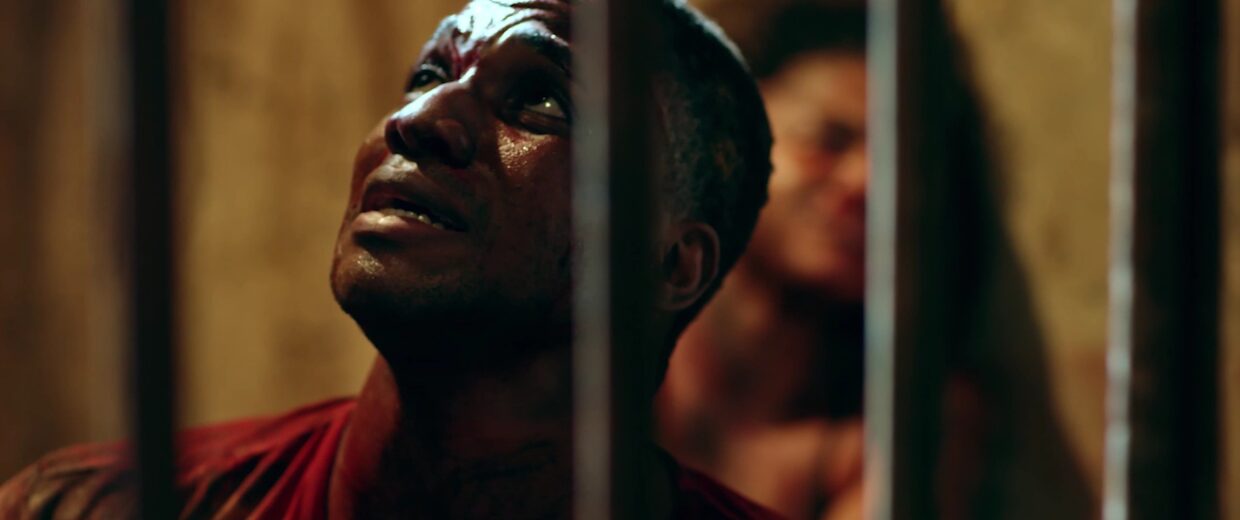
The film dramatises the killing of the Apo Six — six young traders shot dead by police officers in Abuja in June 2005, in one of the most widely documented cases of alleged extrajudicial killing in Nigeria’s recent history, a case that provoked national outrage and remains a reference point in the country’s unresolved conversation about police accountability. Written and produced by Ikeji and directed by Toka McBaror, the film stars Gideon Okeke, Femi Branch, Ali Nuhu, and Charles Lenny. It had already had a public life before this week: it premiered at NollywoodWeek Paris in 2025, screening to an international audience without incident, before returning home to be stopped at the cinema door.
What the Board Said, and What It Didn’t
The NFVCB’s stated ground for the suspension is the sensitivity of the real-life events the film depicts. That is a real and recognisable category of concern — films built on unresolved or contested real-world violence carry genuine risks of reopening wounds, of getting facts wrong, of being read as more inflammatory than intended. Regulators reviewing sensitive historical dramatisations before public release is not, in itself, unusual anywhere in the world. What makes this suspension different is the specific mechanism: a referral not to a content-classification process but to the Department of State Services, Nigeria’s domestic intelligence agency — an institution whose involvement in a film review signals that the state is treating the film’s subject matter as a security concern, not merely a classification one.
Both the producer and distributor have stated they are cooperating fully with the NFVCB and DSS review. Ikeji, addressing the suspension directly, framed the film’s purpose as continuing to “tell our own stories” rather than allowing them to be told without permission — language that positions the film, and its stoppage, inside a larger argument about narrative sovereignty that has run through Nigerian cultural production for years: who gets to narrate the country’s most painful chapters, and on whose terms.
Why This Is Not a Small Story
It would be easy to read this as a routine scheduling delay — films get held for classification reasons often enough that the practice has precedent, including the much-discussed hold on Half of a Yellow Sun more than a decade ago over its Biafra War content. But the DSS referral changes the category of the story. A censors board asking for edits or a content warning is regulation. A state security service reviewing a film about police conduct, before the public has seen a single frame, is a different kind of act — one with a direct chilling effect on any filmmaker considering Nigeria’s own unresolved cases of state violence as material. The message sent by this specific suspension reaches further than this specific film.
It also lands at a specific moment for Nigerian cinema. This has been a year in which Nollywood has been repeatedly celebrated — by this publication among others — for a new seriousness of ambition: historical epics, period dramas, films willing to sit with difficult national material rather than avoid it. The Night of June 7th was squarely inside that ambition, taking one of the country’s most painful unresolved cases and putting it, empathetically, on a commercial cinema screen. Its suspension is a test of whether that ambition is actually welcome, or whether it is welcome only up to the point where it touches the state’s own record.
What Happens Next
Nile Entertainment has said a new release date will be announced once the review concludes, and both the producer and distributor have committed publicly to compliance rather than confrontation — a posture that keeps the door open for the film to eventually reach cinemas with the Board’s clearance. That is the outcome worth hoping for: not because the review process is beyond legitimate scrutiny, but because a Nigerian film industry that cannot dramatise a twenty-year-old, exhaustively documented case of police killing is an industry with a narrower range than the one this year’s other achievements suggested it had.
RollCallAfrica will follow the review and report the film’s eventual release, whenever and however it comes. The Apo Six killings happened in public memory in 2005 and have never been resolved to the satisfaction of the families involved. Whether a film about them can reach a Nigerian cinema screen in 2026 is now, unavoidably, part of that same unresolved story.
— Rotimi Fash. RollCallAfrica, Lagos. 31 August 2026. Sources: Premium Times (NFVCB refers Apo Six film to SSS, August 2026), Nile Entertainment and Linda Ikeji public statements (Instagram, August 2026), The Whistler (August 2026), Legit.ng (August 2026).