Review Desk note: This piece assesses Zjili: A Story of Sisterhood and the Burdens of Excess from its publicly available festival materials, production information and published TIFF criticism rather than presenting itself as a first-hand screening review.
The title of Zjili: A Story of Sisterhood and the Burdens of Excess tells you what the film wants to hold together: intimacy and weight.
Directed by Ghanaian filmmakers Christine Boateng and Hajara Musah Chambas, the 119-minute feature follows three women whose lives intersect around Accra’s Kantamanto secondhand clothing market. The film had its world premiere at the 2026 Toronto International Film Festival in the Discovery programme.
Its subject is the kayayei: women and girls who carry heavy loads through markets for pay. The production’s public materials say the story draws from the experiences of real women doing the work. That turns the film’s central visual idea, bodies carrying clothing, into an economic argument.
Fast fashion does not disappear when the clothes leave Europe
Secondhand clothing is often presented as reuse. Zjili shifts the frame to what happens after enormous volumes of clothing enter a market like Kantamanto.
The garments still have to be sorted, moved, sold and discarded. Human labour sits underneath every stage. In the film, that labour is attached to women with their own ambitions, families and histories rather than treated as background texture.
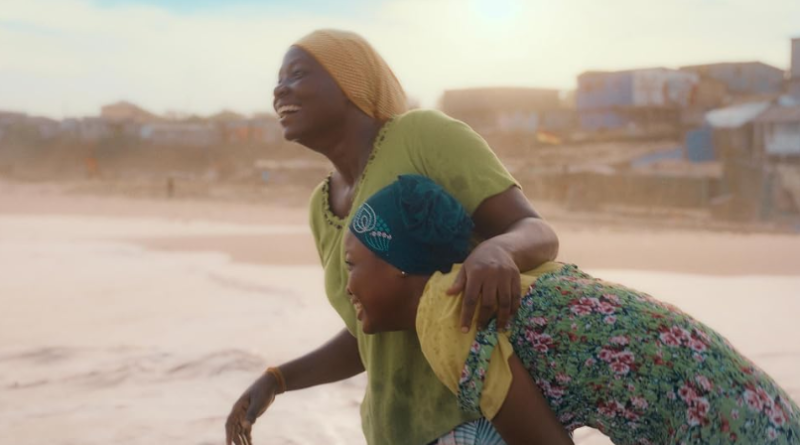
Festival descriptions centre Zoya, an ambitious teenager who wants a different future; Teiya, a young mother; and Chalpang, an older woman navigating the pressures around her. The women are linked by work, precarity and the support structures they create for one another.
That is why the subtitle matters. The “burdens of excess” are physical, but they are also imported: the consequences of consumption elsewhere arrive in Ghana as bales, waste and work.
The film appears strongest when it refuses pure victimhood
Published TIFF reactions have repeatedly highlighted the film’s sisterhood and its refusal to reduce the women to suffering alone. The Alliance of Women Film Journalists described the drama as grounded in the lived experiences of female porters, while festival responses have also noted its movement between hardship, friendship, hope and collective support.
That balance is important.
A film about exploitation can easily turn its characters into evidence for an issue. Zjili instead appears to use the issue as the environment around people who still argue, dream, organise, laugh and make choices.
It is a more useful political position because it locates dignity inside the story rather than adding it as a final message.
Research is part of the authorship
Chambas brings a background connected to advocacy and research around the lived experiences of female porters. The Or Foundation is an executive producer, and the project was developed with close attention to the communities represented.
That level of research does not guarantee a good film. It does change the standard by which a socially engaged film should be judged.
The question becomes whether research has been transformed into character, conflict and cinema rather than delivered as information. The strongest festival responses suggest Zjili succeeds most when it allows the women to exist beyond the thesis.
A Ghanaian story with an international supply chain inside it
Zjili is specific to Ghana, including its languages, geography and labour conditions. But the market at the centre of the film is connected to a global system.
That gives the film two audiences at once.
For Ghanaian and African viewers, it brings a familiar but often ignored form of labour to the centre of a feature. For international festival audiences, it removes the distance between a donated or discarded item of clothing and the people who eventually carry its consequences.
The most interesting thing about Zjili is therefore not that it “raises awareness.” African cinema is asked to perform that function too often.
Its stronger proposition is that the people who carry the world’s excess are not peripheral to the story of fashion. They are part of the industry.