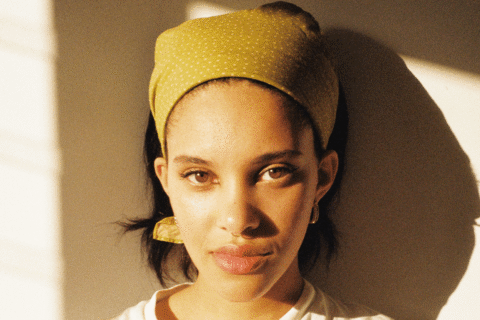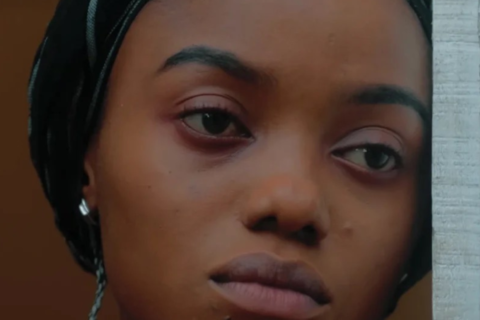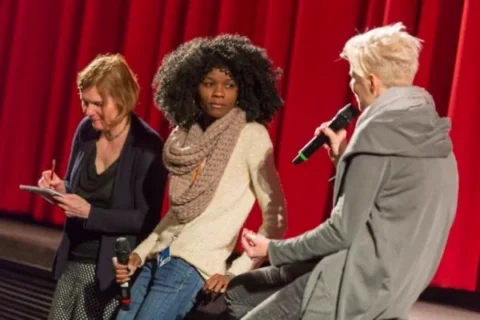

Neema Ngelime is not making a conventional health documentary.
The Ones with the Tempered Flowers, her feature-length project in development, begins with fibroids and fertility. But the film’s larger subject is the network of expectations placed around a woman’s body: family, faith, medicine, marriage, motherhood and the private fear of disappointing people who believe they already know what her life should become.
The Tanzanian filmmaker is placing herself inside that inquiry. Instead of standing outside the story as an invisible observer, she plans to use staged family performances, constructed archives, documentary observation, stop-motion and visual effects to examine her own experience.
That combination has already attracted industry attention. At the 2026 Locarno Open Doors programme, the Tanzania-Kenya project won the €6,000 ARTEKino International Award and the Sørfond Award, which will take it to the Sørfond Pitching Forum in Norway in November.
For RollCall Africa’s Rising Watchlist, the prizes are important. The filmmaking proposition behind them is more important.
A body becomes the archive
The Ones with the Tempered Flowers is described by Kenyan production company LBx Africa as a film in which a filmmaker stages her fears with her family while confronting what is expected of her as a woman.
The project turns an intensely personal medical and emotional experience into a wider investigation. Fibroids are not treated only as a diagnosis. They become the point at which private health, reproductive expectation and social judgment collide.
That distinction matters. Many films about women’s health are organised around explanation: identify the condition, present experts, follow treatment and offer resolution. Ngelime’s proposed form suggests something less orderly. A diagnosis can be clinically named while the fear surrounding it remains difficult to explain. Family members can be loving and still reproduce pressure. Faith can provide comfort while making uncertainty harder to admit.
A diary-like and non-linear structure gives the film room to hold those contradictions. The documentary does not need to pretend that the body, the family and belief will produce matching answers.
Ngelime has been building towards this form
Ngelime is a Tanzanian photographer and filmmaker with a master’s degree from DocNomads, the mobile documentary directing programme. Her earlier work includes A Country in a Corner, Hooyo, Why Here? and An Ode to a Time I Loved Bread.
Across her practice, she has focused on domestic labour, spirituality, class, colonial legacies and African women’s interior lives. She describes her approach as experimental and feminist, with an interest in the mechanical patterns of everyday life.
That background makes the mixed form of The Ones with the Tempered Flowers feel like a continuation rather than an industry-driven change of direction. The constructed archive and staged performance are not visual extras attached to a straightforward documentary. They are tools for filming experiences that may not exist in conventional archival footage.
How does a filmmaker show the fear that preceded a medical appointment? What image represents the future a family has already imagined for a daughter? How do you document a conversation with an older relative when years of silence sit behind every answer?
Observation alone may not be enough. Ngelime appears interested in building images for the emotional evidence that a camera missed.
The Kenyan production partnership matters
The film is produced by Ivy Kiru through Nairobi-based LBx Africa, with Emilia Lloret credited as cinematographer. The Tanzania-Kenya collaboration is a practical regional partnership, not simply a pan-African label added to a funding application.
East African documentary has built significant international visibility through labs, festivals and co-production markets. The harder task is converting that development attention into finished films, durable production companies and distribution that reaches audiences within the region.
The project’s current financing position shows that difficulty clearly. According to reporting from Locarno, the film has secured €90,000 of an estimated €400,000 budget. The team is looking for European broadcasters and co-producers ahead of a planned July 2027 shoot.
The two Locarno prizes improve its position, but €6,000 is development support, not a completed financing plan. The Sørfond invitation may become even more valuable if it places the project before partners able to close a meaningful part of the gap.
This is how many African documentaries now move: local idea, regional production partnership, European lab, international pitch, another round of development and a long search for the final pieces of finance. The process can strengthen a project. It can also consume years of a filmmaker’s career before the first day of principal photography.
The international market may like the subject. The form is the real test
African stories about health, gender and social pressure are legible to international funders. They fit established documentary themes and can be presented in language that markets understand.
Ngelime’s opportunity is to refuse the predictable version of that film.
The most interesting element of The Ones with the Tempered Flowers is not that it addresses fibroids. It is that the director appears willing to disturb the boundary between documentation and performance in order to show how a medical condition reorganises memory, family relationships and the imagination of the future.
That creative ambition also carries risk. Hybrid documentaries need formal discipline. Re-enactment can reveal what observation cannot, but it can also make a personal story feel over-designed. Stop-motion and visual effects can extend the emotional language of a film, or distract from it. The finished work will need to make every technique feel necessary.
The Locarno recognition suggests that international decision-makers see that potential. It does not remove the challenge.
Why Neema Ngelime is on the watchlist
Ngelime is worth watching because she is developing a recognisable artistic position before her first feature has been completed.
She is interested in women’s lives without treating womanhood as a single issue. She works with documentary without accepting that reality must always be represented through observation. She places East African experience inside an experimental practice without making it less accessible or emotionally direct.
The awards provide momentum. The next markers will be more practical: closing the financing gap, protecting the project’s formal ambition through the demands of co-production, completing the planned shoot and finding an African distribution route alongside the expected festival journey.
The Ones with the Tempered Flowers is still in development. That is exactly why this is the moment to pay attention. Rising Watchlist is not a record of people after the industry has agreed they matter. It is an attempt to identify the work while its direction is still being formed.
Neema Ngelime has turned a diagnosis into a cinematic question. The answer may become one of East Africa’s most distinctive new documentaries.