In Soumsoum, the Night of the Stars, power does not first arrive as force. It arrives as recognition. One woman looks at another and understands that what the village calls strange may be a form of knowledge.
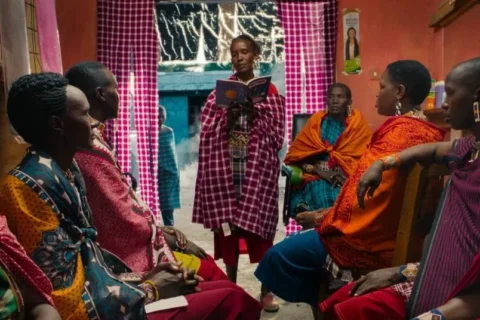
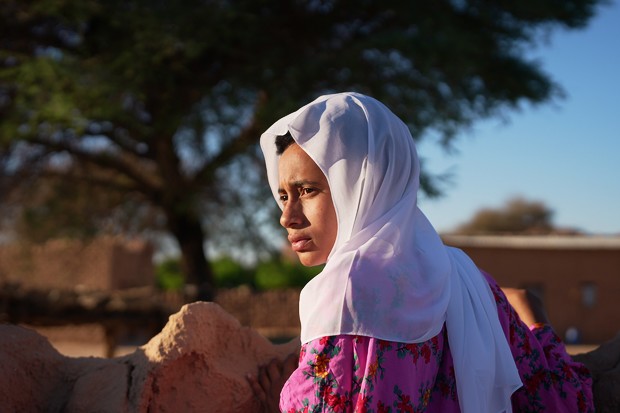
Mahamat-Saleh Haroun’s drama is set among the mountains of Ennedi in northeastern Chad. Seventeen-year-old Kellou, played by newcomer Maïmouna Miawama, experiences visions and abilities she cannot explain. The community meets her difference with suspicion. Aya, an older woman living at its edge, responds with attention. She knows something about Kellou’s birth, her mother and the spiritual world that the village is in danger of rejecting.
Their bond gives Haroun a way to join several concerns that have run through his work: the damage left by political violence, the social authority of men, and the quiet systems women build to keep memory alive. The film premiered in competition at the 2026 Berlinale and received the FIPRESCI prize. Its achievement is not that it makes these themes new. It is that it places them inside a relationship gentle enough to resist the hard world surrounding it.
Kellou’s visions are not a puzzle for the audience to solve
Many supernatural coming-of-age films organise themselves around explanation. A young person discovers a power, learns its rules and eventually demonstrates control. Soumsoum is less interested in rules than in what a community does to someone it cannot classify.
Kellou’s visions isolate her because other people decide they are dangerous. Haroun does not crowd the film with effects or turn spiritual experience into spectacle. The unseen remains partly unseen. This keeps the focus on social reaction: the whispers, prohibitions and small exclusions that prepare the ground for open punishment.
Miawama’s performance matches that restraint. She relies on her face and physical alertness more than dialogue. Kellou often looks as though she is listening to two worlds at once. The approach makes her vulnerable without making her passive. Her silence is not emptiness. It is a space in which she is deciding whom to trust.
The film sometimes leans too heavily on the idea of Kellou as a chosen figure. Its symbolism is clear enough that a few repeated signs add weight without adding meaning. Even so, Miawama keeps the character from becoming only a vessel for the film’s spiritual argument.
Aya carries memory without becoming a museum
Achouackh Abakar Souleymane, who previously worked with Haroun in Lingui, the Sacred Bonds, gives the film its deepest performance. Aya is an outcast, but she is not defined by noble suffering. She can be guarded, funny, impatient and tender. Her knowledge has survived because she has survived, not because the community carefully preserved either one.
Aya understands Kellou because she recognises the violence hidden inside the demand to be normal. Her protection is practical before it becomes symbolic. She listens. She shares what she knows. She gives the younger woman a history that makes experience less frightening.
This relationship is the film’s strongest political idea. Culture is not preserved by declaring it important. It survives when one person takes responsibility for passing it to another. Women perform that work in the film while male authority treats their knowledge as disorder.
Haroun has described tenderness and friendship as resistance to violence. The line could sound soft beside Chad’s long history of conflict, but the film makes it concrete. Violence isolates. Friendship creates a witness. The village can label one woman mad or dangerous; it becomes harder to do so when another person stands beside her and supplies a memory the authorities would prefer to erase.
The landscape is inhabited, not displayed
Mathieu Giombini’s cinematography gives the Ennedi landscape scale without shrinking the people inside it. Rock, sand and sky create a sense of exposure. There are few places to hide, yet social secrets remain everywhere. The contradiction suits a story in which the visible and invisible occupy the same ground.
Haroun resists the temptation to turn the desert into exotic spectacle. Daily life continues within the wide frames. People move, work, observe and judge. The landscape shapes behaviour but does not explain it. The village’s cruelty belongs to people, not geography.
Svetlana Vaynblat’s editing supports the film’s calm tempo. Scenes end on gestures rather than revelations, allowing relationships to accumulate. Bibi Tanga’s music brings warmth and unease, but it does not overstate the spiritual material. Yolande Decarsin’s sound design is just as important. Wind, distant movement and silence make the world beyond the frame feel present.
The patience will divide audiences. At 101 minutes, the film occasionally repeats its emotional information. The middle passages can feel more arranged than discovered, and the village leadership is drawn with less complexity than Kellou and Aya. The men often represent the institution of control before they register as individuals.
Haroun places women at the centre of historical survival
Ériq Ebouaney plays Garba, Kellou’s father, with enough concern to prevent the family conflict from becoming a simple division between caring women and cruel men. Yet his care has limits set by reputation and authority. He wants safety for his daughter, but safety can become another name for obedience when the community decides what a girl is allowed to be.
The film’s feminism emerges from this precise conflict. Kellou is not asking for abstract freedom. She is asking to exist without treating her own perception as a crime. Aya is not seeking ceremonial recognition as a keeper of tradition. She wants the knowledge she holds to remain alive after her.
Haroun links this transfer between women to a country marked by repeated conflict without turning the characters into national metaphors. Their friendship has political meaning because it remains personal. A shared confidence, a warning and a decision to stand together become the units from which resistance is built.
The final movement brings the film’s mystical and social strands together with clarity, though perhaps too much neatness. Some viewers will wish the contradictions remained as open as they are in the first half. The conclusion prefers affirmation to ambiguity. It earns the emotion, but not every part of the resolution.
Final verdict
Soumsoum, the Night of the Stars is a graceful film about knowledge that survives outside official authority. Its strongest scenes need no grand event. They depend on two women recognising each other in a place organised to keep them apart.
Miawama gives the story a quiet centre, while Souleymane supplies its memory, humour and moral force. Haroun’s symbolism sometimes becomes more explicit than necessary, and several male characters remain thin. Yet the film’s tenderness is never decorative. It is a method of survival.