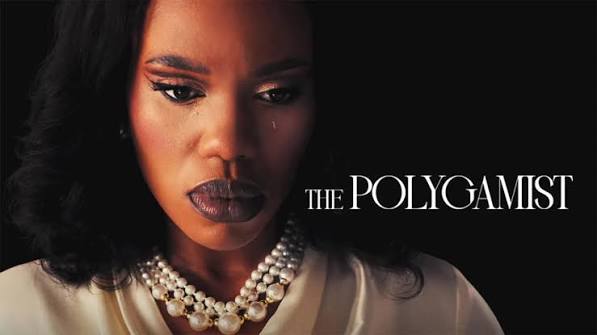
The Polygamist did not become globally visible by removing the parts of itself that belonged to Southern Africa.
The Zulu-language series is based on Zimbabwean author Sue Nyathi’s 2012 novel. Its story is rooted in family hierarchy, patriarchy, polygamy, class mobility and the social power surrounding a successful man who believes he can organise several women around his entitlement.
Reuters reports that the series accumulated nearly 28 million views after its June release. It remained in Netflix’s global Top 10 for seven consecutive weeks and entered the Top 10 in 62 countries.
Those figures do not prove that every culturally specific African drama will travel. They do challenge the assumption that international reach requires a story to become culturally neutral.
The local detail is not a barrier to recognition
Jonasi Gomora, played by S’dumo Mtshali, rises from a poor township background to become a powerful banking executive. His public achievement sits beside deception, infidelity and an ongoing marriage hidden from his wife Joyce.
The social arrangements are specific. The behaviour is widely recognisable.
Mtshali described the character to Reuters as a dark reflection of leaders, bosses, uncles and fathers. That is a useful explanation for the show’s movement across markets. Audiences do not need to share every tradition in the story to recognise authority without accountability.
Specificity gives the conflict texture. Recognition gives it reach.
International television has repeatedly shown that subtitles are not an absolute commercial barrier when the central tension is clear. The more difficult obstacle is often positioning. A viewer must understand quickly what emotional promise the series is making and why another episode is necessary.
The Polygamist offers a character viewers can debate immediately. The audience can condemn him, analyse him or recognise someone like him. Each response creates a reason to keep discussing the programme.
The telenovela structure may be as important as the subject
Coverage of global streaming hits often gives the story all the credit. Format deserves equal attention.
A telenovela is built to sustain revelation, reversal and delayed consequence. Relationships carry information. A secret in one household can affect several characters. The viewer is repeatedly given a reason to move to the next episode.
South Africa has a deep production culture around serial drama and daily television. That experience teaches writers, actors and production teams how to maintain momentum across many hours without treating each episode as a separate film.
Executive producer and co-director Gugulethu Zuma-Ncube operates inside that tradition. The global result is therefore not simply proof that Netflix discovered an interesting premise. It is evidence that local television craft can be commercially useful at international scale.
This distinction matters for commissioners. A fashionable theme cannot replace format discipline. A series needs episode engines, character relationships capable of producing new conflict and an ending rhythm that rewards continued viewing.
Twenty-eight million views is substantial, but it is not the full account
Netflix defines a view through viewing hours divided by a title’s runtime. The measure allows titles of different lengths to be compared more easily than raw hours alone. It still does not disclose every commercial outcome.
The public figure does not tell us how many viewers completed the series, how many joined Netflix because of it or how many remained subscribed afterward. It does not show the share of viewing inside South Africa compared with the rest of the world.
Those limitations do not reduce the reported reach. They determine what can responsibly be claimed from it.
The strongest established conclusion is that a Zulu-language African series sustained considerable attention across numerous national catalogues for several weeks. Profitability, subscriber acquisition and the value returned to individual producers require other data.
Adaptation widened the commercial base
The underlying novel gave the production more than a plot. It supplied an existing work, an authorial reputation and themes that had already survived beyond their original publication.
African streaming strategies often focus on new pitches while overlooking the continent’s books, plays, radio dramas and television archives. Adaptation can reduce one category of uncertainty. The producer is not starting with an entirely untested story world.
That does not make adaptation safe. Readers can reject changes, and literary recognition does not guarantee screen audiences. Rights must also be acquired and credited properly. But a functioning adaptation market can connect publishing and television economics, creating additional value for authors and stronger development material for producers.
The Polygamist also crosses national creative lines before reaching the platform. A Zimbabwean novel becomes a Zulu-language South African series distributed globally. That is a more useful model of pan-African screen activity than attaching a continental label after production.
The lesson is not to manufacture copies
A breakout encourages imitation. Commissioners may now look for another story about a powerful man, another serial family drama or another literary adaptation.
Copying the visible ingredients would misunderstand the result.
The useful lesson is structural: begin with a conflict that is locally credible, build it inside a format designed for sustained viewing and distribute it through a system capable of moving attention across markets. Cultural detail should be made understandable through character and consequence, not removed in anticipation of an imagined global viewer.
The industry should also resist turning one result into proof that distribution problems have disappeared. Many African series never receive comparable platform placement, dubbing, subtitling, recommendation support or publicity. A title can be excellent and remain commercially invisible.
Success should create leverage for the next negotiation
The global performance should strengthen the position of the creative companies and rights holders involved. The next measure is whether that leverage produces better development terms, repeat commissions, participation in future value and investment in company infrastructure.
A hit that makes a platform’s slate look stronger but leaves the producer in the same fragile position is an incomplete industrial success.
The Polygamist has already answered one question. Audiences across many territories can engage with an African series that remains visibly and audibly located in its own culture.
The question now is whether the industry converts that attention into durable ownership, better terms and more ambitious local work, rather than merely searching for the next unexpected hit.