
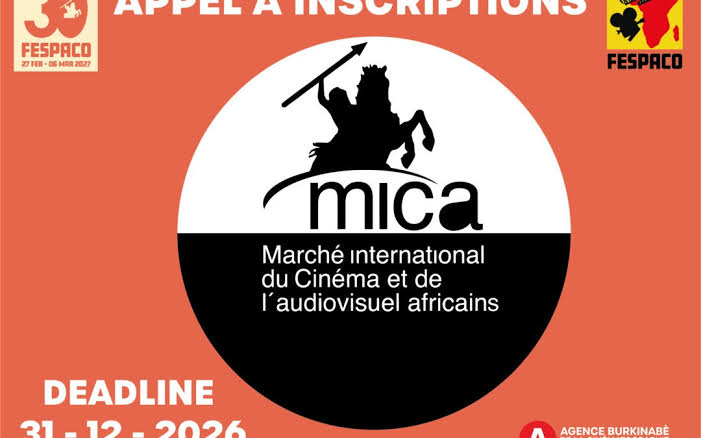
FESPACO has opened its call for films for the festival’s 30th edition, scheduled to take place in Ouagadougou from 27 February to 6 March 2027.
Filmmakers have been directed to register their work through the Faso Arzeka platform. The digital route can simplify administration, centralise entries and give organisers a clearer record of the submission pool.
It does not automatically make the competition accessible.
For a landmark edition of Africa’s most important film festival, the useful question is not simply how many films enter. It is which filmmakers can complete the process, which territories are represented and which barriers remain invisible after the submission form opens.
A portal solves only one part of access
Online submission removes the cost and delay of sending physical materials. Filmmakers can upload information from different countries, and organisers can manage eligibility and communication inside one system.
Digital access is still uneven. Reliable internet, large file uploads, payment methods, supported languages and familiarity with festival requirements can determine who completes an entry.
A filmmaker with a producer, festival consultant or previous international experience approaches the same portal differently from a first-time director working without institutional support.
The platform should therefore be judged by completion, not only visits. How many applicants begin and abandon the process? Where are they located? Which fields produce the most errors? How quickly are questions answered?
Those are operational details, but they shape the artistic pool eventually placed before selectors.
The 30th edition needs a continental map
FESPACO’s identity is pan-African. That promise should be visible in its submission data.
A total number of entries cannot show whether most came from a small group of better-resourced industries. Nigeria, South Africa, Morocco, Egypt, Senegal, Kenya and several established Francophone production territories may naturally generate more completed films. Smaller industries should not disappear inside the continental total.
The festival can publish submissions by country, language, format and filmmaker gender without compromising selection. It can also report how many works met eligibility requirements and how many territories had no entry at all.
That information would help film bodies and funders see where the pipeline is weak. An absent country may have a production problem, an information problem, a delivery problem or all three.
Without a map, underrepresentation is discovered only after the programme appears.
Language access belongs to festival infrastructure
FESPACO operates inside a continent where filmmakers work in Arabic, English, French, Portuguese and hundreds of African languages. Submission rules, technical instructions and support should reflect that reality.
Translation is not a courtesy added after selection. It determines whether a filmmaker understands rights requirements, premiere conditions, subtitle specifications and delivery deadlines before entering.
A portal can technically accept applicants from everywhere while its working language favours some territories. Clear multilingual guidance and responsive support reduce that imbalance.
The same principle applies to subtitles. A film may be completed but lack the money for professional translation or a properly timed file. If the festival wants a wider pool, it should identify whether subtitling support can be offered to promising eligible work rather than allowing a technical gap to end the application.
Submission access is different from attendance access
Selection does not complete participation.
A filmmaker may still need visas, flights, accommodation, accreditation and local transport to attend. For independent producers, these costs can be larger than the submission expense. A selected film can appear in the programme while its director remains outside the room where buyers, programmers and collaborators meet.
The festival should publish what travel and accommodation support is available to selected teams, when that support is confirmed and which costs remain with the filmmaker.
This is especially important for a festival that functions as both a cultural event and an industry meeting. Screening access and market access are not the same benefit.
A director whose film plays without representation gains visibility. A director able to participate in meetings may gain the relationship that finances the next work.
A historic edition should preserve evidence
The 30th edition offers an opportunity to create a durable record of African cinema’s current production geography.
FESPACO can publish a post-festival report covering submissions, eligible entries, selected films, territories, languages, attendance, industry accreditation and public screenings. It should distinguish film entries from individual filmmakers and distinguish visitors from ticketed admissions.
These definitions matter. A large festival number can be accurate while combining categories that answer different questions.
Comparable reporting across future editions would show whether access programmes are working. If a language-support initiative increases eligible entries from previously underrepresented regions, the outcome becomes visible. If applications rise but selected filmmakers cannot attend, the next problem is also visible.
The market must be connected to selection
FESPACO has always been more than an awards ceremony. Its commercial importance depends on whether films find programmers, distributors, broadcasters and financing partners.
Applicants should therefore understand the industry route available if selected. Will projects receive scheduled meetings? Are buyers attending for completed films? Can filmmakers retain contact records and follow up after the festival? Are market outcomes measured?
A submission portal can become the beginning of that relationship rather than an administrative gate. With permission, structured data about format, territory, rights availability and production status can help the festival make relevant introductions.
The objective is not to turn artistic selection into a sales algorithm. It is to ensure that selected work enters a functioning professional environment.
The call is an invitation and a measurement tool
The opening of submissions is legitimate news for African filmmakers. The 30th edition gives the call additional historical weight.
But anniversary language should not replace practical scrutiny. A pan-African festival proves its reach through the composition of its pool, the accessibility of its process and the movement of selected films after the event.
Faso Arzeka can record the applications. FESPACO must decide what it will learn from them.
The strongest outcome would not be the largest submission total in the festival’s history. It would be a credible account showing that more African filmmakers, from more territories and production conditions, were able to enter, attend and convert selection into a longer commercial life.