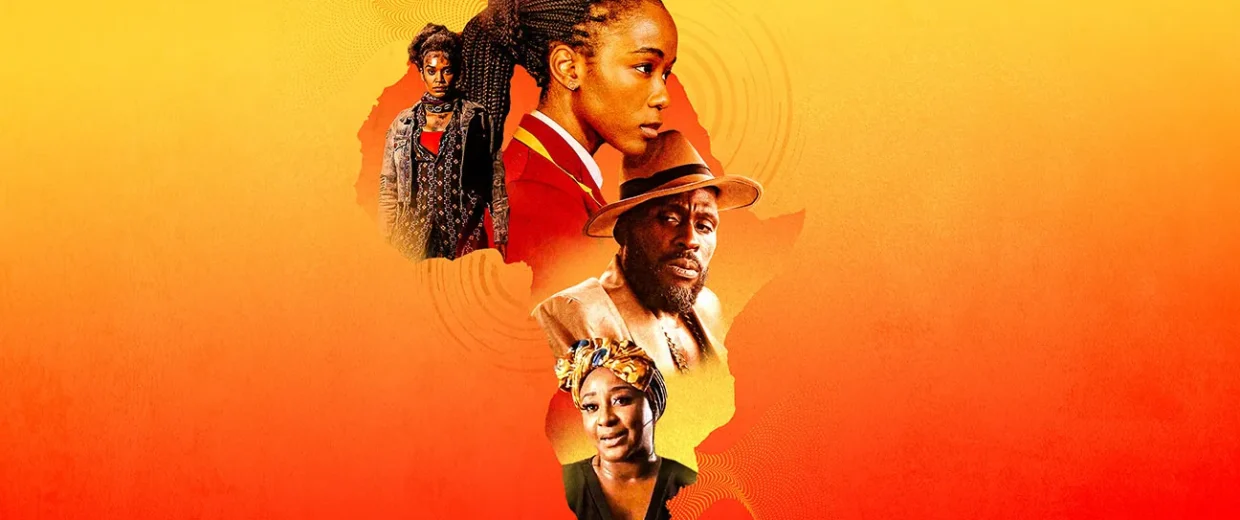
Toronto has assembled one of the widest African selections of the festival year. Ten productions in the 2026 programme connect Rwanda, Gabon, Nigeria, the Central African Republic, the Democratic Republic of Congo, South Africa, Egypt, Chad and Ghana to one of the most influential public and commercial stages in world cinema.
That is the celebratory version. The credits tell a more useful story.
Across the ten films, RollCallAfrica counted nine African countries and at least eight countries outside the continent attached through co-production. France appears repeatedly. So do the United States, Belgium, Norway, Italy, Australia, the Netherlands and Chile. Some titles have clear African production anchors. Others are African because of the director, setting or subject while their legal and financial structure extends much further.
This does not make the films less African. It does mean that “African film” is being asked to describe several different things at once.
READ ALSO: TIFF 2026 assembled the most geographically complete African lineup of the year.
The Credit Audit
| Film | African connection in the credited production | Outside co-production connection |
|---|---|---|
| Ben’Imana | Rwanda, Gabon | France, Norway |
| Congo Boy | Central African Republic, DR Congo | France, Italy |
| Future Tense | South Africa | Australia |
| The Secret Lives of Baba Segi’s Wives | Nigeria | No outside country identified in the announced production credit |
| Soumsoum, the Night of the Stars | Chad | France |
| Clarissa | Nigeria | United States |
| The Smell of Apples | South Africa | Netherlands, Chile |
| Zjili | Ghana | No outside country identified in the announced production credit |
| The Day I Smoked a Cigarette with My Father | Egypt | France, Belgium |
| The Spectacular Death of Prisca | Nigerian filmmaker and Nollywood setting | The published festival summary does not establish a Nigerian production company |
The final row matters because it exposes the limit of the label. A film can be African through authorship and subject without an African production company appearing in the public summary. Another can be built around an African company but require finance, post-production, sales and institutional support from several other territories. A third can be a wholly local production entering the same programme.
Those are not equivalent industrial facts, even when the festival catalogue places them beneath the same continental description.
Co-production Is Not the Problem
The wrong conclusion would be that international co-production weakens African cinema. For many of the strongest films in Toronto, it is the mechanism that allowed the film to exist.
Ben’Imana moved through La Fabrique Cinéma, Atlas Workshops, Ouaga Film Lab, the Berlinale World Cinema Fund and Norway’s Sørfond before reaching Cannes and Toronto. Congo Boy connects a Central African production base to Congolese and European partners. Soumsoum joins Mahamat-Saleh Haroun’s Chadian company to French production and pre-sale infrastructure. These partnerships provide money, finishing capacity, sales access and the institutional confidence required to carry a film through a long development cycle.
READ ALSO: Africa is raising money for film, but the missing product is still a promise that the film will be finished.
The problem is not that France or Norway appears in a credit. The problem is that a country credit is frequently mistaken for an answer to questions it cannot answer: Who originated the project? Who owns the underlying rights? Who controls the finished film? Which producer receives revenue after recoupment? Where was the crew expenditure made? Who decides the release?
A list of countries cannot tell us any of that. Neither can a festival flag.
Authorship, Finance and Control Are Different Things
African film coverage often collapses authorship, financing and ownership into one idea. A Cameroonian director makes a film in Yaoundé and the work is African in the cultural sense. A Rwandan company initiates a project with French and Norwegian partners and the film is an international co-production in the legal sense. A Nigerian story financed and distributed by foreign companies may remain unmistakably Nigerian on screen while its commercial control sits elsewhere.
Each description can be true. They should not be used interchangeably.
RollCallAfrica has already documented the danger of discovering the meaning of a “global deal” only inside the contract. Rights, windows, territories and recoupment positions determine the commercial life of the work long after the premiere photographs disappear.
READ ALSO: A global film deal and a good film deal are not always the same thing.
Clarissa offers a useful counterpoint. It is a Nigeria-United States co-production, shot on 35mm in Lagos, adapted from Virginia Woolf and carried internationally by NEON. Yet the project’s African capital and the Esiri brothers’ control of the Lagos setting are central to its industrial story. The outside partner does not erase the Nigerian structure. The detail makes that structure worth examining.
READ ALSO: The Esiri brothers shot Clarissa on 35mm in Lagos and NEON bought it before anyone saw it.
What RollCall Will Count From Now On
The ten-film TIFF slate is a useful starting point for a stricter vocabulary. When RollCallAfrica describes a production as African, the reporting should identify which claim is being made.
- African-authored: the director or originating writer is African.
- African-set: the story and production take place substantially on the continent.
- African-produced: an Africa-based company holds a credited producing role.
- African-financed: a material portion of finance comes from African public or private capital.
- African-controlled: the available evidence shows that African producers retain decisive rights or commercial control.
One film may satisfy all five descriptions. Another may satisfy two. Both can belong in an African festival survey, but their contribution to the continent’s production economy is not identical.
That distinction becomes more important as African festival visibility grows. The achievement in Toronto is real. Nine African countries are connected to ten selections across Centrepiece, Special Presentations, Platform, Discovery and Short Cuts. Ben’Imana and Congo Boy arrive after winning at Cannes. Soumsoum arrives with a FIPRESCI Prize from Berlin. Daniel Oriahi brings a Nigerian literary property into a major international premiere.
But the next stage of African film coverage must be more precise than counting flags. A festival selection tells us where a film has arrived. The credits begin to tell us how it got there. The contracts, financing and ownership positions tell us who will still benefit after everybody leaves Toronto.
RollCallAfrica credit audit compiled from TIFF programme information, published production credits and official film records as available on 11 September 2026. Country participation does not by itself establish equity ownership or final-rights control.