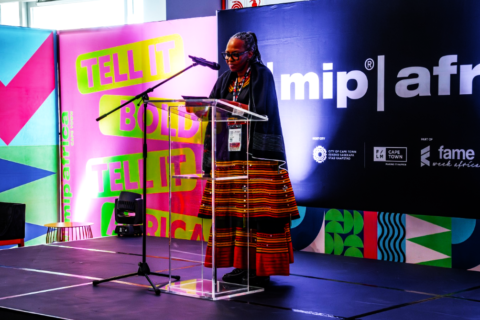

Toronto has created a visible African address inside its first formal film market.
The Global Africa Hub, powered by CANEX Creations, is bringing African filmmakers, producers, executives and organisations into TIFF: The Market. FilmOne Entertainment is participating. Producers are presenting projects and companies. Panels are discussing routes between African production and international finance.
That matters. But a hub is still a container. Its value will be determined by what leaves the room.
African cinema does not need another international space where the continent is described as promising, young and culturally rich. It needs buyer meetings, minimum guarantees, territory commitments, co-production finance, sales representation and written follow-up. The business test for the Global Africa Hub is whether it can turn visibility into transactions.
READ ALSO: TIFF assembled one of the year’s most geographically complete African film lineups.
A Festival Programme and a Film Market Do Different Jobs
A festival selects films for audiences, critics and cultural recognition. A market exists to move rights, projects and money. The same title can participate in both, but the measures of success should not be confused.
A packed screening can strengthen a film’s negotiating position. It is not a distribution agreement. A panel can introduce a producer to decision-makers. It does not finance the next film. A photograph with a global executive can be useful evidence of access. It is not evidence that the executive has taken commercial risk.
TIFF’s decision to launch a full market creates a new North American route for African companies that have traditionally concentrated their international business around Cannes, Berlin, Rotterdam and regional markets. Toronto also sits beside a large African diaspora audience and within a Canadian co-production and public-funding environment. Those features make the location commercially interesting.
The hub must now show what kind of access it has created inside that system.
The Buying Side Is the Real Question
Africa is often strongly represented on the pitching side and weakly represented on the buying side. Filmmakers arrive with projects. Producers arrive looking for finance. Public agencies arrive to promote national industries. Far fewer African companies arrive with budgets to acquire multi-territory rights, commission slates or provide meaningful minimum guarantees.
That imbalance shapes every conversation. If the money, sales infrastructure and distribution networks sit outside the continent, the African producer may gain access while surrendering the strongest commercial position. The market can celebrate inclusion even as control remains unchanged.
The Global Africa Hub should therefore count more than attendance. It should count the African buyers in the room, the territories they represent, the value of rights they can acquire and the number of projects that secure a next step with defined terms.
READ ALSO: Rights, windows and recoupment determine whether a global film deal is actually a good deal.
What a Useful Hub Would Report
Market confidentiality means every agreement will not be public. That does not prevent the hub from reporting meaningful aggregate outcomes.
- How many African production companies held scheduled buyer meetings?
- How many projects received written expressions of interest or follow-up requests?
- How many completed films secured sales, airline, television, theatrical or platform conversations?
- Which African territories were represented by active buyers?
- How many producers received travel or accommodation support rather than paying the full access cost themselves?
- How many deals remained African-controlled after the market?
These are less glamorous figures than the number of speakers or delegates. They are closer to the reason a film market exists.
READ ALSO: Access to an African film opportunity must be measured beyond the submission portal.
Toronto Can Become a Route, Not a Rescue Mission
The language around African film markets sometimes assumes that international institutions are rescuing filmmakers from a continent without infrastructure. That framing ignores the companies, public agencies, exhibitors, broadcasters and distributors already operating across African territories.
A useful Toronto hub would connect those existing systems to new capital and buyers without treating African producers as permanent development cases. FilmOne does not enter Toronto merely as a creative representative. It enters with distribution experience, market data and a catalogue. Other African participants should also be read as businesses with negotiating assets, not only as storytellers seeking approval.
The inaugural edition will not solve the continent’s distribution gap. It can establish a more serious standard for what African participation at a global market should mean.
The hub has already achieved visibility. By the end of TIFF: The Market, the better question will be simple: What was optioned, financed, acquired, sold or scheduled for a second meeting?
If nobody can answer, the Global Africa Hub will have been a strong event. If the participants can answer with deals, it may become infrastructure.
RollCallAfrica analysis based on TIFF: The Market programming, the Global Africa Hub announcement and participating-company disclosures available on 12 September 2026. Commercial outcomes have not yet been announced.