Apple TV is entering Nigeria without asking Nigerians to buy Apple TV.
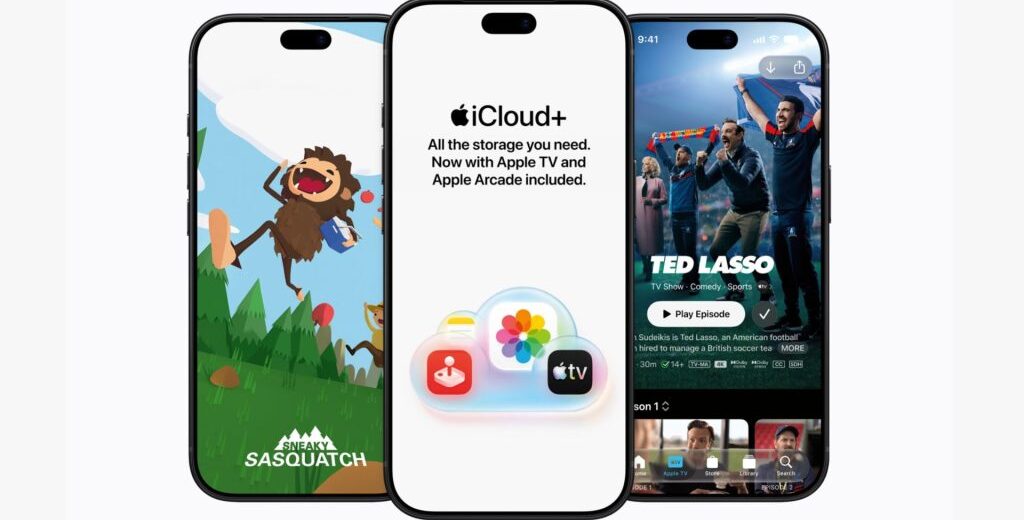
Starting in September, Apple is adding Apple TV and Apple Arcade to iCloud+ subscriptions in Nigeria at no additional cost. The entry plan starts at ₦1,300 per month for 50GB of iCloud storage, and Family Sharing allows a subscription to be shared with up to five family members.
Apple also says Apple TV and Apple Arcade will no longer be offered as standalone subscriptions in Nigeria under the new structure.
That makes the launch less like another streaming service arriving and more like a services bundle using entertainment to make cloud storage harder to cancel.
₦1,300 changes the comparison
Netflix currently advertises Nigerian plans ranging from ₦2,500 to ₦8,500 per month. Apple is entering below that floor, but a straight price comparison is misleading because the products are different.
Netflix is selling a large video catalogue as the primary product. Apple is selling storage, television, games and additional cloud features inside one subscription.
A Nigerian iPhone user who already pays for iCloud storage does not have to make a fresh decision about whether Apple TV alone is worth another monthly debit. The video service becomes an additional reason to keep a payment that may already be attached to backing up photos, files and devices.
That is a powerful retention design.
Apple is competing with subscription fatigue
The African streaming market is not only a competition for content. It is a competition for space in a household’s recurring expenses.
Every standalone subscription creates another cancellation decision. Bundling reduces those decisions by making several benefits disappear together if the customer leaves.
For Apple, the logic is particularly strong because iCloud storage has utility outside entertainment. A viewer may stop watching a series for two months but still need device backup. That gives Apple TV a retention mechanism that a pure streaming platform does not have.
The company is also adding Apple Music Select stations and offering discounted Apple Music subscriptions to iCloud+ users in Nigeria, extending the bundle across more of its services ecosystem.
The weakness is local relevance
Price is only one side of streaming value.
Apple’s launch announcement highlights global titles including Ted Lasso, Severance, The Studio, Pluribus, CODA and F1. What it does not announce is a Nigerian commissioning slate.
That creates the central strategic question for African producers.
Will the expansion of Apple TV into Nigeria eventually produce demand for Nigerian originals and acquisitions, or will Nigeria initially function mainly as another market for Apple’s global catalogue?
Netflix built much of its African identity through local films and series. MultiChoice’s strength has historically depended on deep local programming. Apple can enter cheaply because its services economics are different, but price cannot permanently substitute for cultural relevance.
The device base is the real gate
The bundle is attractive only to people inside or near Apple’s ecosystem. That narrows the addressable market compared with platforms designed to treat Android phones, televisions and web browsers as equally central.
But within that segment, Apple’s offer is difficult to compare directly with anything else.
At ₦1,300, the company is not asking, “Is Apple TV better than Netflix?” It is asking, “If you already need iCloud, why would you not also use the television service included with it?”
That is a much easier customer-acquisition question.
The African streaming war is becoming a bundling war
Showmax’s standalone service has already disappeared into DStv Stream in Nigeria. Apple TV is entering through iCloud+. Entertainment services are increasingly being attached to larger ecosystems rather than asked to survive on video subscriptions alone.
That direction matters for African producers because the buyer landscape changes when video becomes one component of a broader customer-retention machine.
A title may be valued not only by direct viewing revenue, but by how it reduces churn across storage, devices, games, music or pay television.
Apple’s Nigerian launch is therefore bigger than a new streaming price. It is another signal that the future of subscription entertainment may belong to companies that can make cancelling one service feel like losing several.