Netflix has confirmed its African content slate for 2026. Let me read it back to you and ask you to notice what is not there.
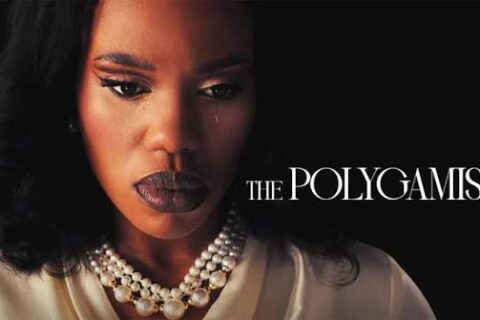
Nigeria: Aníkúlápó Season 2, returning January 30. The Secret Lives of Baba Segi’s Wives. South Africa: Yoh! Bestie, Love Is Blind South Africa, 180, Fatal Seduction Season 3. Ghana: TWO, the country’s first neo-noir feature. That is the list.
Kenya, which has produced a consistent body of internationally recognised television — Country Queen, Subterranea (the continent’s first sci-fi series), Pepeta, and a Sundance 2026 entry in the documentary competition — is not on it. Senegal is not on it. Morocco is not on it. Ethiopia, with 120 million people, is not on it. Tanzania is not on it. Côte d’Ivoire, Cameroon, the DRC — absent. Egypt, which produces more hours of serialised television content per year than every other African country combined, is not classified by Netflix as Africa at all. It sits in the EMEA region, the Europe, Middle East and Africa bucket where African content disappears into a continental designation that has nothing to do with the African continent.
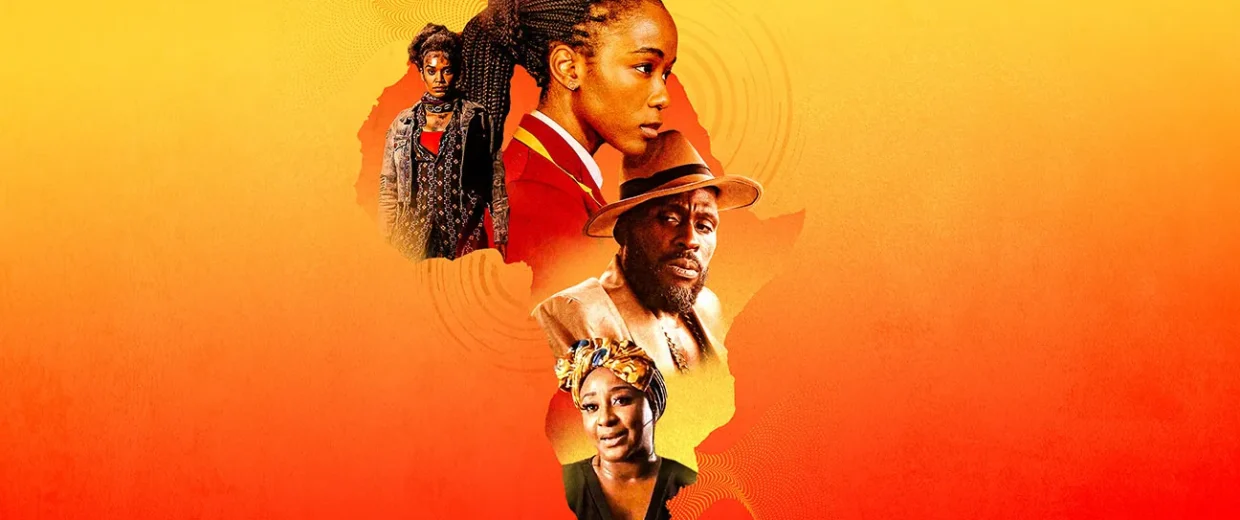
This is Netflix’s map of Africa: Nigeria, South Africa, occasionally Ghana. That map is wrong. Not commercially wrong — Netflix can commission wherever it finds the most efficient return on subscriber acquisition. I mean cartographically wrong. The continent that map describes is not the continent that exists.
What the Commissioning Geography Produces
When a platform with Netflix’s reach and brand authority concentrates its African commissioning in two countries, it produces effects that extend well beyond those two countries’ television industries.
It tells producers in Nairobi that the path to Netflix runs through Lagos or Cape Town, not through Nairobi. It tells Senegalese writers that their stories need to be adapted into formats legible to the commissioning criteria of a South African or Nigerian brief. It tells the streaming services that do commission in underrepresented African territories that they are operating outside the prestige hierarchy — that their content, however good, is not what the global market considers when it says “African television.”
READ ALSO: The Eyes of Ghana — the documentary that opened TIFF 2025’s documentary
None of this is conspiratorial. It is the mechanical result of a commissioning strategy organised around subscriber acquisition efficiency. South Africa and Nigeria have the most developed production infrastructures, the largest English-speaking creative economies, and the most established talent pipelines for delivering content at the technical specifications Netflix requires. The commissioning follows the infrastructure. The infrastructure was built by previous investment rounds. The previous investment rounds followed earlier commissioning decisions. The cycle is self-reinforcing.
Breaking the cycle requires deliberate intervention — which is precisely what Netflix has done in South Korea, in Spain, in Brazil, in India, investing against the existing infrastructure rather than waiting for it to develop without incentive. That same deliberate intervention has not happened at scale in East Africa, in Francophone West Africa, or in North Africa.
The Egyptian Omission
Let me be direct about Egypt specifically, because the omission is the most glaring and the least discussed.
Egypt produces an estimated 250 to 300 television series annually. During Ramadan alone — the peak production season, when Egyptian families across the Arab world orient their evenings around the new serial releases — the country generates a volume of serialised drama content that no sub-Saharan African television industry approaches. Egyptian series are watched from Casablanca to Beirut, subtitled into French for Francophone African audiences, dubbed into Swahili for East African platforms. The country’s television export economy is the most sophisticated on the continent.
Netflix classifies Egypt as EMEA. The internal logic is that Egypt’s primary market audience maps onto the Middle East and North Africa content strategy, not the sub-Saharan African strategy. That internal logic is geographically accurate and continentally incoherent. Egypt is in Africa. Its television industry is African. The separation is a product of Netflix’s market segmentation architecture, not of any cultural or geographic reality.
Roll Call Africa covers the continent. We will be covering Egyptian television.
What the Rest of the Continent Can Do
The Kenyan industry’s consistent Sundance presence — two documentary entries in consecutive years — demonstrates that the quality of East African storytelling is not the constraint. The constraint is the production infrastructure gap between what these industries can currently deliver technically and what Netflix’s minimum specifications require. That gap is closeable with targeted investment.
The Afreximbank film fund, the various African development finance instruments that are beginning to engage with screen content, the Canal+ commissioning pipeline in Francophone Africa — these are the mechanisms through which the infrastructure gap can be closed in the territories Netflix currently ignores. When it closes, the commissioning will follow.
Until then, Netflix’s Africa is two countries. The Africa that actually exists is fifty-four. Someone should be counting the gap.
— Nadia El-Rashid covers African screen distribution and the continental commissioning landscape from Cairo. She has reported on North African and sub-Saharan African television since 2001.