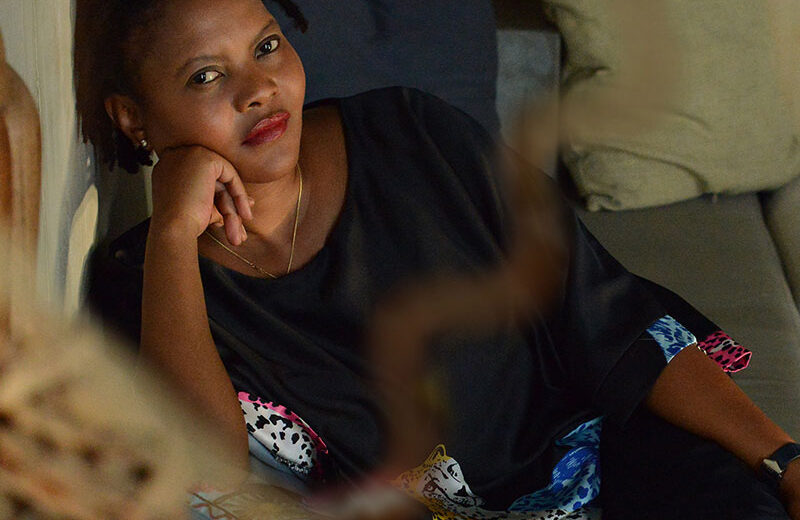
At the 78th Locarno Film Festival in August 2025, during a panel titled “Building Sustainable Film Ecosystems in Africa,” Tshepiso Chikapa-Phiri — CEO and founder of Johannesburg-based Known Associates Entertainment — described the decision that changed the architecture of her career. She had been operating on a project-by-project model, the standard mode for independent producers: find the money, make the film, find the money again. She looked at that model and made a different decision.
“I knew I couldn’t keep waiting for other doors to open,” she told the Locarno audience, as reported by Celluloid Junkie. “The wait is over.” She stepped away from film in 2012, went into marketing, built a separate business — what she described as a “cash cow” — and used the revenue it generated to reinvest in the creative ventures she actually wanted to build. She came back to film not as a supplicant waiting for other people’s financing decisions, but as a vertically integrated operation with its own funding base, its own studio infrastructure under development at the Cradle of Humankind in Gauteng, its own production slate, and its own capacity to make things happen without being dependent on the structures that had previously made waiting the only option.
This is a specific kind of African producer thinking. Not “how do I convince European co-production funds to support my vision” but “how do I build the mechanism that makes the European co-production fund optional.” The distinction sounds strategic. It is existential.
The Rebate Crisis and the March on Pretoria
On a morning in early 2025, hundreds of South African film industry professionals picketed outside the offices of the Department of Trade, Industry and Competition in Pretoria. They were demanding that the DTIC settle its outstanding debts on the 25% cash rebate system — claims dating as far back as three years, from productions that had completed, delivered, and were still waiting for the government reimbursement that made their financing stack viable in the first place. The department’s rebate approval committee had not convened in more than a year.
Tshepiso Chikapa-Phiri was at the front of the protest. Her husband and Known Associates Group chairman Joel Chikapa Phiri addressed the crowd. “Pay the claims! Pay them now!” RollCallAfrica covered the event and the implications in detail. What Tshepiso said to Variety at the Joburg Film Festival in the aftermath of those protests was, characteristically, without diplomatic softening: “We should never have gotten here.”
The sentence contained everything. The rebate system is not a favour the government does for the film industry — it is a mechanism that makes South Africa competitive as a production destination, that has attracted R5.2 billion in foreign funds by October 2025, up from R2.52 billion in the preceding eighteen months. It is, as she has described it elsewhere, a commercial argument that the government is actively undermining by failing to honour its own agreements. “We should never have gotten here” is a statement about institutional failure made by someone who has built her career around not waiting for institutions to function properly — and who found that even her self-sufficient model could not fully insulate her from the consequences of institutional failure at this scale.
What South Africa Has That Others Do Not
The picture Tshepiso paints of South Africa’s film industry is not, however, one of crisis. It is one of frustrated potential. When she speaks about the country’s competitive position as a production destination, the tone shifts entirely. “South Africa is definitely open for business,” she told the Gauteng Film Commission in January 2026. “Our rand still goes a long way. We’ve got great facilities, we’ve got great crews that are highly skilled.”
This is the paradox that anyone who covers South African cinema from the outside must hold: an industry with exceptional production infrastructure, a government rebate system that in principle makes it one of the most attractive production destinations on the continent, a crew base developed through decades of international commercial and feature production — and an institutional environment that is actively undermining its own competitive advantages through administrative dysfunction.
READ ALSO: Kunle Afolayan On Making Films for People Who Can Think
Tshepiso has navigated this paradox by operating at both registers simultaneously. She advocates publicly and loudly for the institutional environment to function. She builds her own infrastructure so that it partially can regardless. She takes on international co-productions — she was a production executive on Universal’s Beast and Sony’s The Woman King — that develop the crew base and the institutional knowledge her company then deploys on African-originating projects. She is, in the terminology she has used herself at industry events, a filmmaker-founder: someone who understands that the artistic vision and the business architecture are not separate problems but the same problem.
At Locarno, she urged African filmmakers to own their intellectual property, distribute their own work, and take calculated risks. “The wait is over,” she had said. What that line means, coming from a woman who marched on the government’s offices months earlier demanding they honour their debts, is something more complex than optimism. It is the position of someone who has decided that the wait is over regardless of whether the institutions have caught up — and who is building accordingly.
— Lerato Dlamini. RollCallAfrica, May 2026. Sources: Tshepiso Chikapa-Phiri at Locarno Film Festival Panel (August 2025), Variety/Joburg Film Festival (March 2025), Gauteng Film Commission report (January 2026).