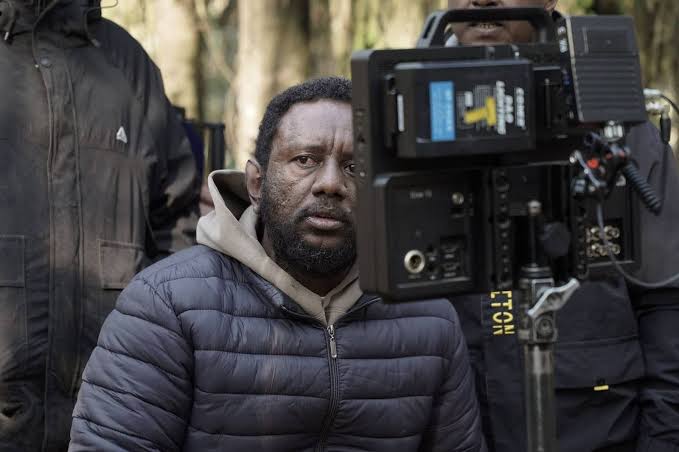
The name to watch is Abraham Gezahagne. The question to follow is what his latest production can leave behind in Ethiopia.
Mehal Sefari is one of six works in progress selected for the 2026 Final Cut in Venice programme. The official selection identifies a production spanning Ethiopia, Canada, Germany, the Netherlands, Norway and Saudi Arabia.
That international structure is part of the story. So is the fact that the film was shot in Addis Ababa.
A thriller built around the impossibility of staying outside history
The production announcement from GAT describes a 1970s-set thriller about an ambulance driver collecting bodies during political killings. The discovery of his son among the dead destroys the distance he has tried to maintain from the conflict.
The announced cast includes Girum Zenebe, Abebe Balcha, Tsedey Fantahun and Ethiopian-Canadian actor Araya Mengesha. Tamara Mariam Dawit is among the producers.
As a premise, the story gives historical violence a specific point of entry. A driver’s work places him inside the machinery of the crisis before he chooses a political position. His family then makes neutrality impossible.
That is an assessment of the published premise, not a review of the film. Final Cut screens unfinished work; the completed version still has to establish how the drama handles its historical material.
There is a documented financing step behind the selection
Sørfond’s project record says the film received NOK650,000 in support in 2025. It names Barentsfilm as the Norwegian co-production company and identifies its Norwegian co-producers.
A disclosed grant does not reveal the total budget. It does establish a concrete stage in the project’s financing, making the international partnership more than a list of countries on a festival page.
The distinction is useful for a watchlist. Emerging visibility is easier to evaluate when it can be connected to identifiable support, production activity and a next stage.
The collaboration should be judged by what it builds locally
In its published interview with Dawit, FRED describes a predominantly Ethiopian crew with targeted international participation and an emphasis on knowledge sharing.
That account is encouraging. It is not yet an independent measurement of skills transfer. Such a measurement would look at the roles people performed, the responsibilities they acquired and whether they can use those capabilities on another production.
A visiting specialist can solve an immediate problem. A local colleague able to take responsibility on the next film creates a longer-lasting benefit. The two outcomes are compatible, but one does not automatically produce the other.
The same applies to equipment and workflows. The presence of an international partner becomes more consequential when it helps a local team deliver again, rather than only meet the requirements of one project.
The next dates are still plans
The earlier production announcement anticipated completion in autumn 2026 and a festival launch in early 2027, followed by a release approach involving theatrical, educational and broadcast platforms. These were stated plans, not confirmed bookings.
The Venice rough-cut showing should therefore not be mistaken for the finished film’s public release. It is a step toward completing and positioning the work.
What makes Gezahagne worth following is the combination now visible: a sharply defined premise, a production rooted in Addis Ababa, documented international support and an industry platform where further partners can assess the work.
The next milestone is a completed film. The larger test is whether this production helps make the next Ethiopian project less difficult to organise. A watchlist should track both.