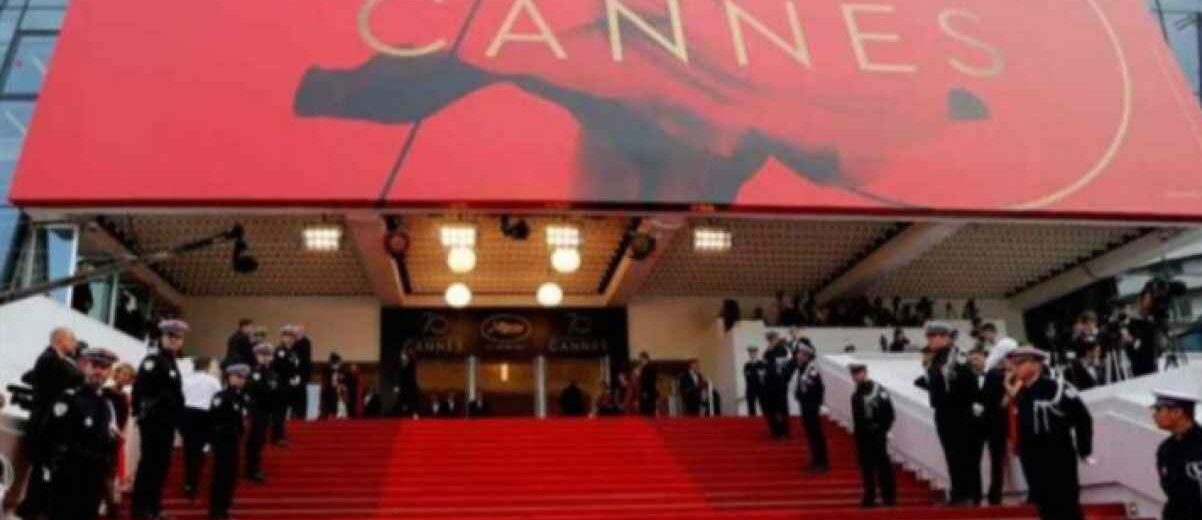
I have been coming to this festival since 1999. I have filed dispatches from the Marché du Film in years when the African presence consisted of two producers sharing a table in the back of a pavilion they had not been invited to and a filmmaker from Burkina Faso whose film had screened at FESPACO six months earlier and who was here, essentially, to introduce himself to people who did not yet know his name. I have been here in years of genuine advance — when Moolaadé walked the Palme d’Or stage in 2004, when Ezra screened in Competition in 2006, when My Father’s Shadow came out of Un Certain Regard last year with a Caméra d’Or Special Mention and changed the terms of every conversation I have had in this building since.
I have also been here in years of stasis. Years when the numbers looked fine and the substance was thin. Years when three African films in the official selection was headlined as a milestone while the conversations that actually determine distribution, financing, and the conditions of future filmmaking were happening in rooms that no African filmmaker had been asked to enter.
The 79th edition opens tomorrow. The continent just finished its biggest awards night — the AMVCA closed in Lagos thirty-six hours ago, with My Father’s Shadow sweeping five categories and the industry briefly feeling, as it does on those nights, like everything is accelerating. Now the same industry needs to walk through the door of the Palais des Festivals and demonstrate that what accelerates in Lagos reaches the market in Cannes.
I want to be honest about what I am seeing in these corridors on the eve of the opening. The honest account is more complicated than either the celebratory press releases or the cynical counter-narratives suggest. It is what I have been doing for twenty-five years and I am not going to stop now.
What Is Actually in the Selection
Three African films are in Un Certain Regard. Two consecutive years of three African films in this section is not an accident, and it is not a coincidence, and it is not a function of any single filmmaker’s talent in isolation from the structural decisions made by development bodies, co-production partnerships, and the cumulative institutional investment that precedes a film’s arrival in Cannes.
Ben’Imana — Marie-Clémentine Dusabejambo’s debut feature, a Rwanda-Gabon-Côte d’Ivoire-France-Norway co-production — is the first film by a Rwandan director in the Cannes official selection. A decade in development. MK2 handling international sales. The Un Certain Regard jury president this year is Leïla Bekhti — French-Algerian, a figure whose presence here carries its own weight. The jury also includes Angèle Diabang, a producer whose understanding of how African films move through the international circuit is specific and practical. The room that will evaluate Ben’Imana contains people who know the territory the film is coming from.
Congo Boy — Rafiki Fariala, Central African Republic and DRC — is his second feature, and the trajectory from his debut (We, Students!, the first Central African film at Berlinale in 2022) to here is the most disciplined and deliberate development arc I have followed in recent years. Fariala has moved through Atlas Workshops, the Ouaga Film Lab, the entire apparatus of pan-African development infrastructure, and arrived at Un Certain Regard in five years from a country whose film industry infrastructure can be described in a single sentence. The development ecosystem built this result. That is the story that will be underreported.
Strawberries — Laïla Marrakchi, returning to Cannes twenty-one years after Marock screened in this same section — is a Morocco-France-Spain-Belgium co-production about Moroccan women strawberry pickers in Andalusia facing exploitation and harassment. It is a film about North African women in Europe made by a North African woman. This section of African cinema has been covered as though North Africa begins with Egypt and ends at the Sahara. Marrakchi’s return is a correction that the coverage should register.
And then there is Clarissa in the Directors’ Fortnight — Arie and Chuko Esiri, Lagos reimagining of Virginia Woolf’s Mrs Dalloway, 35mm, Sophie Okonedo, David Oyelowo, Ayo Edebiri, India Amarteifio, Toheeb Jimoh, NEON distributing for the US and handling international sales. The Esiri brothers are in the Fortnight rather than Un Certain Regard. The Hollywood Reporter called the sidebar announcement “starry,” which is a word that American trade press uses when a filmmaker from outside the American system has assembled the kind of cast that the American system had been pretending only it could assemble.
Four African films across two major parallel sections. The main Competition contains twenty-two films and zero African directors. That absence is not incidental. It is the ceiling that African cinema has been pressing against in this building for the last decade, and it has not moved.
What the Marché Looks Like From Inside It
The Marché du Film is not the festival. Most people in the film industry know this. Most coverage of the festival behaves as though the Marché does not exist, or exists only as a backdrop to the screened films, which is a misunderstanding of where the industry actually functions.
The Marché is where distribution is negotiated, where financing partnerships are discussed, where the decision about what film gets made in 2027 is more likely to be influenced than by any press conference or awards result. It runs May 12 to 21. It operates in parallel to the festival, in the basement and the corridors and the meeting rooms of the Palais and the rented spaces along the Croisette, and the conversations happening in it right now — before a single film in the official selection has screened — are the conversations that will determine the practical conditions of African cinema for the next three years.
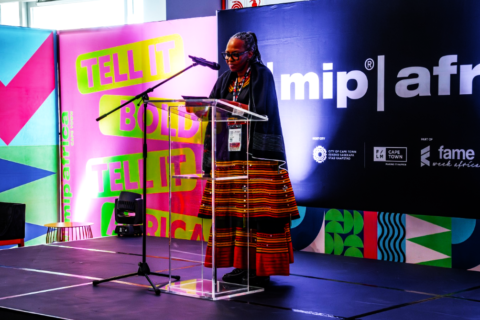
The Pavillon Afronova is operational. It has been running here for several years now and its significance is different from the significance of a film in Un Certain Regard. A film in Un Certain Regard tells you that Cannes’s selection committee found something in this work worth programming. The Pavillon Afronova tells you that African and diasporic filmmakers have built a dedicated institutional space within the Marché where they can meet buyers, discuss co-productions, and access the infrastructure of the global market from a position that is not entirely reactive to what the global market decides to notice.
These are different kinds of progress. Both are necessary. The film in Un Certain Regard demonstrates excellence to people who were already paying attention. The Pavillon demonstrates presence to people who might not have been.
The Nomadic Film Space initiative — which launched this week with a series of events at the Marché — is designed to connect African creative producers with sources of financing that do not depend on the European development pipeline. It is one of several efforts I have watched grow in this building over the last five years, and it represents a structural response to a structural problem. African filmmakers have spent decades building films through European co-production infrastructure that comes with conditions — editorial conditions, cultural conditions, distribution conditions — that the financing rarely makes explicit but the filmmaker understands implicitly. The effort to build alternative financing pathways is not anti-European. It is pro-autonomy.
Whether that effort is producing results at scale is a question I am not in a position to answer from the Marché on the day before the festival opens. I will know more by May 21.
Clarissa, and What the Fortnight Means
The Esiri brothers are the most commercially ambitious African presence at this festival. Neon’s acquisition — announced before the Cannes lineup was even public — is the clearest signal of that. NEON does not buy films as a gesture of good faith toward African cinema. It buys films it believes it can distribute to audiences in the United States and beyond. The fact that Clarissa arrived at the Fortnight already sold in the United States is a structurally different situation from what African filmmakers typically encounter here.
But the Directors’ Fortnight is not Un Certain Regard. Un Certain Regard is not the Competition. These distinctions are not snobbery. They are the architecture of how prestige circulates in this building and in the industry that extends from it. A film that wins Un Certain Regard generates distribution conversations across territories. A film that wins the Fortnight’s Audience Prize generates a different kind of attention. A film in Competition for the Palme d’Or generates the kind of attention that African cinema has generated from this festival exactly once in its history — when Moolaadé was here in Competition in 2004, and Sembène came to collect the Un Certain Regard prize.
I have been asked several times in the last week whether Clarissa’s presence in the Fortnight is a disappointment given the scale of what the Esiri brothers have assembled. I want to answer that question precisely rather than politely.
It is not a disappointment. It is an accurate reflection of where African cinema sits in the festival’s hierarchy at this specific moment, and that is different from saying it is where African cinema deserves to sit. The Esiri brothers made Eyimofe — their debut — which is now in the Criterion Collection. They have made Clarissa with a cast assembled at a scale that African cinema has never managed before, with financing from African institutional capital, with North American distribution already secured. If Clarissa had arrived at this festival without any of that scaffolding, its placement in the Fortnight would be exactly right. With that scaffolding, the question of why it is not in Un Certain Regard or Competition is worth asking and not dismissing as ambition outpacing achievement.
I do not know what the answer is. I have not seen the film yet. It screens on Thursday. What I know is that the question deserves to be held openly, without the reflexive defensiveness that African cinema’s supporters sometimes reach for when the industry that celebrates African films does not always reward them proportionate to their quality.
The Conversation the Marché Is Having This Week
Sitting in the Marché on the day before the festival opens, the conversation I am hearing most consistently is about distribution. Specifically, about the gap between the critical recognition African films have built at festivals over the last decade and the distribution infrastructure that would allow that recognition to translate into African audiences seeing African films.
My Father’s Shadow opened in Nigeria on September 19, 2025. It swept the AMVCA last night with five awards including Best Movie. The global prestige circuit — Cannes, BIFA, Gotham, BAFTA Outstanding Debut nomination — has been generating coverage for it for more than a year. It is on MUBI for international audiences. The question of when it arrives in Lagos cinemas in an accessible and sustained way — not a limited one-week engagement but the kind of theatrical release its commercial and critical standing warranted — is a question the distribution infrastructure of Nigerian cinema was not built to answer.
Ben’Imana will screen at Un Certain Regard this week and MK2 will begin selling it internationally. The probability that it screens in Rwanda before it screens in France is low. The infrastructure for a Rwandan film to travel from Cannes to Rwandan cinemas does not yet function at the speed the film’s Cannes presence implies is deserved. That gap — between the international recognition and the continental access — is the most important and least discussed structural problem in African cinema right now.
I have been saying this for twenty-five years. It has been partially true for twenty-five years. It is more pressingly true now than it was in 1999, because the quality of the films has advanced faster than the infrastructure for African audiences to see them.
Why Tomorrow Matters
I want to end with something specific rather than something grand, because grand claims about African cinema at Cannes have been made from this building before and they have sometimes been accurate and sometimes been the kind of optimism that the corridors of the Marché produce in people who are here and feel the momentum and mistake proximity for progress.
What is specific about tomorrow is this: for the second consecutive year, three African films are in Un Certain Regard. The Un Certain Regard jury is presided over by a French-Algerian actress. One of its jury members is an African producer. A Nigerian film is in the Directors’ Fortnight with North American distribution already in place. The Pavillon Afronova is operational. AFRIFF has delegates in the Marché this week presenting projects to international buyers. The Nomadic Film Space initiative has launched with a direct mandate to build financing access that does not depend entirely on European gatekeeping.
And thirty-six hours ago, in Lagos, Nigeria, My Father’s Shadow won Best Movie at the AMVCA — a film that walked these same corridors twelve months ago as a debut feature from two British-Nigerian brothers and walked away with a Caméra d’Or Special Mention that I watched from thirty metres away.
These facts are not a revolution. They are a sustained forward pressure. A veteran of this circuit knows the difference between a moment and a movement. A moment is what happens when a film arrives in an unexpected section and generates unexpected coverage. A movement is what happens when the infrastructure behind the film — the financing, the development, the distribution, the market access — has been built at a pace that the next film and the film after that can also use.
This week is a moment and a movement simultaneously, at a different proportion in each category. The festival coverage will mostly describe the moment. This dispatch is about both.
The films screen starting tomorrow. I will be in the room for all three. Dispatch follows each one.
Amara Diallo is RollCallAfrica’s Senior Festival and International Correspondent, based in Dakar. She has covered the Cannes Film Festival, FESPACO, and the pan-African cinema circuit since 1999. She is currently in Cannes for the full duration of the 79th edition.