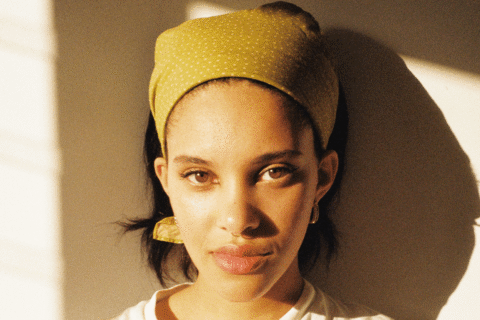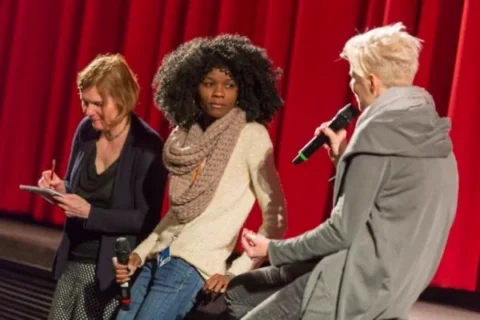

Folagade Banks has taken a character built through short-form performance and moved her into a feature-length screen property.
A Mama Deola Wedding Story arrived on Kava in September with Banks credited as writer, producer and star. Femi Adebayo directs.
The release is a larger step than stretching a popular sketch into a longer video. It tests whether Mama Deola can function as intellectual property: a character capable of carrying story, attracting partners and creating value outside the platform where audiences first encountered her.
That is why Banks enters the RollCall Africa Rising Watchlist.
The audience was developed before the film
Traditional film marketing introduces the character and the story at the same time. Creator-led properties begin differently. The audience may already know the voice, behaviour, catchphrases and social world before a trailer appears.
That familiarity reduces one part of the marketing problem. The campaign does not have to explain Mama Deola from the beginning. It can invite an existing audience into a larger event.
It does not remove the need for storytelling.
A character designed for a short comic encounter can repeat a recognisable pattern without changing very much. A feature needs progression, supporting characters, conflict and enough variation to sustain attention. Familiarity may secure the first viewing. Structure determines whether the film feels complete.
Writing, producing and starring changes the commercial position
Banks is not entering the project only as hired talent. His credits place him closer to the ownership and decision-making centre.
Writing protects the character’s voice. Producing creates participation in how the project is assembled and sold. Starring connects the screen performance directly to the audience that made the character valuable.
The exact rights and revenue arrangements are not publicly disclosed, so ownership should not be assumed from credits alone. The important signal is that the creator is participating across several stages rather than simply licensing his image for somebody else’s production.
For African creators, that distinction can determine whether a viral moment becomes a company asset or remains temporary visibility owned by a platform.
Femi Adebayo adds production translation
Moving from short form to feature length benefits from a filmmaker who understands larger sets, performance continuity and commercial Nigerian audiences.
Femi Adebayo’s involvement as director gives the project an experienced production partner. The collaboration can help translate a familiar digital performance into scenes built for a longer narrative rhythm.
It also widens the audience proposition. Viewers who do not follow Banks online may recognise Adebayo’s name and body of work.
The partnership is commercially sensible because it combines native audience knowledge with established screen production. The result still has to prove that both strengths appear in the finished film rather than merely in the credits.
Kava makes the release a platform test
The film is positioned as a Kava exclusive. That gives the service differentiated content and gives Banks a defined distribution destination.
An exclusive can concentrate attention because viewers know where the title is available. It can also limit discovery if the platform has less reach than the creator’s existing social channels or if technical friction interrupts viewing.
Kava’s Google Play listing has passed 100,000 Android downloads, establishing a meaningful early audience base. Its displayed phone rating and recent customer complaints also show that product reliability remains part of the release.
For Banks, the commercial result will depend on more than public reactions. Did the film bring new registrations? Did existing followers complete the feature? Did viewers remain on Kava for another title? Did the platform’s exclusivity create value large enough to justify the narrower distribution?
Those are the measures that turn a creator collaboration into an acquisition strategy.
The property must travel beyond recognition
Mama Deola is culturally and socially legible to audiences familiar with Nigerian family expectations, weddings and the authority exercised by older relatives. That specificity gives the character texture.
The next question is whether the surrounding story makes that behaviour understandable to viewers meeting her for the first time. A successful screen property cannot depend entirely on prior knowledge from social media.
This does not require flattening the language or culture. It requires clear motivation and consequence. The new viewer should understand what Mama Deola wants, what stands in her way and why her choices create comedy or conflict.
If that works, the property can move across platforms and potentially across territories. If it does not, the film may operate mainly as an extended reward for the existing community.
Creator reach should be measured as conversion
Followers are regularly presented as guaranteed customers. They are not.
A social follower can enjoy free clips without paying for a subscription or spending the time required for a feature. Platform algorithms can also make an audience look larger than the number of people who reliably see each post.
The relevant measure is conversion. How many people moved from a Banks post to Kava? How many completed registration? How many watched a meaningful portion of the film? How many returned?
The same analysis applies to future cinema projects. Online attention becomes commercially valuable when it can repeatedly move audiences into a paid environment.
What would justify movement beyond the Watchlist?
One feature proves initiative. A durable screen business requires repetition.
Banks’ next evidence should include a second property or continuation, a clearer production identity and results showing that audiences follow his work beyond one character. Development of other writers and performers would also indicate movement from individual creator to production company.
Rights control will be central. If Mama Deola can appear in new films, branded extensions, live formats or licensed adaptations under terms that preserve meaningful value for the creator, the character becomes more than content.
There is also a creative test. Banks must show that he can make choices for the long-term strength of the property, including changing a familiar formula when repetition becomes limiting.
The watch
Folagade Banks is worth tracking because the move has already crossed three boundaries: from short form to feature length, from performer to multi-role producer and from open social distribution to a platform exclusive.
The opportunity is clear. He begins with a recognisable character, an existing audience and an experienced director.
The evidence still required is equally clear. The project needs measurable conversion, sustained viewing, rights that support future use and another release capable of proving that the transition can be repeated.
Mama Deola has left the feed. The next stage is showing that she can become a durable screen property.