
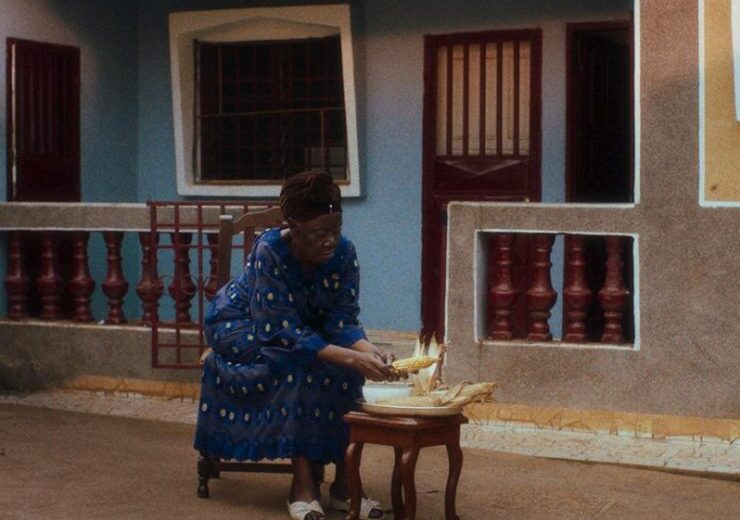
When La Maison du Vent left Venice with two prizes, the easiest story was that a Cameroonian debut had broken through. The more useful story begins with the number of countries it took to get there.
Auguste Bernard Kouemo Yanghu’s first feature won the Special Orizzonti Jury Prize and the Luigi De Laurentiis Award for a debut film at the 2026 Venice Film Festival. It was an important result for the director and for Cameroonian cinema, which is still rarely represented at the top level of the major European festivals.
But the film did not travel from Cameroon to Venice on a single national financing line. The festival lists it as a production involving Cameroon, France, Belgium, Benin, Saudi Arabia and Qatar. Behind one African title sits a chain of production companies, public funds, development relationships and international partners.
That is not a footnote. It is the business story.
A local film with an international balance sheet
La Maison du Vent was produced through companies including Horizons d’Afrique, La Mansarde Cinéma, Steel Fish Pictures and Merveilles Production. Support also came from institutions connected to the Red Sea Fund and Doha Film Institute.
The structure reflects a reality facing many ambitious African films. The story may be rooted in one country, but the capital required to develop, produce, finish and circulate it is assembled across several jurisdictions.
In creative terms, the film remains closely tied to Yaoundé and to Yanghu’s personal history. The director has described it as being inspired by his mother, whose six children moved abroad and left her living alone in the city. He has also spoken about his own complicated legal relationship with Cameroon after becoming a French citizen in a system that does not recognise dual nationality.
The film’s emotional centre is therefore separation: between parents and children, home and diaspora, citizenship and belonging. Its production structure mirrors that movement. A Cameroonian story had to cross borders repeatedly before audiences could see it.
Why six countries become necessary
International co-production is often described as cultural exchange. It is also a response to missing infrastructure.
One partner may provide development money. Another may unlock a national film fund. A third can supply post-production. A regional fund can close part of the budget, while an international sales relationship helps the project appear credible to a festival selector or later buyer.
No single contribution needs to carry the film. The stack works because each piece makes the next one more likely.
This arrangement can increase the scale and technical quality of an African production. It can also give the project access to experienced producers, international crews, laboratories, markets and festival networks. RollCall Africa has previously examined how structured co-production programmes can connect African projects to European finance.
Yet every new partner adds another set of interests. The project may accumulate contractual approvals, recoupment positions, delivery requirements, territorial rights and producer credits. Money travels in, but control can travel out.
The Commercial Index question
The correct measure of this Venice success is not only the number of trophies. It is what remains with the African side of the production after the applause.
Who owns the underlying intellectual property? Which company controls sequel, remake and adaptation rights? Where will sales revenue be collected? Which investments recoup first? Does the Cameroonian producer retain a meaningful share of the asset, or mainly supply the story, location and cultural credibility?
These questions cannot be answered from the festival’s public production listing alone. That is precisely why they should become normal questions in African film reporting.
International finance is not automatically extractive. A well-negotiated co-production can protect the originating producer and create lasting relationships. A poor one can turn an African company into a service provider on a film presented internationally as African.
The difference is found in the contracts, not the flags listed beside the title.
The same ownership question appeared in RollCall Africa’s report on the production and distribution pipeline being built by MAD Solutions and IRTH. As more institutions connect finance, development, distribution and sales, filmmakers must understand which part of the chain they are entering and what they are giving away.
Venice is a beginning, not a revenue report
Two prizes can materially improve a debut film’s commercial prospects. They give sales agents a stronger line, help distributors position the title and may open conversations about the director’s next project.
They do not guarantee broad African distribution.
The industry still has to ask where La Maison du Vent will screen after Venice. Will it secure theatrical dates in Cameroon and other African markets? Can universities, cinematheques and broadcasters license it? Will a streaming platform acquire meaningful regional rights? Will the attention translate into income for the companies that carried the film through development?
RollCall Africa has documented the gap between festival visibility and durable distribution. The Venice awards reduce that gap, but they do not close it.
The next test is whether the film’s international structure can also build an audience at home. Festival recognition is most valuable when it increases a filmmaker’s negotiating power, not when it becomes the final destination of the work.
What the win says about Cameroonian cinema
Yanghu’s result shows that a Cameroonian project can compete at the highest festival level. It also shows how long the route can be. The director had already built recognition through short-form work years before arriving with his first feature.
That long development path matters in an industry that often reports discoveries as overnight success. African filmmakers are not usually waiting to be discovered. They are spending years assembling the relationships and finance required to make one feature possible.
La Maison du Vent deserves to be celebrated as a Cameroonian film. It should also be studied as a financing map. Its six-country credit line explains both the opportunity available to African filmmakers and the weakness of national systems that cannot yet carry enough films from development to distribution.
The film won in Venice. The larger achievement would be for its structure to leave the originating filmmakers with the rights, revenue and leverage to make the next one.
Sources: La Biennale di Venezia; TV5Monde.